 Clinic
Review Article | DOI: https://doi.org/10.31579/2834-5126/137
The Rinse Project: Recycling with Pyrolysis Discarded used Plastic Made Insecticide Treated Mosquito Nets for a Safer Environment. Some Ecological and Human Health Considerations on Plastic and Insecticide Toxicity and Our Solution for “End of Life”
1HSE; CEO RINSE Project. Batuan, Bali.
2First Help Instructor. Soussans France.
3DR EC II; technical adviser; Castelnau-le-Lez, France.
*Corresponding Author: Pierre Carnevale., DR EC II; technical adviser; Castelnau-le-Lez, France.
Citation: Guillaume Carnevale, Nicolas Carnevale, Pierre Carnevale, (2026), The Rinse Project: Recycling with Pyrolysis Discarded used Plastic Made Insecticide Treated Mosquito Nets for a Safer Environment. Some Ecological and Human Health Considerations on Plastic and Insecticide Toxicity and Our Solution for “End of Life” Nets, Clinical Trials and Clinical Research,5(2); DOI:10.31579/2834-5126/137
Copyright: © 2026, Pierre Carnevale. This is an open access article distributed under the creative commons’ attribution license, which permits unrestricted use, distribution, and reproduction in any medium, provided the original work is properly cited.
Received: 06 April 2026 | Accepted: 20 April 2026 | Published: 27 April 2026
Keywords: malaria; mosquito; plastic
Abstract
Malaria is still the main parasitic disease in the World and vector control is an absolute need due to the drug-resistant P. falciparum. Vector control is mainly based on the large-scale distribution of long-lasting insecticide treated nets which avoided several hundred thousand of deaths. More than three billion of such nets were distributed these last two decades and it is scheduled three hundred million each year. But in one or two years used nets are torn and removed, discarded here and there in the environment. The management of these “end-of-life” is of great concern because all they are made of plastic (polyester, polyethylene, polypropylene) which is no biodegradable. They are often left, with other domestic waste, in landfill, and burned, this must be strictly avoided due to well-known toxic vapour. Or buried, but plastic, and insecticide, are still present while the goal is their elimination. The physical degradation of plastic, Macro-Micro and Nanoparticle is of great concern. A first trial of pyrolysis showed that both plastic and insecticide could actually be eliminated, the “recycling” method procured fuel which could be used for engine. From our experience of field surveys for malaria control, and published document noticed in PubMed, we did a synthesis of main risks, to fauna and human, due to plastic and pyrethroid insecticide pollution. Comprehensive programme must be undertaken to get ride of both plastic and insecticide and to get Safer Environment for populations of malarious countries.
Introduction
According to the last WHO Report of malaria in the World [1] “Globally, in 2023, the number of malaria cases was estimated at 263 million, with an incidence of 60.4 cases per 1000 population at risk. This is an increase of 11 million cases from the previous year and a rise in incidence from 58.6 cases per 1000 population at risk in 2022. The WHO African Region continues to carry the heaviest burden of the disease, accounting for an estimated 94% of malaria cases worldwide in 2023”. “Globally, in 2023, the number of deaths was estimated at 597 000, with a mortality rate of 13.7 per 100 000. The number of malaria deaths and the mortality rate steadily decreased from 622 000 and 14.9 deaths per 100 000, respectively, in 2020. The WHO African Region continues to carry the heaviest burden of mortality, with 95% of estimated malaria deaths worldwide”. “Between 2000 and 2023, an estimated 2.2 billion malaria cases and 12.7 million malaria deaths were averted worldwide, with 1.7 billion cases and 12 million deaths prevented in the WHO African Region alone. In 2023 alone, more than 177 million cases and more than 1 million deaths were averted globally.” Bhatt et al. [2] “ found that Plasmodium falciparum infection prevalence in endemic Africa halved and the incidence of clinical disease fell by 40?tween 2000 and 2015. We estimate that interventions have averted 663 (542–753 credible interval) million clinical cases since 2000. Insecticide-treated nets, the most widespread intervention, were by far the largest contributor (68% of cases averted).”
According to the Alliance for Malaria Prevention [3] nearly 3.5 billion long-lasting insecticide treated nets were shipped to malaria endemic countries (Table 1).
Standard | 2,636,709,945 |
Pyr + PBO | 491,185,021 |
Dual a.i. | 321,509,322 |
Total | 3,449,404,288 |
Table 1: Cumulative shipments to malaria endemic countries.
It is scheduled a distribution of 400 hundred million of LLINs each year to get a full and permanent coverage.
All these nets are made of plastic, polyester or polyethylene or polypropylene (Table 2) and this raises the issue of plastic pollution as plastic are not biodegradable!
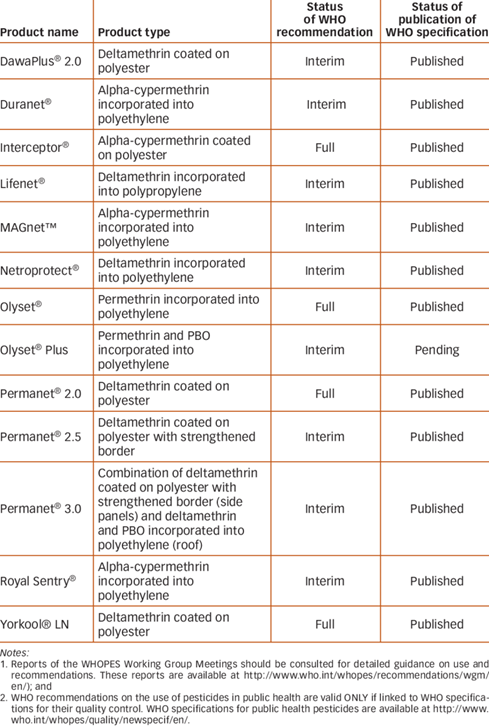
Table 2: LLINs recommended by WHOPES.
These nets are treated with a pyrethroid insecticide, but one of the keys issues is the spreading of pyrethroid resistance [4, 5, 6, 7, 8] which can reduce the efficacy of currently available LLINs (9) and underlines the needs for new tools for “averting a malaria disaster.” [6]. WHO developed the Global plan for Insecticide Resistance Management in malaria vectors (GPIRM) to provide a framework for countries to develop their own strategies. Among new tools recently developed are mosquito nets treated with two products such as pyrethroid and chlorfenapyr (10) or pyriproxyfen [11-12] or PBO [13,14,15,16]. The surface of a net is 15m2 and the concentration in inseciticide is usually of 55 mg a.i./m2 (but usually much more, even 500 mg a.i./m2) meaning a dose of 825 mg a.i. insecticide per net (0.825 gr a.i.) When considering the billions of nets already distributed, and the million scheduled, it is clear that the pressure for pyrethroid insecticide was great, and it will remain great, added with insecticide largely used for agriculture purpose. As each net weight around 0.650 kg it is clear that, added with their packaging, several hundred million of ton of plastic already arrived, and will arrive each year in malaria endemic countries. The crucial point is actually the human behavior, it was often observed that, in two or three years, these nets are torn and dirty, they are removed and discarded, here and there, in the environment. [17,18] with impact also on Plasmodial infections [19] From the recent recent KAP survey done in Bénin [17] it was reported that “Djougou has a population of about 35,000 households. There is an average of 2.4 people per ITN. Half of the ITNs are less than 2 months old, indicating a recent distribution campaign. The reported ITNs used the night before the survey was 73 %. Over half of the households (52 %) reported losing at least one ITN in the past year, with an average of 2.53 nets lost per household”. It was estimated that “if each household loses an average of 2.53 nets per year, then in the last 12 months 2.53*35,000* 1500 = 133 kg of insecticides were released into the wild, along with 57.6 tons of plastics (support material constituting the net)” It was thus possible to extrapolate to the whole country and to the malarious countries South of Sahata. “In Benin data indicate that 46,939,986 ITNs were distributed from 2004 to 2023. Based on the results obtained from our sample, if we extrapolate in Benin which houses 1.8 million households (according to the RGPH4), the amount of insecticides released would be 6.8 tons per year and the amuount of plastic abandoned would be 2960 tons per year. For malarious contries sub-Saharan Africa “The number of ITNs distributed in sub-Saharan Africa over the same period from 2004 to 2023 is 2,670,896 648. If we now extrapolate from Benin to sub-Saharan Africa, based on 174.5 million households, the amount of insecticides released would be 662 tons per year and the amount of plastic abandoned would be 287,000 tons per year. “ The management of such “end-of-life” nets, and their packaging, are of great concern due the double pollution they create: physical with decomposition of plastic in macro-micro-nano particles, and chemical as pyrethroid is killing cold blood animal, insects, earthworm etc, and even fishes. Discarded old nets are often “forgotten” in the environment, or added to domestic waste in some locally made landfill where they are left in open space, or burned and this is dangerous with the well-known toxic vapour (see below) and this must be strictly forbidden. It also recommended burying them but this is just a “transfer”, from on to in the earth and plastic and insecticide are still present with impact on the edaphic fauna such as earthworm (see below) and this must also be forbidden. It was observed, or reported, some “transformation” of domestic plastic waste in other “thing” for other purposes, but this is also a simple transfer of use, plastic still there. Also crushing the collected net or packaging does not solve the problem and even could worsening the situation as it is well known that abrasion release micro (MP) and nano particle (NP) which have impact on human health (see below). Therefore, a solution must be found and implemented, to get rid of plastic and insecticide treated discarded nets for a safer environment and human health. This is the aim of the RINSE Project.
II. Environmental and human health toxicity with decomposition of polyethylene.
A great lot of recent publications reported the relation micro-nano particles and environmetal impact and human health. [20-41]
Microplastic (MP) pollution has emerged as a critical environmental concern. “Microplastics (MPs) (< 5mm>
The Minderoo-Monaco Commission on Plastics and Human Health.
Human health findings: Coal miners, oil workers and gas field workers who extract fossil carbon feedstocks for plastic production suffer increased mortality from traumatic injury, coal workers' pneumoconiosis, silicosis, cardiovascular disease, chronic obstructive pulmonary disease, and lung cancer. Plastic production workers are at increased risk of leukemia, lymphoma, hepatic angiosarcoma, brain cancer, breast cancer, mesothelioma, neurotoxic injury, and decreased fertility. Workers producing plastic textiles die of bladder cancer, lung cancer, mesothelioma, and interstitial lung disease at increased rates. Plastic recycling workers have increased rates of cardiovascular disease, toxic metal poisoning, neuropathy, and lung cancer. Residents of "fenceline" communities adjacent to plastic production and waste disposal sites experience increased risks of premature birth, low birth weight, asthma, childhood leukemia, cardiovascular disease, chronic obstructive pulmonary disease, and lung cancer. During use and also in disposal, plastics release toxic chemicals including additives and residual monomers into the environment and into people. National biomonitoring surveys in the USA document population-wide exposures to these chemicals. Plastic additives disrupt endocrine function and increase risk for premature births, neurodevelopmental disorders, male reproductive birth defects, infertility, obesity, cardiovascular disease, renal disease, and cancers. Chemical-laden MNPs formed through the environmental degradation of plastic waste can enter living organisms, including humans. Emerging, albeit still incomplete evidence indicates that MNPs may cause toxicity due to their physical and toxicological effects as well as by acting as vectors that transport toxic chemicals and bacterial pathogens into tissues and cells.Infants in the womb and young children are two populations at particularly high risk of plastic-related health effects. Because of the exquisite sensitivity of early development to hazardous chemicals and children's unique patterns of exposure, plastic-associated exposures are linked to increased risks of prematurity, stillbirth, low birth weight, birth defects of the reproductive organs, neurodevelopmental impairment, impaired lung growth, and childhood cancer. Early-life exposures to plastic-associated chemicals also increase the risk of multiple non-communicable diseases later in life.
“Microplastics Found in Human Brains: An Alarming link to Dementia
GROUNDBREAKING research has found that microplastics are accumulating in human brains at alarming levels, with concentrations increasing over time and potential linked to dementia. The presence of microplastics in human tissues has been a growing concern, and a recent study has confirmed their accumulation in the brain, liver, and kidneys of decedents. Scientists from the University of New Mexico and collaborating Institutions analysed post-mortems samples from 52 individuals. Their research highlights a concerning trend: microplastics concentration in the brain surpass those in other organs, raising questions about potential health implications. To conduct the study, researchers obtained de- identified liver, kidney, and brain samples from autopsies performed in 2016 and 2024. Using advanced detection methods, including pyrolysis gas chromatography-mass spectrometry and electron microscopy, they identified microplastics in all three organs, with polyethylene being dominant polymer. Notably concentration of microplastics in brain tissue increased from3,345 µg/g in 2016 to 4,917 µg/g in 2024 (p=0.01). This significant rise aligns with broader environmental plastic pollution trends. Interestingly, microplastic accumulation did not correlate with age, sex, race, or cause of death, but individuals with dementia exhibited even greater plastic concentrations, particularly with cerebrovascular walls and immune cells. While no direct causa link has been established between microplastics and dementia, the findings suggest a need for further investigation. These results underscore the urgency of understanding how microplastics enter and persist in the human body, particularly in the brain. While the liver and kidneys appear to clear some plastic particles, the brain’s ability to expel them remains unclear. The long-term health effects of microplastics exposure, including potential neurotoxicity, warrant further clinical and epidemiological studies. For healthcare professionals, these findings highlight the need for increased awareness of environmental pollutants as a factor of neurological health. As plastic pollution continues to rise, mitigation strategies including reducing plastic exposure in food and water sources, could become an essential aspect of public health policy. Future research should focus on elucidating the mechanisms of plastic uptake and clearance in human tissues and evaluating potential interventions to limit exposure.”
III. Toxicity of pyrethroids
The main pyrethroids used for treated mosquito nets are permethrin, deltamethrin, lambdacyhalothrin and alphacypermethrin (Table 2) Permethrin is a pyrethroid type I; deltamethrin, cyhalothrin, cypermethrin are pyrethroides type II (with a group α-cyane). Their chemical formulation are given in Annex Deltamethrin, permethrin, and alpha-cypermethrin were long considered to have very low toxicity for humans of all ages because they degrade rapidly. However, recent evidence shows that they could have an impact on the neurological development.
Modes of action
Like natural pyrethrum, pyrethroids act by contact, irreversibly blocking sodium channels in neuronal membranes. Type II pyrethroids also block other ion channels, such as chloride and calcium channels, and therefore have a more severe effect on the nervous system. Pyrethroids generally act very quickly on almost all insects. They are highly toxic to cold blood animals (42,43) such as fish, crustaceans, amphibians, earthworm, and reptiles: the blockage of ion channels leads to paralysis in these animals.
Chemical markers indicate that the two main sources of contamination in the human body are permethrin and cypermethrin. Pyrethroids or their degradation products can also be found in breast milk, infant formula, and some baby foods.
Ecotoxicity
Pyrethrinoids exhibit significant selective ecotoxicity, primarily targeting insects (for example, the median lethal dose (LD50) for insects is 0.45 mg/kg). They also have the advantage of being easily degraded and not very persistent in the environment, disappearing through hydrolysis, photolysis, and biodegradation by microorganisms. Acute exposure shows toxicity targeting the nervous system (Na+ channels). On rodents T-type symptoms (tremors, ataxia, excitability, hypersensitivity) are observed with type I pyrethroids, while CS-type symptoms (choreo-athetosis, salivation, tremors, convulsions) are observed with type II pyrethroids. Environmental Emissions: The main pathways for pyrethroid emissions into the aquatic environment are water runoff (rain, irrigation) and wind. Therefore, it can be expected runoff of pyrethroid from old nets in land fill or discarded here and there, when raining. The impact of pyrethroid on fishes is known [42, 43] Being highly hydrophobic, pyrethroids readily bind to organic carbon and particulate matter and accumulate in soil and sediments where they degrade within a few months. In the aquatic environment, they are bioavailable in dissolved form or bound to particles.
Human Toxicity
A great lot of work was devoted to toxicity risk of pyrethroid for human being [44-49] Short-term skin exposure to pyrethroids can lead to abnormal facial sensations (paresthesia). Ingestion can cause sore throat, nausea, vomiting, abdominal cramps, and mouth ulcers. Excessive salivation and difficulty swallowing are often observed. Most affected individuals recover within 12 to 48 hours. Lethal doses vary considerably depending on the molecule (from approximately 55 mg/kg of body weight for bifenthrin or λ-cyhalothrin… to over 10,000 mg/kg of body weight for d-phenothrin). Poisoning is rarely fatal, but high doses cause tremors, coma, and seizures, which are medical emergencies. (Annex 2) In adult humans, the main routes of contamination are percutaneous absorption (through the skin), inhalation (especially after using aerosol sprays or other sprays) [44] and ingestion of contaminated food or water. Pyrethroids, and their metabolites, have hormonal activity, generally estrogenic or anti-androgenic. They thus reduce the production of progesterone and estradiol in mammals. In the early 2000s, it was estimated that at environmental doses, no chronic organ damage was observed in chronically exposed individuals, but poisoning is possible at high doses. Epidemiological studies subsequently showed that repeated exposure to pyrethroids, even at low doses and without causing acute effects such as cardiovascular events, can be associated with chronic disorders. These manifest in young children exposed in utero as behavioral problems (anxiety and withdrawal), while fertility impairments (particularly sperm abnormalities) have been observed in the general population. Spermatogenesis can also be negatively affected. Deltamethrin, one of the compounds in this family, has also been linked to an increased risk of chronic lymphocytic leukemia or lymphocytic lymphoma in people exposed in their work. A recent study by Public Health France, revealed significant levels of exposure, especially in children [45]. In China, a large epidemiological study showed in 2022 that prenatal exposure, even at low levels—particularly in malaria-endemic areas—is associated with delayed neurological development in infants (affecting cognition, motor development, and adaptive behavior); it also showed that high exposures during the first six months of pregnancy lead to the most pronounced effects. [46] Children are also more vulnerable and more exposed to these products [47]. Recent studies in a cohort of three hundred mother-child pairs, reported that pyrethroids are indeed neurotoxic to the youngest children. According to the 2021 updated version of this study: “New studies on pyrethroids highlight a link between exposure during pregnancy and an increase in internalizing behavioral disorders such as anxiety in children. Experimental data on rodents suggest increased permeability of the blood-brain barrier to pyrethroids at the earliest stages of development, supporting the biological plausibility of this link.” This meta-study confirms “the role of prenatal exposure to pyrethroid insecticides in the development of neuropsychological and motor disorders in children.” [48-49]. Pyrethroids are endocrine disruptors for human being [50].
IV. A solution: pyrolysis: the RINSE Project
Principle of Pyrolysis
The word "pyrolysis" comes from Greek: "pyro" meaning heat and "lysis" meaning breaking down. It refers to the thermal decomposition of materials at high temperatures in the absence of oxygen. [51, 52,53] Plastic pyrolysis is a chemical recycling process that converts plastic waste into valuable products like fuel oil, carbon black and syn-gas. Unlike other plastic recycling solutions, plastic pyrolysis has relatively low requirements on the type and quality of plastics. Generally, apart from PVC and PET plastics, other plastic waste all can be recycled with the plastic pyrolysis machine. By heating materials like wood or plastic to high temperatures, it breaks them down into simpler components: biochar (a solid charcoal-like material), syngas (a mixture of combustible gases), and a liquid called pyrolytic oil. This process differs from combustion because the lack of oxygen prevents burning, allowing for the creation of valuable products instead of just ash.
Safety challenges
Because pyrolysis takes place at high temperatures which exceed the autoignition temperature of the produced gases, an explosion risk exists if oxygen is present. Careful temperature control is needed for pyrolysis systems, which can be accomplished with pyrolysis controller [54, 55] Pyrolysis also produces various toxic gases, such as carbon monoxide. The greatest risk of fire, explosion, and release of toxic gases comes when the system is starting up and shutting down, operating intermittently, or during operational upsets [56]. Inert gas purging is essential to manage inherent explosion risks. The procedure is not trivial and failure to keep oxygen out has led to accidents [56] Pyrolysis can also be used to treat municipal plastic waste [57, 58, 59]. Pyrolysis of plastics is one of the efficient ways to recover plastic waste. . A strong plastic waste management solution is crucial The European commission is planning to implement a circular economy with a key focus on plastics. The objective is to ensure that all plastic packaging is reused or recycled by the year 2030 [60]. The products from pyrolysis are oil and monomers, which can substitute diesel fuel and monomers for plastic production. In addition to higher recovery value, the primary driving factor at present is the global warming issues and stricter emission rules which are forcing forward mechanisms to recover valuable plastic wastes that are usually incinerated or sent to landfills [61,62]. Plastics wastes are propitious sources for production of diesel fuels or monomers, due to the high heating value and high availability. The catalytic fast pyrolysis process yields liquid rich in hydrocarbons (C11–C20), which has similar thermal and chemical properties as diesel . The optimal pyrolysis temperature for thermal degradation of plastic wastes into liquid fuel is found to be in the range of 450–700°C
The RINSE Project. The first pyrolysis of insecticide treated nets.
Pyrolysis was tested on Royal Sentry® Long-Lasting Insecticide-treated Net LLINs, made from polyethylene and impregnated with alpha-cypermethrin [63]. A special equipment was prepared to make this pyrolysis, (picture) following the same protocol as the one currently used for treating plastic waste at large-scale in the factory Geo Trash Management (Lombok).
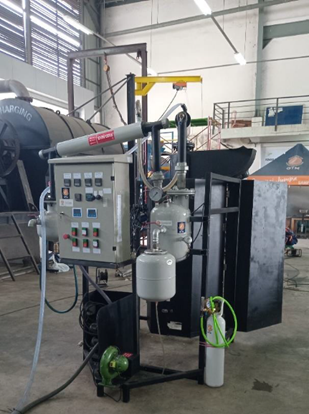
Equipment prepared for the first pyrolysis of insecticide-treated mosquito nets.
The pyrolysis machine can test 4 – 5 kg batches, at a temperature of 400°C in a sealed, zero-oxygen environment. It runs on pyrolysis oil or diesel, 240V AC and CO2 gas. The machine features include a multistage, forced air fuel-oil burner, and syngas-scavenging, gas recycling system as a heating source. This includes a gravity-fed fuel oil flow regulation system and air throttle to regulate temperature. The heating chamber is insulated with a flume silica sealed ceramic fiber layer over 2mm sheet steel housing held in place by 15mm galvanized steel mesh. The cooling system includes two recycled water condensers / heat exchangers to quickly convert syngas to liquid hydrocarbons (pyrolysis oil). For safety and product quality a CO2 injection system is included for purging oxygen before startup and evacuating syngas’s during shutdown. All digital thermal sensing instruments monitor internal and external temperatures during the process. Digital and analogue pressure sensing instruments monitor internal pressure during the reaction. Other safety features include an over pressure relief valve; emergency stop systems and Residual Current Device (RCD) safety switch across all electrical circuits. The GTM pyrolysis reactor produced, per LLIN: 374 g of pyrolysis oil (81.3%); 62 g of oil residue (5.65%); and 23 g of carbon residue. (5%). 4.6 .kg of LLIN was packed into the pyrolysis reactor which produced a total of 4.8 liters of oil which was analyzed in GC-MS method in Mataram University.
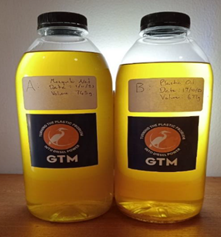
Sample of oil obtained
A total of 36 different hydrocarbons (65.2%), 7 Alcohols (24.9%) and 1 form of Acid (phthalic acid) (2.01%) were identified. But NOT A SINGLE MOLECULE OF PLASTIC PE and NOT OF INSECTICIDE ALPHACYPERMETHRIN The system get completly rid of plastic and insecticide and appeared as the adapted technical solution for plastic depollution of discarded “end of life nets”.
IV.Perspectives
Impacts of pyrethroids on human health and enviroment: what we know, what we don’t know, and related recommandation” [Impacts des insecticides pyréthrinoïdes sur la santé humaine et environnementale: ce que l'on sait, ce qu'on ignore et les recommandations qui s'y rapportent]. Équiterre [64]
Some Technical studies
After the successful pyrolysis of polyethylen made nets, pyrolysis must be done with polyester made nets; with other pyrethroid (permethrin, deltamethrin, lambdacyhalothrin) and newly developed nets treated with CFP or PPF or PBO moreover insecticide itself. It seems that on some nets PFAS were added (Annex 4) and it has to be known if pyrolysis can destroy them. Washing and release of MP: as it has been reported that the washing of a cloth made with non natural material release 1900 MP. It is important to evaluate the release of MP-NP when wahsing LLINs taking into consideration: the plastic (polyester, polyethylen, polypropylen); the insecticide (permethrin, deltamethrin, lambdacyhalothrin, alphacypermethrin), the impregnation (insecticide on the thread or in the thread), the method of washing (wash machine: speed of spin, time, temperature, soap etc or traditional hand washing with local soap etc) Comprehensive studies: identifying in the field some places in the river where clothes and nets are washed with traditional method and soap, analyse MP-NP in the place of washing and some distances (considering the tiver, turbidity etc, collaboration hydrologist, microbiologist); analyse MP-NP in fishes caught at distance of the washing place (collaboration ichtyologist, veterinary, microbiologists); analyse MP-NP in human population eating these fishes at close and distance of this (these) river (collaboration MD, microbiologists etc). Ethological studies on the behavior of population in term of use, misuse (nets for fishing!) of nets, washing habits etc
Some Operational studies
The currently in process EOLIN project shows that large-scale colleection of discarded nets can be done; but the question are: what about the follow -up of these nets? Gathered in warehouse? And after? It is clear that an pyrolysis equipment, colse to these warehouse, could be of great help, transforming these “forgotten” nets in fuel for engine and implementation of circular economy giving financial input in communauties while cleaning their environment. In some villages in Angola we developed a “barter system” with an: exchange an old mosquito net for a new one; we arrived in the village with a lot of new nets and propose this exchange…it worked very well and very easily. The question remained; what about these old nets collected in the field. Here also it could be useful to have a mobile pyrolysis equipment and to treat these old nets and procuring to population. fuel for their engines. These are, among other example, where locally done pyrolysis of old nets should be of great help. This is the aim of the RINSE Project, to develop technicity to do pyrolysis of “end-of-life” nets, then transferring the technology to “malarious countries” getting Safer Environment with no more plastic and chemical pollution, circular economy and “waste for energy” system in a three steps protocol: collecting discarded nets in the field- gathering them in warehouse where pyrolysis equipment is installed- making pyrolysis and starting circular economy. The RINSE project can transfer the technology and training to do pyrolysis safely with strengthening national capacities. People will easily participate in such system where they can get new nets, money, safe environment, fuel for their scooter etc. This pyrolysis technology could be a part and a booster of a national large-scale comprehensive adapted plastic depollution programme involving a central part with large-scale pyrolysis equipment (treating domestic waste at tons level) and mobile team going in warehouses where old nets are stocked. This results in a clean environment, a guarantee of improved health, combined with additional financial income. Still maintaining a protection against malaria but without pollution
Annex: 1
Formula of pyrethroids used for treating mosquito nets
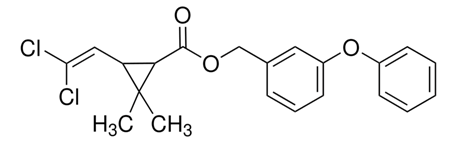
Permethrin
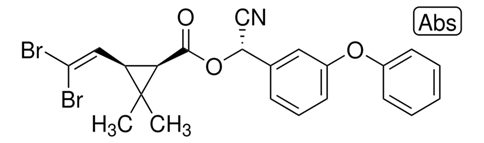
Deltamethrin
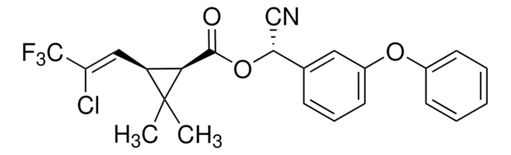
Lambdacyhalothrin
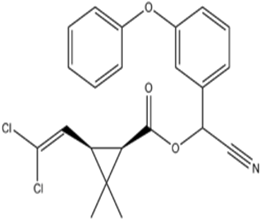
Alphacypermethrin
Annex 2: Clinical Emergency Pyrethroid
Main Risk
At very high doses, myoclonus, coma, and seizures are possible
Key points
- Large doses (several grams) must be ingested to produce a significant toxic effect.
- Solvents can contribute to the symptoms.
General Information
- Widely used and relatively non-toxic insecticides
- Pyrethrum is derived from Chrysanthemum
- Pyrethroids are produced through chemical synthesis
- Second- and third-generation derivatives are more insect-specific
Diagnostic elements
• During use
- Skin and mucous membrane irritation, conjunctivitis
- Skin and respiratory allergy
- Facial and lip paresthesia and loss of consciousness (for professional use)
• When high doses are ingested
- Initial digestive disturbances
- Dizziness, headaches
- Neuromuscular disorders: paresthesia, hyperexcitability, tremors, myoclonus, convulsions
- Altered consciousness: drowsiness to brief coma
Action to take
- Treatment of eye splashes
- Treatment of skin splashes
- The clinical benefit of activated charcoal has not been formally demonstrated. Its administration as a single dose (50 g for adults, 1 g/kg for children) should be early, ideally within one hour of ingestion.
- Symptomatic treatment
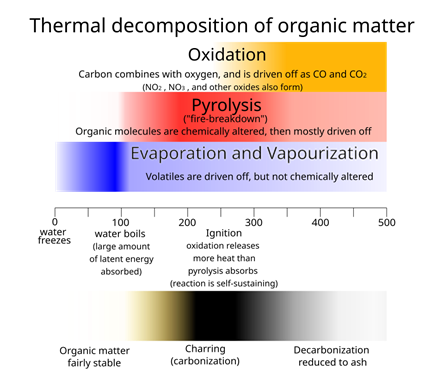
Principe of pyrolysis
Annex: 3
Annex: 4
Per- and polyfluoroalkyl substances (PFAS) are a large class of thousands of synthetic chemicals that are used throughout society. However, they are increasingly detected as environmental pollutants and some are linked to negative effects on human health.
They all contain carbon-fluorine bonds, which are one of the strongest chemical bonds in organic chemistry. This means that they resist degradation when used and also in the environment. Most PFAS are also easily transported in the environment covering long distances away from the source of their release. PFAS have been frequently observed to contaminate groundwater, surface water and soil. Cleaning up polluted sites is technically difficult and costly. If releases continue, they will continue to accumulate in the environment, drinking water and food.
What are PFAS
PFAS have a wide range of different physical and chemical properties. They can be gases, liquids, or solid high-molecular weight polymers. Some PFAS are described as long-chain or short-chain, but this does not cover all of the different kinds of structures that are present in the PFAS class, which is very diverse. PFASs can be sorted in many ways based on their structure. PFAS are widely used as they have unique desirable properties. For instance, they are stable under intense heat. Many of them are also surfactants and are used, for example, as water and grease repellents. Some of the major industry sectors using PFAS include aerospace and defence, automotive, aviation, food contact materials, textiles, leather and apparel, construction and household products, electronics, firefighting, food processing, and medical articles. Over the past decades, global manufacturers have started to replace certain PFAS with other PFAS or with fluorine-free substances. This trend has been driven by the fact that scientists and governments around the world first recognised the harmful effects of some PFAS (particularly long-chain PFAS) on human health and the environment. As the focus shifted to other PFAS, these have also been found to have properties of concern.
Concerns
The majority of PFAS are persistent in the environment. Some PFAS are known to persist in the environment longer than any other synthetic substance. As a consequence of this persistence, as long as PFAS continue to be released to the environment, humans and other species will be exposed to ever greater concentrations. Even if all releases of PFAS would cease tomorrow, they would continue to be present in the environment, and humans, for generations to come. The behaviour of PFAS in the environment means that they tend to pollute groundwater and drinking water, which is difficult and costly to remediate. Certain PFAS are known to accumulate in people, animals and plants and cause toxic effects. Certain PFAS are toxic for reproduction and can harm the development of foetuses. Several PFAS may cause cancer in humans. Some PFAS are also suspected of interfering with the human endocrine (hormonal) system. PFAS are released into the environment from direct and indirect sources, for example, from professional and industrial facilities using PFAS, during use of consumer products (e.g. cosmetics, ski waxes, clothing) and from food contact materials. Humans can be exposed to them every day at home, in their workplace and through the environment, for example, from the food they eat and drinking water.
Conclusions
It is now clear that current patterns of plastic production, use, and disposal are not sustainable and are responsible for significant harms to human health, the environment, and the economy as well as for deep societal injustices.The main driver of these worsening harms is an almost exponential and still accelerating increase in global plastic production. Plastics' harms are further magnified by low rates of recovery and recycling and by the long persistence of plastic waste in the environment.The thousands of chemicals in plastics-monomers, additives, processing agents, and non-intentionally added substances-include amongst their number known human carcinogens, endocrine disruptors, neurotoxicants, and persistent organic pollutants. These chemicals are responsible for many of plastics' known harms to human and planetary health. The chemicals leach out of plastics, enter the environment, cause pollution, and result in human exposure and disease. All efforts to reduce plastics' hazards must address the hazards of plastic-associated chemicals This could be considered as an important perspective of works in comprehensive studies where plastic made discarded nets must be taken into consideration, with other domestic waste, for their impact on human health if not quickly eradicated from human environment by radical and definitive method.
Author’s consent
The three authors had given their consent for this article and its publication
Funding
This work did not received any external support.
Competing Interest
There was not any competing interest in this study.
References
- World malaria report 2024: addressing inequity in the global malaria response ISBN 978-92-4-010444-0 (electronic version) ISBN 978-92-4-010445-7 (print version)
View at Publisher | View at Google Scholar - Bhatt S., Weiss DJ. , E. Cameron E., et al. (2015). The effect of malaria control on Plasmodium falciparum in Africa between 2000 and 2015. Nature; 526(7572): 207–211.
View at Publisher | View at Google Scholar - (2025). The Alliance for Malaria Prevention. Annual Report.
View at Publisher | View at Google Scholar - Hemingway J, Ranson H. (2000). Insecticide resistance in insect vectors of human disease. Annu Rev Entomol; 45:371-91.
View at Publisher | View at Google Scholar - Hemingway J, Field L, Vontas J. (2002). An overview of insecticide resistance. Science Washington.; 298(5591):96-7.
View at Publisher | View at Google Scholar - Hemingway J, Ranson H, Magill A, Kolaczinski J, Fornadel C, Gimnig J, et al. (2016). Averting a malaria disaster: will insecticide resistance derail malaria control? Lancet; 387(10029):1785-1788.
View at Publisher | View at Google Scholar - Ranson H, N’guessan R, Lines J, Moiroux N, Nkuni Z, Corbel V. (2011). Pyrethroid resistance in African anopheline mosquitoes: what are the implications for malaria control? Trends Parasitol; 27:91–98.
View at Publisher | View at Google Scholar - Ranson H, Lissende N. (2016). Insecticide resistance in African anopheles’ mosquitoes: a worsening situation that needs urgent action to maintain malaria control. Trends Parasitol; 32:187–196.
View at Publisher | View at Google Scholar - N'Guessan R, Corbel V, Akogbeto M, Rowland M. (2007). Pyrethroid treated nets and indoor residual spraying may no longer be effective against Anopheles gambiae in an area of pyrethroid resistance in Benin, West Africa. Emerg Inf Dis.; 13 (2):199-206.
View at Publisher | View at Google Scholar - N'Guessan R, Odjo A, Ngufor C, Malone D, Rowland M., (2016). A Chlorfenapyr Mixture Net Interceptor® G2 Shows High Efficacy and Wash Durability against Resistant Mosquitoes in West Africa. PLoS One; 11(11):e0165925.
View at Publisher | View at Google Scholar - Ngufor C, N'guessan R, Fagbohoun J, Odjo A, Malone D, Akogbeto M, et al (2014). Olyset Duo® (a pyriproxyfen and permethrin mixture net): an experimental hut trial against pyrethroid resistant Anopheles gambiae and Culex quinquefasciatus in Southern Benin. PLoS One; 9(4):e93603.
View at Publisher | View at Google Scholar - Ngufor C, N'Guessan R, Fagbohoun J, Todjinou D, Odjo A, Malone D, et al. (2016). Efficacy of the Olyset Duo® net against insecticide-resistant mosquito vectors of malaria. Sci Transl Med;8(356):121.
View at Publisher | View at Google Scholar - Tungu P, Magesa S, Maxwell C, Malima R, Masue D, Sudi W, et al. (2010). Evaluation of PermaNet® 3.0 a deltamethrin-PBO combination net against Anopheles gambiae and pyrethroid resistant Culex quinquefasciatus mosquitoes: an experimental hut trial in Tanzania. Malar J; 9:21.
View at Publisher | View at Google Scholar - Tungu P, Waweru J, Karthi S, Wangai J, Kweka E. (2021). Field evaluation of Veeralin®, an alpha-cypermethrin + PBO long-lasting insecticidal net, against natural populations of Anopheles funestus in experimental huts in Muheza, Tanzania. Curr Res Parasitol Vector Borne Dis; 1(100030).
View at Publisher | View at Google Scholar - Martin J, Mosha F, Lukole E, Rowland M, Todd J, Charlwood J, et al. (2021). Personal protection with PBO-pyrethroid synergist-treated nets after 2 years of household use against pyrethroid-resistant Anopheles in Tanzania. Parasit Vectors; 14(1):150.
View at Publisher | View at Google Scholar - Gleave K, Lissenden N, Richardson M, Choi L, Ranson H. (2018). Piperonyl butoxide (PBO) combined with pyrethroids in insecticide-treated nets to prevent malaria in Africa. Cochrane Database Syst Rev.; 11.
View at Publisher | View at Google Scholar - Ouorou R, Bohissou I , Kuessi P, Gay F. (2023). Estimation of the magnitude of plastic and chemical pollution related to the abandonment of insecticide treated nets in the environment: From a KAP survey conducted in Benin in. Travel Medicine and Infectious Disease 67 (2025) 102826
View at Publisher | View at Google Scholar - Carnevale P, Toto, JC., Foumane V, Carnevale S, Gay F. (2021). Co-Evolution of the Presence of Long-Lasting Insecticide Treated Nets and Plasmodium falciparum Welch, 1897 Prevalence in Cahata Village (Benguela Province, Angola) during a Village Scale Long-Term of Malaria Vector Control Program. Asian J Res Inf Dis; 7(4):21-32.
View at Publisher | View at Google Scholar - Carnevale P, Toto J, Foumane V, Manguin S. (2021). Influence of Partial and Full Coverage on Long Lasting Deltamethrin Treated Nets (“Δllin”) on Plasmodium falciparum Parasitaemia in 2 Villages around Balombo Town (Benguela Province, Angola). OAJBS J Biomed Sc; 4(6): ID.000340
View at Publisher | View at Google Scholar - Allouzi M, Tang D, Chew K, Rinklebe J, Bolan N, Allouzi S, Show P. (2021). Micro (nano) plastic pollution: The ecological influence on soil-plant system and human health. Sci Total Environ.;788:147815
View at Publisher | View at Google Scholar - da Silva Brito WA, Mutter F, Wende K, Cecchini AL, Schmidt A, Bekeschus S. (2022). Consequences of nano and microplastic exposure in rodent models: the known and unknown. Part Fibre Toxicol.;19(1):28.
View at Publisher | View at Google Scholar - Kumar R, Manna C, Padha S, Verma A, Sharma P, Dhar A, Ghosh A, Bhattacharya P. (2022). Micro(nano)plastics pollution and human health: How plastics can induce carcinogenesis to humans? Chemosphere.;298:134267.
View at Publisher | View at Google Scholar - Sangkham S, Faikhaw O, Munkong N, Sakunkoo P, Arunlertaree C, Chavali M, Mousazadeh M, Tiwari A. (2022). A review on microplastics and nanoplastics in the environment: Their occurrence, exposure routes, toxic studies, and potential effects on human health. Mar Pollut Bull.;181:113832.
View at Publisher | View at Google Scholar - Yang D, Zhu J, Zhou X, Pan D, Nan S, Yin R, Lei Q, Ma N, Zhu H, Chen J, Han L, Ding M, Ding Y. (2022). Polystyrene micro- and nano-particle coexposure injures fetal thalamus by inducing ROS-mediated cell apoptosis.Environ Int.;166:107362.
View at Publisher | View at Google Scholar - Zhang Q, He Y, Cheng R, Li Q, Qian Z, Lin X. (2022). Recent advances in toxicological research and potential health impact of microplastics and nanoplastics in vivo. Environ Sci Pollut Res Int.;29(27):40415-40448.
View at Publisher | View at Google Scholar - Ali N, Katsouli J, Marczylo EL, Gant TW, Wright S, Bernardino de la Serna J. (2024). The potential impacts of micro-and-nano plastics on various organ systems in humans. EBioMedicine.;99:104901.
View at Publisher | View at Google Scholar - Balali H, Morabbi A, Karimian M. (2024). Concerning influences of micro/nano plastics on female reproductive health: focusing on cellular and molecular pathways from animal models to human studies. Reprod Biol Endocrinol.;22(1):141.
View at Publisher | View at Google Scholar - Carvalho JGR, Augusto HC, Ferraz R, Delerue-Matos C, Fernandes VC. (2024). Micro(nano)plastic and Related Chemicals: Emerging Contaminants in Environment, Food and Health Impacts.Toxics.;12(10):762.
View at Publisher | View at Google Scholar - Qian N, Gao X, Lang X, Deng H, Bratu TM, Chen Q, Stapleton P, Yan B, Min W. (2024). Rapid single-particle chemical imaging of nanoplastics by SRS microscopy. Proc Natl Acad Sci U S A..;121(3):e2300582121.
View at Publisher | View at Google Scholar - Liang J, Ji F, Wang H, Zhu T, Rubinstein J, et al. (2024). Unraveling the threat: Microplastics and nano-plastics' impact on reproductive viability across ecosystems. Sci Total Environ.; 913:169525
View at Publisher | View at Google Scholar - Yuan Z, Nag R, Cummins E. (2022). Human health concerns regarding microplastics in the aquatic environment. From marine to food systems. Sci Total Environ.;823:153730.
View at Publisher | View at Google Scholar - Donisi I, Colloca A, Anastasio C, Balestrieri ML, D'Onofrio N. (2024). Micro(nano)plastics: an Emerging Burden for Human Health. Int J Biol Sci.; 20(14):5779-5792.
View at Publisher | View at Google Scholar - Zhu Y, Che R, Zong X, Wang J, Li J, Zhang C, Wang F. (2024). A comprehensive review on the source, ingestion route, attachment and toxicity of microplastics/nanoplastics in human systems. J Environ Manage; 352:120039.
View at Publisher | View at Google Scholar - Deng X, Gui Y, Zhao L. (2025). The micro(nano)plastics perspective: exploring cancer development and therapy. Mol Cancer; 24(1):30.
View at Publisher | View at Google Scholar - Anilbose KS, Johnson E , Varghese G. (2025). Critical review on microplastics in landfill leachate. Waste Manag Res; 734242X251350549.
View at Publisher | View at Google Scholar - Krishnendu S, Varghese G. (2025). Landfill liners as a source of microplastics: Do the guards guard themselves? J Environ Manage; 391:126522.
View at Publisher | View at Google Scholar - Dubey A, Thalla A. (2025). A comprehensive study on quantification and characterization of microplastics in compost, landfill-soil and leachate. Waste Manag Res; 43(11):1818-1826.
View at Publisher | View at Google Scholar - Fowzi M, Ebrahimpour K , Dehnavi A, Jamshidi S, Andaluri G. (2025). Microplastics as emerging contaminants in municipal solid waste compost: Distribution, characterization, and ecological risk. Environ Res; 284:122248.
View at Publisher | View at Google Scholar - Ullah S , Ahmad S, Guo X , Ullah S , Ullah S , Nabi G , Wanghe K. (2023). A review of the endocrine disrupting effects of micro and nano plastic and their associated chemicals in mammals. Front Endocrinol (Lausanne); 13:1084236.
View at Publisher | View at Google Scholar - Zhang Q, Yuan He Y, Cheng R, Li Q, Qian Z, Lin X. (2022). Recent advances in toxicological research and potential health impact of microplastics and nanoplastics in vivo. Environ Sci Pollut Res Int; 29(27):40415-40448.
View at Publisher | View at Google Scholar - Ali N, Katsouli J, Marczylo E, Gant T, Wright S, Bernardino de la Serna J. (2024). The potential impacts of micro-and-nano plastics on various organ systems in humans. EbioMedicine; 99:104901.
View at Publisher | View at Google Scholar - Landrigan PJ, Raps H, Cropper M et al. (2023). The Minderoo-Monaco Commission on Plastics and Human Health. Ann Glob Health.; 89 (1): 71.
View at Publisher | View at Google Scholar - Ramesh M, Bindu C, Mohanth S, Hema T. (2023). Efficiency of hematological, enzymological and oxidative stress biomarkers of Cyprinus carpio to an emerging organic compound (alphamethrin) toxicity. Environmental Toxicology Pharmacology,101, 104186.
View at Publisher | View at Google Scholar - Brander S, Gabler M, Fowler N, Connon R. (2016). Pyrethroid Pesticides as Endocrine Disruptors: Molecular Mechanisms in Vertebrates with a Focus on Fishes . Environ Sci Tech,; 50: 17, 8977–8992
View at Publisher | View at Google Scholar - Hermant M. (2014). Exposition aux pyréthrinoïdes en population générale adulte : mise en place d’une méthode d’évaluation des expositions externes en vue de la caractérisation des risques. Mémoire d'Ingénieur du Génie Sanitaire. Promotion; 80 p
View at Publisher | View at Google Scholar - Inserm. « Analyse des résultats de l’expertise collective de l’Inserm sur les effets des pesticides sur la santé [archive] », sur Anses - Agence nationale de sécurité sanitaire de l’alimentation, de l’environnement et du travail, 24 avril 2025
View at Publisher | View at Google Scholar - Zhiye Qi, Xiaoxiao Song, Xia Xiao et Kek Khee Loo, (2022). « Effects of prenatal exposure to pyrethroid pesticides on neurodevelopment of 1-year-old children: A birth cohort study in China. Ecotoxicology and Environmental Safety; 234, 113384.
View at Publisher | View at Google Scholar - Barr D, Olsson A, Wong LY, Udunka S. (2010). Urinary Concentrations of Metabolites of Pyrethroid Insecticides in the General U.S. Population: National Health and Nutrition Examination Survey 1999–2002, Environmental Health Perspectives, 118, 6, 742–748.
View at Publisher | View at Google Scholar - (2015). INSERM. « Impact de l'exposition environnementale aux insecticides sur le développement cognitif de l'enfant de 6 ans »,inserm.fr, .
View at Publisher | View at Google Scholar - (2021). INSERM., Pesticides et effets sur la santé : Nouvelles données. Collection Expertise collective, EDP Sciences, , 164 p.
View at Publisher | View at Google Scholar - Reyene H, Nadia M. La cytotoxicité, la génotoxicité et la perturbation endocrinienne par les pyréthrinoïdes (Doctoral dissertation, Université Larbi Tébessi-Tébessa). IUPAC, Compendium of Chemical Terminology, 5th ed. (the
View at Publisher | View at Google Scholar - Mamta D, Sachin R, Swati S. (2020). A comprehensive review of the pyrolysis process: from carbon nanomaterial synthesis to waste treatment. Oxford Open Materials Science; 1 (1) itab014.
View at Publisher | View at Google Scholar - (2025). Eastern Regional Research Center: Wyndmoor, PA. USDA.
View at Publisher | View at Google Scholar - Hafting F, Kulas D, Michels E, Chipkar S, Wisniewski S, Shonnard D, Pearce, Joshua M. (2023). Modular Open-Source Design of Pyrolysis Reactor Monitoring and Control Electronics. Electronics; 12 (24): 4893. .
View at Publisher | View at Google Scholar - Rollinson, A. (2018). Fire, explosion and chemical toxicity hazards of gasification energy from waste
View at Publisher | View at Google Scholar - Hedlund F. (2022). Inherent Hazards and Limited Regulatory Oversight in the Waste Plastic Recycling Sector Repeat Explosion at Pyrolysis Plant
View at Publisher | View at Google Scholar - Combustible Solid Waste Thermochemical Conversion. Springer Theses. 2017.
View at Publisher | View at Google Scholar - Zhou, Hui; Long, YanQiu; Meng, AiHong; Li, QingHai; Zhang, YanGuo. Thermogravimetric characteristics of typical municipal solid waste fractions during co-pyrolysis. Waste Management 2015; 38: 194–200.
View at Publisher | View at Google Scholar - Pandey U, Stormyr J, Hassani A, Jaiswal R, Haugen H, Moldesta B. Pyrolysis of plastic waste to environmental firendly products. WIT Transactions on Ecology and the Environment 2020; 246.
View at Publisher | View at Google Scholar - Geyer R, Jambeck J, Law, K. Production, use, and fate of all plastics ever made. Science Advances, 2017; 3(7), e1700782-e1700782.
View at Publisher | View at Google Scholar - Plastics Europe. www.plasticseurope.org/en/resources/market-data. 2019
View at Publisher | View at Google Scholar - Basu P. Biomass Gasification, Pyrolysis and Torrefaction: Practical Design and Theory, Elsevier: San Diego, 2013.
View at Publisher | View at Google Scholar - Carnevale G. Sinclair A. , Fouque F., Carnevale P. First trial of recycling used insecticide treated nets by pyrolysis for safer environment: The RINSE project . Travel Medicine and Infectious Disease 2025; 67, 102835.
View at Publisher | View at Google Scholar - Hénault-Ethier, L., Soumis, N., & Bouchard, M. (2016). Impacts des insecticides pyréthrinoïdes sur la santé humaine et environnementale: ce que l'on sait, ce qu'on ignore et les recommandations qui s'y rapportent. Équiterre
View at Publisher | View at Google Scholar