 Clinic
Research Article | DOI: https://doi.org/10.31579/2834-8389/051
Lesbian Sexual Behavior in Relation to STDs and HIV Infection*
1Riggs Pharmaceuticals Department of Pharmacy, University of Karachi, Pakistan.
2Pharmaceutical Inc OPJS University Rajasthan India
3Assistant Professor Department of Pathology Dow University of Health Sciences Karachi, Pakistan.
*Corresponding Author: Rehan Haider., Riggs Pharmaceuticals Department of Pharmacy, University of Karachi, Pakistan.
Citation: Haider R, Geetha Kumari Das, Zameer Ahmed, Sambreen Zameer., (2025), Lesbian Sexual Behavior in Relation to STDs and HIV Infection., International Journal of Clinical Case Reports, 4(6); DOI:10.31579/2834-8389/051
Copyright: © 2025, Rehan Haider. This is an open access article distributed under the Creative Commons Attribution License, which permits unrestricted use, distribution, and reproduction in any medium, provided the original work is properly cited.
Received: 01 December 2025 | Accepted: 10 December 2025 | Published: 24 December 2025
Keywords: Lesbian sexual behavior, sexually transmitted diseases (STDs), HIV infection, safe sexual practices, health disparities, sexual health education, LGBTQ+ healthcare, risk factors.
Abstract
Lesbian intercourse conduct is frequently seen as bearing a decreased danger of sexually transmitted illnesses (STDs) and HIV contamination prominent to heterosexuals or males sexually attracted to identical sex relationships. However, research shows that gay and bisexual girls aren't insensitive to these health risks. This observation looks into the dynamics of sex exercise between gay women concerning the printed of STDs and HIV. It climaxes risk factors to some extent monkey business accompanying bisexual or heterosexual guys, giving of sexuality toys without correct cleaning, and uncovering physical fluids all along sexual initiatives. The feature of present collective infections, in the manner that bacterial vaginosis and human papillomavirus (HPV), in amplifying susceptibleness to STDs is also discussed.
Notwithstanding these dangers, the dearth of cognizance of nicely-being instruction and healthcare aids for lesbian other halves frequently outcomes in beneath-defend and past-due diagnoses. This takes a look at emphasizes the want for inclusive sex well-being education that incorporates statistics on dependable practices, barrier structures, and habitual guard. It likewise explores the psychosocial determinants doing fitness-looking for conduct in gay cultures, along with shame, fear of bias, and lack of in regards to the welfare of mankind able healthcare carriers.
Addressing these issues requires collaborative efforts between public health authorities, healthcare providers, and advocacy groups to reduce barriers to care and improve health outcomes. The findings underscore the importance of inclusivity in sexual health policies and interventions tailored to the needs of diverse sexual orientations.
Introduction
The period “lesbian” derives from the Greek island of Lesbos, domestic to the well-known Greek poetess Sappho (c 600 BC), whose erotic tributes to each male and lady enthusiasts preserve to undergo a fresh translation into the twenty-first century.{1} The Oxford English Dictionary defines the period as each an adjective (“of a woman: gay, characterized by way of a sexual interest in other ladies. Additionally, of or about gay relations between women”) and a noun (“a girl homosexual”{.2} because of the noticeably wide implications of those definitions, the usage of the term in the scientific literature has given upward thrust to sizable debate and confusion. The period has been used variably, and frequently carelessly, to deliver information approximately each of 3 awesome axes of sexuality (orientation, conduct, and identification, discussed similarly below). Many authors (and readers) count on the use of this period to convey relevant facts approximately all three axes. This confusion has been compounded with the aid of a particularly massive assumption that girls who self-become aware as lesbians possibly do now not have a history of intercourse with men, and surely, are not still sexually lively with guys. Sadly, imprecise terminology, assumptions approximately sexual practices and previous sexual history, and standard lack of expertise on the complexity of women’s sexuality have all contributed to the relative loss of sophisticated, long-term facts about the sexual practices, possibilities, and history of a surprisingly diverse organization of ladies. Furthermore, it can be hard to evaluate statistics derived from studying this institution over the years, as applicable social and sexual mores (for instance, recognition of public dialogue of homosexuality in the popular media) can evolve hastily.{3}
To compound those demanding situations, the availability of the period “lesbian” has been tricky for researchers in search of a convenient and correct manner to refer to the population of girls who report intercourse with other girls. A few investigators have used the period to carry a description of sexual contact among ladies, leaving aside totally the query of whether topics identify as lesbian. Others have assumed that self-identification as a lesbian connotes current sexual practices with ladies. Some authors now use the term lesbian and bisexual ladies to (frequently vaguely) account for all possibilities, even as others have followed “ladies who have sex with women (WSW)” for studies that have emphasized effects centered on sexual behaviors (as a parallel to guys who have sex with men, or MSM). Using the term WSW has evoked several responses in the literature, from in keeping with laxity to hostility; a few have derided the term for its unwieldiness, “political correctness,” or insensitivity to the rich nature of sexual identification. {4,5} curiously, no such reaction become pronounced right now under the increasing number of widespread use of “MSM.” For ease of reference, on this bankruptcy we use the term lesbian as a feature of sexual conduct: to outline girls who've sex with other ladies. While appropriate, the period “bisexual” will be used to imply sexual conduct with males and females. When referring mainly to the axis of sexual identity, those terms may be prefaced with the word “self-diagnosed.”
Epidemiology Of Lesbian And Bisexual Behavior
Statistics to explain the population of women who exercise intercourse with different women, whether or not or now not they self-perceive as lesbian, are restrained for several motives. The challenges of terminology are mentioned above. Moreover, at the same time the social stigma associated with the disclosure of homosexuality has lessened markedly within the remaining two decades, many people can also still be reluctant to disclose these behaviors or emotions, even in the context of a supposedly anonymous or personal survey, for worry of exposure and bad results. This can be particularly genuine for lesbians who live outdoors of primary city regions, that have historically provided a relative haven for homosexual humans. severely, lesbians have been invisible in the information accrued as part of the country-wide ailment surveillance systems and essential countrywide women’s health research. The ladies’ fitness Initiative did no longer begin to gather statistics on equal-sex behavior or sexual identity in 1998, and the Nurses’ fitness observation started to accomplish that in 1995{.6} these omissions allowed the loss of valuable opportunities to prospectively compare vital long-term fitness outcomes for lesbians and heterosexual ladies. seriously, amongst 350 subjects participating in a pilot questionnaire to check disclosure of sexual orientation and response charges in the Nurses’ Health Study II, disclosure fees had been similar to the 91,654 subjects collaborating inside the larger cohort take a look at; the investigators' conclusion that questions on sexual orientation may be brought to big studies of girls without affecting reaction fees{.7}
In 2000, the U.S. Census for the first time accrued and stated facts referent to families in which two unmarried adults reported having the identical intercourse and had a near personal courting with each different.{8} although those statistics do no longer specially cognizance of sexual behavior, they seasoned video an oblique and necessarily incomplete window into the prevalence of women who cohabitate. With information enumerated from 105.5 million families within the United States of America, 297,061 ladies indicated that they have been unmarried partners living in same-sex households at the time of the survey. other investigators finally indicated that this cost can also underestimate the overall population of lesbians living in same-intercourse families by as lots as 72%.{9} Importantly, 15% of all (male and girl) cohabitating identical-sex couples who spoke back to the census resided in rural settings. As stated by using O’Hanlon, if one assumes a prevalence of 2% of lesbians many of the 146,707,720 adult ladies are estimated to live in the United States by these census facts, the U.S. population of lesbians are approximately three million.{10} this range is near the 23. Million U.S. ladies previously expected to pick out as lesbians.{11}Aaron and associates employed a technique used in estimating numbers of uncommon wildlife species to get at the population estimation trouble in a distinctive way.{12} the use of identifying statistics for a county in Pennsylvania and a “seize–recapture” technique with log-linear modeling, they predicted that lesbians comprised 1.87% (95% CI, 1.56–2.28%) of the entire county population. Different investigators have used location probability sampling, facilitated using the U.S. Census tracking, to decorate the proportion of lesbian respondents in the methodologic confines of a population-based total approach.{13}
Only a few massive-scale surveys in which sexual conduct became in particular assessed have pronounced on the frequency or nature of equal-intercourse conduct amongst girls, or assessed measures of self-identity as lesbian. Those who have accomplished so have employed one-of-a-kind recruitment methodologies and, critically, have requested applicable questions in unique ways. Directly comparing findings from exceptional surveys is further complex with the aid of the reality that massive temporal gaps frequently exist between them. Those gaps may also have commanded main shifts in social norms concerning gay cities, which extensively impact practices approximately disclosure.
For instance, the National Fitness and Social Existence Survey, an area opportunity pattern of 3432 U.S. adults elderly 18–59 interviewed in 1992, that 4.3% of girls surveyed stated identical-gender intercourse seeing that puberty and that 8.3?monstrated at least one of the three components of homosexuality: preference, identification, or conduct.{14} The investigators that examined interviewed subjects face-to-face. extra recently, investigators mentioned findings from the National Survey of Family Boom (NSFG), which acquired files of sexual conduct through the usage of audio computer-helped self-interviewing (A-CASI) in a country-wide pattern of 12,571 women and men inside the household populace of the United States.{15} As certain in Table 14-1, in 2002, amongst ladies 15–44 years old, the share reporting equal-sex behavior at some stage in their lifetime changed to 11% and, during the remaining 12 months, 44 %. curiously, among ladies 18–44- years-antique, of the 10% who did now not think about themselves as heterosexual, the breakdown changed into 1.3% “gay,” 2.8% “bisexual,”3.8% “something else,” and 1.8% without a solution. The reality is that the general public of ladies who no longer classify themselves as heterosexual referred to themselves “something else,” and that this class changed into citing plenty less often via nonheterosexual male respondents than by using the corresponding woman group, emphasizes the want for in addition study concerning studies on ladies’s self-described sexual identification. The NSFG probabilities translate to 2.29 million U.S. ladies 18–44 years of age who self-identify as both gay and bisexual. Findings from a huge population-primarily based survey of sexual conduct in adults inside the United Kingdom has currently been mentioned.{16} The countrywide Survey of Sexual Attitudes and lifestyles (NATSAL) 2000 examination became an opportunity sample survey of 1161 respondents aged sixteen–44 years who have been resident in Britain, with intentional oversampling of London citizens.{17} Respondents had been interviewed via CASI for the sexual records part of the evaluation, and “WSW” became For instance, the National Fitness and Social Existence Survey, an area opportunity pattern of 3432 U.S. adults elderly 18–59 interviewed in 1992, that 4.3% of girls surveyed stated identical-gender intercourse seeing that puberty and that 8.3?monstrated at least one of the three components of homosexuality: preference, identification, or conduct.14 The investigators that examined interviewed subjects face-to-face. extra recently, investigators mentioned findings from the National Survey of Family Boom (NSFG), which acquired files of sexual conduct through the usage of audio computer-helped self-interviewing (A-CASI) in a country-wide pattern of 12,571 women and men inside the household populace of the United States.15 As certain in Table 14-1, in 2002, amongst ladies 15–44 years old, the share reporting equal-sex behavior at some stage in their lifetime changed to 11% and, during the remaining 12 months, 44 %. curiously, among ladies 18–44- years-antique, of the 10% who did now not think about themselves as heterosexual, the breakdown changed into 1.3% “gay,” 2.8% “bisexual,”3.8% “something else,” and 1.eight% without a solution. The reality is that the general public of ladies who no longer classify themselves as heterosexual referred to themselves “something else,” and that this class changed into citing plenty less often via nonheterosexual male respondents than by using the corresponding woman group, emphasizes the want for in addition study concerning studies on ladies’s self-described sexual identification. The NSFG probabilities translate to 2.29 million U.S. ladies 18–44 years of age who self-identify as both gay and bisexual.
Findings from a huge population-primarily based survey of sexual conduct in adults inside the United Kingdom has currently been mentioned.16 the countrywide Survey of Sexual Attitudes and lifestyles (NATSAL) 2000 examination became an opportunity sample survey of 11, 161 respondents aged 16–44 years who have been resident in Britain, with intentional oversampling of London citizens.17 Respondents had been interviewed via CASI for the sexual records part of the evaluation, and “WSW” became described liberally as any female reporting as a minimum one girl sex partner in the past 5 years. Of all female respondents, 4.9% stated any same-intercourse experience related to genital touch, with 2.8% reporting that this had occurred in the ultimate yr. By other surveys, the maximum of the WSW as a consequence defined (9.8%) pronounced earlier sex with guys, with 85% reporting that this had happened in the beyond five years. Even though the records above are incomplete and do now not provide an in-intensity picture of the genuine occurrence of same-intercourse conduct among ladies, the maximum latest estimates are noticeably steady, indicating that approximately 2–2.8% of the grownup U.S. and UK populations can be lesbian. Apart from the overall caveats concerning the conclusions of these surveys, it's far critical to emphasize that making sure a consultant populace-primarily based sample may additionally nevertheless not obviate variability in effectively eliciting disclosure of equal-sex behavior from women of various cultures an described liberally as any female reporting as a minimum one girl sex partner in the past 5 years. Of all female respondents, 4.9% stated any same-intercourse experience related to genital touch, with 2.8% reporting that this had occurred in the ultimate yr. By other surveys, the maximum of the WSW as a consequence defined (ninety eight%) pronounced earlier sex with guys, with 85% reporting that this had happened in the beyond five years. even though the records above are incomplete and do now not provide an in-intensity picture of the genuine occurrence of same-intercourse conduct among ladies, the maximum latest estimates are noticeably steady, indicating that approximately 2–2.8% of the grownup U.S. and UK populations can be lesbian. Apart from the overall caveats concerning the conclusions of these surveys, it's far critical to emphasize that making sure a consultant populace-primarily based sample may additionally nevertheless not obviate variability in effectively eliciting disclosure of equal-sex behavior from women of various cultures and
| Characteristic | Number (in Thousands) | Lifetime (%) | Last Year (%) |
|---|---|---|---|
| All respondents (15–44 years) | 61,561 | 11.2 | 4.4 |
| Age (years) | |||
| 15–19 | 9,834 | 10.6 | 7.7 |
| 20–24 | 9,840 | 14.2 | 5.8 |
| 25–44 | 41,887 | 10.7 | 3.4 |
| 25–29 | 9,249 | 14.1 | 3.6 |
| 30–34 | 10,272 | 9.1 | 3.0 |
| 35–39 | 10,853 | 12.3 | 4.5 |
| 40–44 | 11,512 | 7.8 | 2.4 |
| Residence | |||
| Metropolitan, central city of 12 largest MSAs | 8,538 | 14.1 | 5.6 |
| Metropolitan, central city of other MSAs | 14,082 | 12.7 | 5.2 |
| Metropolitan, suburb of 12 largest MSAs | 13,981 | 9.6 | 4.5 |
| Metropolitan, suburb of other MSAs | 14,079 | 11.4 | 3.8 |
| Nonmetropolitan | 10,880 | 8.9 | 3.3 |
Table 14-1: Number of Females Aged 15–44 Years and Percentage Reporting Any Same-Sex Sexual Contact in the Year Prior to Interview and in Lifetime, by Selected Characteristics (National Survey of Family Growth, U.S., 2002)
Source: Adapted from Mosher WD, Chandra A, Jones J. Sexual behavior and selected health measures: Men and women 15–44 years of age, United States, 2002. National Center for Health Statistics, Advance Data, Vol. 362, 2005.
Ethnicities within the large populations, and from adolescents.{18} the probability of reporting touchy behaviors scubas sexual practices could be markedly changed using membership in some of these organizations. For example, the evaluation of 8 college-based adolescent fitness surveys in America and Canada from 1986 through 1999 found that no response fees for questions on sexual orientation (however no longer for different similar variables) were better for younger College students, immigrants, and college students with gaining knowledge of disabilities.{19} In a related analysis, self-records of both sexual orientation and sexual behavior found a drastically higher prevalence of homosexual, bisexual, and uncertain responses among 12,978 reservation-primarily based American-Indian adolescents as compared to eleven,356 Anglo-American teens, however, the nonresponse fee for these questions became additionally significantly higher for many of the former organization.{20} In addition, no systematically collected information on same-intercourse conduct is to be had from girls in non-Western or developing international locations. Opportunity tactics may be required to fully symbolize the spectrum of equal-sex conduct among women of numerous ethnic backgrounds and geographic regions, particularly because fitness consequences themselves are possibly adversely tormented by “dual” minority reputation (race and sexual orientation).{21}
Sexual Identity, Risk Behaviors, And Pregnancy-Related Outcomes Among Wsw
In all published research that has queried lesbians approximately their lifetime sexual records, most of the people of respondents (generally between 80% and 95%) file previous sex with as a minimum one male companion and frequently report volatile sexual behaviors. Diamant and colleagues surveyed 6935 self-recognized lesbians solicited through a survey printed in the recommend, a national information magazine aimed toward homosexual guys and lesbians. Most of the people of ladies (77.3%) pronounced one or greater lifetime male sex element need, with 17.2% reporting ever having had anal intercourse and 5.7% reported having had a male sex partner at some stage in the beyond year.{22} Sexual pastimes with male partners probably start off evolved in early life.{23} women kids who have sex with other females can be specifically in all likelihood to engage in unprotected sex with each male and lady partner or to document sexual abuse.{24,25} amongst 182 self-diagnosed bisexual or homosexual adolescents in a single study, ladies younger than 15 years had been more likely than their older opposite numbers to file an in-advance age at onset of sexual sex with men.{26} In a subsample of 3816 students who finished the 1987 Minnesota Adolescent Health Survey, bisexual or lesbian respondents were as in all likelihood as heterosexual ladies ever to have had integration (33% and 29%, respectively), but said a significantly higher occurrence of being pregnant (12%) and bodily or sexual abuse (19–22%) than heterosexuals or adolescents who have been “unsure” about their sexuality.{27} Among sexually experienced respondents, bisexual or lesbian respondents were the most probably to have frequent intercourse (22%, as compared with 15–17% inside the different corporations). amongst all who were sexually experienced and those who had ever been pregnant, bisexual or lesbian girls had been the maximum likely to have engaged in prostitution at some stage in the preceding year.27 thus, many lesbians document lifetime reproductive results such as being pregnant, childbirth, and brought on abortion.
The lifetime incidence of said being pregnant within the few research that has addressed this trouble tiers from 23% to 35%.{28–30} amongst participants within the women's fitness Initiative, ever use of oral contraceptives became similar between lesbians and heterosexual women, and 35% pronounced ever having been pregnant. 29 among 392 lesbians who participated in the Seattle Lesbian health take a look at (1998–2001; median age of all topics, 28 years), reviews of prior pregnancy, oral contraceptive use, and precipitated abortion had been commonplace.30 standard, 25% of girls were pregnant at least as soon as and 16% had had an abortion. Over 1/2 of all topics had used oral contraceptives (imply period, 40 months). Most of the people of women (63%) who had ever been pregnant had had at least one abortion. One-fifth of the subjects who were especially self-diagnosed as lesbian were pregnant at a minimum once, 12% had had a precipitated abortion, and nearly half had ever used oral contraceptives. The most unusual pregnancy outcome for girls who have become pregnant at an age much less than 25 years was abortion, which came about in 59% of those pregnancies. Of related significance, the range of reported lifetime male sex partners did now not fluctuate by using whether women identified as lesbian Or bisexual. The general age-adjusted rate of abortions corresponded to the envisioned fee reported for U.S. women ordinary within the NSFG.31 the authors concluded that self-identification as lesbian did not constantly avoid prior use of oral contraceptives or pregnancy-related effects, with the implication that companies must address these troubles with all grownup girl sufferers, irrespective of stated sexual identification or behavior. These findings may be particularly for clinicswith a traditional “family planning” consciousness, as these might also servebecause the number one entry point of take care of many lesbians, particularly people with limited resources. finally, lesbians who are also currently sexually lively with men can also, in some settings, reveal increased sexual threat-taking behavior.32 among ladies attending STD clinics, reports of intercourse with ladies as well as with men have been associated with a markedly improved occurrence of HIV-associated hazard behaviors, together with sex with homosexual or bisexual men, use of injection tablets and crack cocaine, and a change of sex for drugs or money.33–35 Inside the 1997 university Alcohol take a look at, comprised of 14,251 randomly selected U.S. university students, ladies reporting intercourse with both women and men were more probably to report more than one sex partner than peers with the handiest opposite-intercourse companions.36 In a large, go-sectional, community-based take a look at sociometric networks among intravenous drug users, Friedman found that a file of same-intercourse behavior by using female respondents changed into associated with a twofold increase in the likelihood of HIV infection.37 Koh efficiently recruited 1304 lesbians from 33 outpatient primary care settings throughout the US 38 to enhance the study population with lesbians, the investigators used a sampling scheme that took into consideration the share of lesbian patients (>30% as anticipated with the aid of lead clinicians) served using contributing sites. They used an extensive questionnaire (98 system) with properly reaction charge (>50%). Respondents were commonly white, quite educated, and had fantastically high profits. Although most had been in a solid dating (71%), and many (23%) reported substance use while having intercourse or sex with a homosexual or bisexual guy (6%) within the past 12 months. Among women who these days had intercourse with men (N = 600), fifty one% stated ever using condoms. Bisexual ladies stated substance use for the duration of sex at a higher rate than lesbians or heterosexual ladies. Whilst lesbians greater often suggested sex with bisexual guys and injection drug customers, in addition, they reported using condoms more frequently than did bisexual or heterosexual girls. significantly, lesbians who participated believed that their chance for HIV contamination was high, but few stated ever having had checks for non-HIV STDs are drastically much more likely than HIV contamination in this organization. Why have been lesbians using chance reduction measures? Proximity to the problem of HIV/AIDS within the MSM community can also inform this preference (although this could no longer be constant with the inverse relationship between age and report of condom use in this subgroup). It can also relate to lesbians’ preference for MSM as partners when they select to have sex with men. Of first-rate interest is that amongst women who mentioned intercourse with men within the prior 12 months, lesbians recorded a higher range of male intercourse companions than either heterosexual or bisexual ladies. This locating becomes modified by using age, with younger ladies tending to record this conduct greater generally. The records amassed on heterosexual women’s condom use are valuable due to the paucity of statistics for women whom most primary care companies may categorize. As “low danger”; variations within the frequency of condom use by profits and age in heterosexual ladies deserve further scrutiny. inside the United Kingdom a number of the findings on risk behaviors from the NATSAL 2000 take a look at were unexpected. 16 First, -one-third of woman respondents pronounced the handiest one lady partner in the past 5 years and 42% of WSW (as defined on this observation, defined above) did no longer file any girl partners in the past year. 2nd, relative to completely heterosexual ladies respondents, WSW mentioned drastically large numbers of male partners within the beyond 5 years (Fig. 14-1), ever, and in the past 12 months (all P < 0.001). 1/3, relative to completely heterosexual ladies, WSW reporting male partners had been significantly much more likely to record doubtlessly excessive-threat heterosexual behaviors inclusive of anal intercourse (AOR (age-adjusted odds ratio for WSW relative to ladies reporting exclusively heterosexual companions) 2.46 [95% CI 1.58–3.85, P < 0.001]), maximum current accomplice, described as “not regular” (AOR 1. 74[95% CI 1.07–2.82, P = 0.02]), starting up intercourse less than 24 hours after meeting the maximum latest accomplice (AOR 2.48 [95% CI 1.44–4.27, P = 0.001]), and unsafe intercourse ( or more heterosexual partners within the past four weeks with inconsistent condom use; AOR 7.17 [95% CI 3.25–15.8, P < 0.001]). WSW respondents were significantly more likely to record in search of care at an STD clinic, get an HIV test, be recognized with any STD, and having had a brought-on abortion (P < 0.001 for each relative to heterosexual respondents). Even as some of those findings boost questions about the character of the WSW respondent population, and the generalizability of the examination’s findings, they do spotlight the marked variety inside companies of women who engage in equal-intercourse conduct.
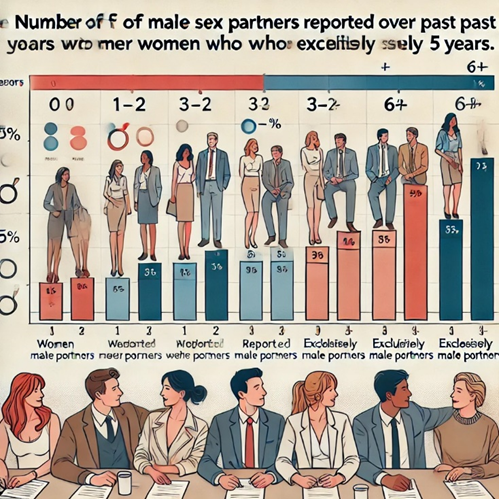
ultimately, French investigators used statistics from a national telephone survey that targeted domestic violence in France in 2000 to evaluate female respondents who reported at least one lady sex partner (N = 78) to heterosexual girls (N = 6332).39 Lesbians on this survey pronounced a more youthful age at sexual debut, a better quantity of lifetime male partners, the greater common file of STD diagnoses and prior HIV testing, and, importantly, greater often experiencing domestic violence as adults.
Epidemiology Of Stds And Hiv Infection Among Wsw
Despite the great number of girls who have interacted in identical-intercourse conduct, tremendously little data are available on health effects related to STD, or to the attributable chance of STDs from sexual practices wherein lesbians have interaction. In its 1999 record “Lesbian Health: Current Evaluation and instructions for the future,” the Institute of Medication emphasized that greater facts on STDs, Pap smear screening, and threat of cervical cancers in lesbians had been needed.11 tries to apply country-wide or neighborhood surveillance information to estimate the chance of STD transmission among ladies is restricted by the reality that virtually all risk-type schemes have either excluded equal-gender intercourse amongst ladies or subsumed it below a hierarchy of different behaviors considered as a better threat. Furthermore, few if any national or local STD reporting structures robotically collect information on identical-sex behavior among ladies. The available information is derived from sources: small studies that have at once measured the prevalence of common STDs, usually amongst sanatorium attendees or self-referred look at volunteers, and surveys that have queried lesbians approximately their self-suggested STD records. lots of those studies have additionally assessed lesbians’ self-record of sexual practices. Taken as an entire, these statistics—restricted as they are—suggest that the danger of STD transmission between girls depends on two main factors: (1) the particular STD under consideration and (2) the sexual practices wherein lesbians have interaction. a few sexual practices, which include oral-genital intercourse, vaginalor anal sex the usage of hands, arms, or penetrative intercourse toys, and oral–anal intercourse, is practiced generally among woman's sexpartners (table 14-2).35,40,41 Oral intercourse, mainly, appears to be extraordinarily not unusual, and is probably practiced more frequently than among heterosexual girls. other sexual practices include virtual–vaginal or digital–anal contact, particularly with shared penetrative intercourse toys. Those sexual practices present an attainable method for the transmission of infected cervicovaginal secretions, even though the frequency of tranventure related to these practices isn't properly documented. Transmission of not unusual viral STD, particularly human papillomavirus (HPV) and herpes simplex virus (HSV), and of Treponema pallidum, the causative agent
Practice | Description & Vernacular Terms | Estimated Frequency | Factors Modifying Risk of STD |
|---|---|---|---|
| Oral–vulvovaginal contact | “Going down” (cunnilingus) | Very common (>95%) | Presence of oral lesions in the performing partner (e.g., herpes, syphilis, possibly gonorrhea) (+); use of barriers (e.g., dental dams, plastic wrap) (–) |
| Digital–vaginal contact | “Finger-fucking” to “fisting” | Very common (>85%) | Sharing of infected cervicovaginal secretions (trichomoniasis, C. trachomatis, gonorrhea, HPV, herpes) (+); use of gloves (–) |
| Digital–anal contact | “Finger-fucking” to “fisting” | Common (25%) | Sharing of infected anorectal secretions (hepatitis A, enteric pathogens, gonorrhea, HPV, herpes) (+); use of gloves (–) |
| Insertive sex objects | Toys, dildos (vagina or anus) | Very common vaginally (60%); Common anally (25%) | Sharing of infected cervicovaginal or anal fluids (trichomoniasis, C. trachomatis, gonorrhea, HPV, herpes) (+); use of condoms with sex toys (–) |
| Oral–anal contact | “Rimming” | Common (35%) | Oral infections in the performing partner (syphilis, genital herpes) (+); anorectal infections in the receiving partner (hepatitis A, enteric pathogens) (+); use of barriers (–) |
| Direct genital-to-genital contact | Tribadism | Very common (>95%) | Direct contact of susceptible skin/mucosa (HPV, herpes, syphilis) (+); use of interposed devices like vibrators can cause mechanical vulvar irritation |
| Sadomasochism | Bondage, “BDSM” | Unknown; probably uncommon (<2> | Sharing of blood (hepatitis B, hepatitis C, HIV) (+) |
Table 14-2: Sexual Practices Among Lesbians: Frequency and Associated STD Risk
Plus sign (+) designates the determinant likely to improve the risk of STD broadcast or purchase; minus sign (–) designates the determinant with credible securing effect. n 1).42 Even though self-document of STD records frequently incurs a fee (as is the attribution of STD to a particular source companion), those statistics suggest that at the same time as transmission of some STDs is fairly inefficient between women's sex partners, these respondents sought care for perceived genitourinary abnormalities and acquired an analysis that indicated the provider had cause to suspect a particular STD.
Genital Human Papillomavirus
Genital contamination with particular forms of HPV causes genital warts and most people of cervical cancers. Similar to case reviews, 43,44 research that enrolled self-referred lesbians in Seattle have deteScted HPV DNA using PCR-based methods in 13–30% of topics.4045 In each of these research, samples received from the cervix, vagina, and vulva all demonstrated HPV DNA and no person's anatomic site accounted for the majority of infections. Among a hundred and fifty ladies in the earlier of those research (1995–1997), HPV DNA changed into the present in 30% of all topics and 19% pronounced no previous se with men.40 In multivariate analysis, modern-day but not earlier cigarette smoking turned into an impartial predictor of the presence of HPV DNA (OR 3.4; 95% CI, 1.2, nine.6), as became time to have sex with a male associate (P = 0.002). Among all subjects with detectable HPV DNA, 29 (69%) had unclassified sorts most effective, 9 (21%) had HPV-31/33/35/39, eight (19%) had HPV-16, and 1 (2%) had HPV-6/11. 28 (62%) of those girls had HPV DNA detected in the specimens acquired from the cervix, 26 (fifty eight%) from the vagina, and 32 (seventy one%) from the vulva; 24 (50% had HPV DNA in specimens from more than one site. Of the 41 women with HPV DNA who pronounced earlier intercourse with guys, 21 (51%) no longer had intercourse with a male partner in over a year (range, 1–18 years; median, 2 years). In their sexual practices with girl companions, ladies who had detectable HPV DNA did not vary from people who had no detectable HPV DNA. With male componentneed, women with detectable HPV DNA had been much more likely to file a history of receptive oral sex (P = zero.05). In the subsequent Seattle Lesbian Health Look at (1998–2001), HPV DNA changed into measured in 248 ladies and detected in 31 (13%), which includes 7 with HPV kind sixteen and 15 with different oncogenic types.45 12 (39%) had non-oncogenic kinds (6/eleven, 40/42/53/54). The various 28 women with HPV DNA who said prior sex with men, 14 (50%) had now not had intercourse with a male accomplice in over 12 months (range, 1–eleven years; median, 2 years).
capture enzyme-related immunosorbent assay (ELISA) was used in the earlier study to measure kind-precise antibodies to HPV and 47% of 133 topics had been seropositive for antibodies to HPV-16 and 62% for HPV-6; 54r% had antibodies to both 40 among 19 subjects reported by no means having had sex with a person, 5 (26%) had antibodies to HPV-16and 8 (42%) had antibodies to HPV-6. Antibodies to HPV-6 or -16 have been detected in 8 (42%) of 19 women reporting no previous intercourse with guys and in 84 (74%) of 114 women reported previous intercourse with guys. subjects who were seropositive to both HPV-6 or HPV-sixteen have been older than seronegative topics (mean age, 34 years vs. 30 years, respectively; P = 0.01), but did no longer fluctuate notably from seronegative subjects in time to final intercourse with a male companion, lifetime wide variety of male or girl partners, or detection of HPV DNA.
Importantly, each excessive- and occasional-grade squamous intraepithelial lesions (SIL) have been detected on Pap smear testing in each of these studies, such as among women who mentioned no previous sex with guys. Within the first examination, 13 of the 150 subjects (6% of all subjects) had odd Pap smears. 3 of these women suggested no records of sex with men and 3 said having had lady sex companions with genital warts. SIL changed into detected in 2 of 21 women (10%) who had by no means had intercourse with men, in 2 (2%) of 93 ladies who had had intercourse with a person >1 year previously, and in 2 (6%) of 35 women who said sex with guys during the last year (no longer enormous). HPV DNA turned into came across in five of the 6 girls with SIL; HPV type 31/33/35/39 turned into observed in both instances of SIL that occurred in girls without records of intercourse with men. Among 248 women enrolled in the second one looks at, 7 of the 11 SIL detected that took place in women who mentioned by no means having had sex with guys, or sex with men >1 12 months formerly. Twenty-five girls (10% of all topics) had bizarre Pap smears. 4 girls had excessive-grade and 7 had low-grade SIL detected; 7 of these lesions occurred in women who pronounced both never having had sex with guys or intercourse with guys more than one year before checking out. HPV DNA was detected in 7 of the 11 women with SIL (HPV-sixteen in 3 women and other oncegenic types in four women). In a huge study reporting Pap smear information for lesbians and heterosexual controls in an STD sanatorium in Melbourne, odd Pap smears took place equally often in both organizations.35
There are fewer facts available for the clinical prognosis of genital warts among lesbians, however, this situation has been pronounced among lesbians who denied previous sex with men in several research, often from STD clinics.46 In STD clinics which have stated data from lesbian customers, an analysis of genital warts became especially unusual in London, arising in 1.6% of 708 lesbians,47 however greater common in Melbourne (8% of 1408 lesbians) (Table 14–3).35 whilst genital HPV and associated conditions are not unusual among ladies who report growing numbers of lifetime male sex companions, the facts above, and the reality that SIL has been found in ladies who pronounced no prior intercourse with guys imply that high-danger and coffee-danger genital HPV sorts are sexually transmitted among ladies and lesbians must undergo Pap smear screening the use of Modern Kingdome recommendations, as endorsed in the 2006 Sexually
| Variable | Lesbians (N=1408) | Heterosexual Women (N=1423) | OR (95% CI) | P |
|---|---|---|---|---|
| Median age, years (range) | 27 (14–78) | 26 (16–56) | — | — |
| Bacterial vaginosis | 111 (8%) | 69 (5%) | 1.7 (1.2–2.3) | 0.001 |
| Genital warts | 106 (8%) | 158 (11%) | 0.7 (0.5–0.9) | 0.001 |
| Genital herpes | 133 (9%) | 136 (9%) | 0.95 | — |
| Gonorrhea | 4/958 (<1> | 7 (<1> | 0.39 | — |
| Chlamydia | 28/830 (3%) | 31/747 (4%) | 0.34 | — |
| Hepatitis C | 73 (5%) | 10 (<1> | 7.7 (3.9–16.0) | <0> |
| Hepatitis B | 73 (5%) | 36 (3%) | 2.1 (1.4–3.2) | <0> |
| HIV | 5 (<1> | 3 (<1> | 0.51 | — |
| Abnormal Pap smear | 69/356 (19%) | 28/286 (20%) | 0.78 | — |
| Past history of STD | 616 (44%) | 459 (32%) | 1.6 (1.1–2.0) | <0> |
| Sex with gay or bisexual male (ever) | 206/1347 (15%) | 68/1343 (5%) | 3.4 (2.5–4.6) | <0> |
| Sex with heterosexual man with multiple partners (ever) | 273 (19%) | 244 (17%) | 0.13 | — |
| Sex with injecting drug user (ever) | 288/1353 (21%) | 81/1346 (6%) | 4.2 (3.2–5.5) | <0> |
| Injecting drug use (ever) | 316/1398 (23%) | 49/1387 (4%) | 8.0 (5.6–11.3) | <0> |
| Current sex work | 235/1089 (22%) | 114/1061 (11%) | 2.3 (1.8–2.9) | <0> |
| Termination of pregnancy (ever) | 537 (38%) | 380 (27%) | 1.7 (1.4–2.0) | <0> |
Table 14-3: Demographics, STD Detection, and Risk Behaviors Among Lesbians and Heterosexual Control Women at a Sexual Health (STD) Clinic in Melbourne, Australia
Key Notes:
Lesbian Definition: Women the one stated ever bearing had sexuality accompanying another woman.
Heterosexual Controls: Women the one stated never bearing had sexuality with another mother.
A reside reasoning of 283 women newsgathering sexuality particularly with mothers in the period superior to clinic visit recorded that this subgroup showed an analogous risk behavior characterization to all lesbians, except that a considerably taller likelihood of newsgathering >50 period male sexuality partners (4% vs. 2%; OR 2.8, P = 0.003).
References: Fethers K, Marks C, Mindel A, Estcourt CS. Sexually communicated contaminations and risk conducts in women the one has sex with different partners accompanying women. Sex Transm Infect. 2000;76:345–349.
OR (Odds Ratio): >1: Indicates taller probability in the gay group. <1: Indicates lower advantage in the lesbian group. 95% CI: Confidence break.
P: Probability advantage displaying statistical importance. Transmitted sickness treatment guidelines from the Centers for Disease and Prevention.48
Genital Herpes
Most of the people of genital herpes results from HSV kind-2 (HSV-2), even though current reviews indicate a steady fashion towards greater HSV-1-associated genital ailment.49 using the Western blot assay to hit upon type-unique antibodies amongst 392 girls in the Seattle Lesbian fitness look, antibodies to HSV-1 had been detected in 46% and to HSV-2 in 8% (Fig. 14-2).50 HSV-1 seroprevalence elevated notably with increasing quantity of female companions (Fig. 14-3; additionally discussed under). Increasing age expected higher seroprevalence to both HSV types and HSV-2 seropositivity turned into related to a recorded record of having had a male partner with genital herpes (however no longer with the earlier number of male intercourse companions). Of 78 girls reported no prior intercourse with guys, 3% were HSV-2 seropositive. Seropositivity to HSV-2 was also associated with record of prior trichomoniasis, gonorrhea, and pelvis
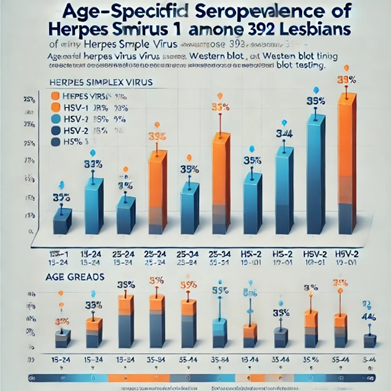
Figure 14-2: Age-specific seroprevalence of herpes simplex virus types 1 and 2 among 392 lesbians tested in 1998–2001 by Western Blot. (With permission from Marrazzo JM, Stine K, Wald A. Prevalence and risk factors for infection with herpes simplex virus type-1 and -2 among lesbians. Sex Transm Dis 2003; 30: 890–895.)

Figure 14-3: Seroprevalence of herpes simplex virus type 1 and 2 by number of lifetime sex partners. (With permission from Marrazzo JM, Stine K, Wald A. Prevalence and risk factors for infection with herpes simplex virus type-1 and -2 among lesbians. Sex Transm Dis 2003; 30: 890–895.)
Inflammatory disease. As has been demonstrated in other studies, most HSV-2 seropositive subjects (71%) reported no history of genital herpes; only 6.1% of all subjects gave such a history. The seroprevalence of HSV-2 among women in this study was approximately half that reported among white women in the National Health and Nutrition Examination Survey (NHANES) study, which tested sera obtained during the years 1999–2004.51 Data on the sexual orientation of the women in these studies was not reported, but most were presumably heterosexual. In the NHANES population, HSV-2 seroprevalence among women aged 20–29 years old—the subgroup most comparable to the Seattle study population—was 15.6% (95% CI, 13.1–18.5). Possible reasons for the lower HSV-2 seroprevalence among the Seattle lesbian subjects include the potential for less efficient genital transmission of HSV-2 in the absence of penile-vaginalsex, the fact that many subjects were part of monogamous partnerships, frequently of Lengthy period, and subjects’ predominantly white race. In all HSV-2 serosurveys finished to this point, blacks have been more likely than other racial or ethnic groups to be inflamed with HSV-2, and additionally skilled considerably better charges of recent HSV-2 infections in one prospective look at.52 In addition, danger factors for contamination with HSV-2 might also vary throughout the populations studied. Within the NHANES look at, predictors of HSV-2 infection have been racing, age, lifetime variety of sex partners (gender no longer certain), marital status, however fewer years of formal education, income under the poverty degree, and ever having used cocaine was also independently related. Of these characteristics, the handiest growing age independently predicted a higher seroprevalence to HSV-2 in the Seattle Lesbian health examination. Many studies have cautioned that the occurrence of genital contamination with HSV-1 is increasing53–57 and that new genital HSV-1 infections are as not unusual as oropharyngeal HSV-1 infections.52, in addition, a document of receptive oral intercourse in the absence of vaginal intercourse multiplied the danger of HSV-1 seroconversion among 1207 heterosexual girls prospectively assessed in Pittsburgh (nine.8 vs. 1.2 instances in line with a hundred woman-years of follow-up; P = 0.04).58 the general public of the topics (54%) within the Seattle Lesbian fitness study lacked serum antibodies to HSV-1, a percentage even lower than that of baseline seroprevalence among girls enrolled in the Pittsburgh have a look at (62%). because genital contamination with HSV-1 is most probably obtained during receipt of oral intercourse,53 a behavior typically practiced by way of lesbians, an extensive share of lesbians engaging in receptive oral intercourse are probably at hazard for genital acquisition of HSV-1. The Seattle data established extra outstanding association among a range of lifetime woman intercourse companions and HSV-1 contamination than that said for male intercourse partners a few of the girls studied inside the NHANES III take a look at.59 other investigators have counseled that decreasing HSV-1 seroprevalence among young adults may additionally region these individuals at higher hazard for next genital HSV-1 acquisition, and have counseled a want for improved education approximately the risks of urogenital sex.56,57 Counseling about susceptibility to genital herpes contamination can be stronger by way of the recent availability of much less highly-priced, kind-precise HSV serologic assays that identify persons in danger.60 whilst no other studies have measured lesbians’ HSV zero occurrence others have assessed lesbians’ self-record of genital herpes. Most have used self-referred, volunteer samples and reported an entire life occurrence of three.3–7.4%.22,61,62 but, as mentioned above, self-reports of genital herpes considerably underestimate incidence as measured through kind-particular HSV serology. Amongst 27 lesbians visible at an STD health center in London in the overdue Nineteen Eighties, genital herpes was identified by way of life in three girls (eleven%).63 greater recently, 1.1% of 708 new sufferers attending a clinic for lesbians in London and nine% of 1408 lesbians visible in a Melbourne (Australia) STD clinic had been diagnosed with genital herpes through lifestyle, including ladies who suggested no prior intercourse with men (table 14-3).35,47
Human Immunodeficiency Virus
Whilst sexual transmission of HIV among girls has been mentioned,64–68 the likelihood of transmission in this setting is unknown. It might be strongly modified with the aid of the volume to which woman partners percentage cervicovaginal secretions, specifically, if menstrual blood is worried or if activities concerning vaginal or anal penetration are lively sufficient to abrade mucosa or purpose bleeding. these days, Kwakwa specifically a convincing case of a 20-12 months-old female with documented HIV acquisition throughout the path of a monogamous relationship is delivered with an HIV-inflamed woman companion.69 The viral strains were genotypically equal, presenting strong assisting evidence that the female accomplice changed into the supply. These ladies denied having intercourse throughout menses, but reported the use of vaginal sex toys in addition to virtual penetration, with related exchange of blood-tinged vaginal fluid. Raiteri followed about 18 discordant lesbian couples for HIV transmission over several years without watching any transmission.70 similarly to behaviors that transmit these potentially infected secretions, lesbians’ participation in sexual networks that contain homosexual or bisexual guys or their own IDU could location them at extended threat of HIV acquisition, but this has now not been appreciably studied. Chu used countrywide surveillance for mentioned AIDS cases from 1980 to 1989 to signify the 79 women who suggested intercourse with any other ladies in those information; ninety five% also said IDU.seventy one The HIV Epidemiologic research study, which required that ladies document IDU, intercourse with five or more partners within the earlier five years, prior sex with a male at threat for HIV, or change of sex for drugs or money which will be eligible for enrollment, said that 67 of 871 subjects (8%) had had intercourse with a woman all through the 31 ⁄2 years of the possible observe-up.72 maximum (82%) had a history of IDU.
Human Immunodeficiency Virus
whilst sexual transmission of HIV among girls has been mentioned,64–68 the likelihood of transmission in this setting is unknown. It might be strongly modified with the aid of the volume to which woman partners percentage cervicovaginal secretions, specifically, if menstrual blood is worried or if activities concerning vaginal or anal penetration are lively sufficient to abrade mucosa or purpose bleeding. these days, Kwakwa specifically a convincing case of a 20-12 months-old female with documented HIV acquisition throughout the path of a monogamous relationship is delivered with an HIV-inflamed woman companion.69 The viral strains were genotypically equal, presenting strong assisting evidence that the female accomplice changed into the supply. These ladies denied having intercourse throughout menses, but reported the use of vaginal sex toys in addition to virtual penetration, with related exchange of blood-tinged vaginal fluid. Raiteri followed about 18 discordant lesbian couples for HIV transmission over several years without watching any transmission.70 similarly to behaviors that transmit these potentially infected secretions, lesbians’ participation in sexual networks that contain homosexual or bisexual guys or their own IDU could location them at extended threat of HIV acquisition, but this has now not been appreciably studied. Chu used countrywide surveillance for mentioned AIDS cases from 1980 to 1989 to signify the 79 women who suggested intercourse with any other ladies in those information; ninety five% also said IDU.seventy one The HIV Epidemiologic research study, which required that ladies document IDU, intercourse with five or more partners within the earlier five years, prior sex with a male at threat for HIV, or change of sex for drugs or money which will be eligible for enrollment, said that 67 of 871 subjects (8%) had had intercourse with a woman all through the 31 ⁄2 years of the possible observe-up.72 maximum (82%) had a history of IDU. topics suggested the common practice of sexual behaviors that might potentially transmit inflamed secretions without concomitant barrier use, however, records on partners’ HIV fame turned into now not mentioned. Shotsky tested HIV seroprevalence statistics from Big Apple State’s HIV counseling and testing packages from 1993 to 1994.73 HIV seroprevalence amongst the 27,370 ladies tested was the maximum among women who pronounced intercourse with males and females (4.eight%), as compared to that among girls sexually active exclusively with women (3.0%) or with guys (2.9%). other studies have noted an excessive occurrence of risky or unprotected sexual conduct with girl partners in HIV-inflamed lesbians who report IDU74; but, because of the selection of the populations studied, the generalizability of these facts cannot be confidentpics suggested the common practice of sexual behaviors that might potentially transmit inflamed secretions without concomitant barrier use, however, records on partners’ HIV fame turned into now not mentioned. Shotsky tested HIV seroprevalence statistics from Big Apple State’s HIV counseling and testing packages from 1993 to 1994.73 HIV seroprevalence amongst the 27,370 ladies tested was the maximum among women who pronounced intercourse with males and females (4.8%), as compared to that among girls sexually active exclusively with women (3.0%) or with guys (2.9%). other studies have noted an excessive occurrence of risky or unprotected sexual conduct with girl partners in HIV-inflamed lesbians who report IDU74; but, because of the selection of the populations studied, the generalizability of these facts cannot be assured
Viral Hepatitis
No systematically amassed information was said on sexual transmission of hepatitis B among girls, but anecdotal case reviews have come about (J. Hofmann, private communication). Based on the statement that different blood-borne viruses are transmitted between women, it's far from affordable to presume that this occurs, but the frequency is unknown. Transmission of hepatitis A has also been stated among WSW.76 appreciably, inside the Melbourne STD health facility look at comparing lesbians with heterosexual women controls, the prevalence of hepatitis C turned notably higher (OR 7.7; P < 0>
Chlamydia Trachomatis And Neisseria Gonorrhoeae
Reviews of clinically documented C. trachomatis and N. gonorrhoeae transmission among women is rare. The scant statistics available derive from medical institution-based reviews of prevalence among lesbian attendees and from the survey respondents’ self-file of having acquired those precise diagnoses. Health facility-primarily based information pronounced typically from STD (in the America and Australia) and sexual fitness (in the United Kingdom) clinics imply that the prevalence of both of those infections have been very low (usually 3% or much less). For instance, amongst 708 new sufferers attending a health facility for lesbians in London, the incidence of C. trachomatis became 0.6% and of gonorrhea become 0.3%.47 although a smaller property of ladies who said intercourse solely with women underwent endocervical culture for C. trachomatis and N. gonorrhoeae relative to women who reported sex with men, chlamydial contamination became recognized in two ladies reporting intercourse only with women. Within the Melbourne STD health center looked at, the prevalence of C. trachomatis was 3%; interestingly, this no longer differs from the prevalence amongst heterosexual control girls, which changed into additionally quite low.35 subsequently, way-of-life-based records from a Seattle STD clinic found out C. trachomatis amongst the most effective 2 (1.1%) of 187 women reporting intercourse most effective with girls in the past 2 months and in 12 (1.9%) of 841 girls reported sex with each guy and women in the course of that point body. Corresponding detection of gonorrhea become zero of 192 ladies examined and 14 (2.1%) of 661 tested, respectively.34 obstacles to the generalization of this information encompasses a lack of truly widespread checking out at the maximum settings, as well as tiny numbers of patients in the U.S. studies. Survey information assessing lesbians’ lifetime records of these STDs has been pronounced mainly from the United States, where approximately 3–6% of respondents indicate that a fitness-care company had diagnosed chlamydial contamination.42,61
Syphilis
Even though T. pallidum is notably uncommon compared to most different STDs, sexual transmission between female companions has been said.76due to the fact some lesbians choose to have sex with men may be much more likely to select bisexual men for Partners,33,34 healthcare companies have to take into account that the occurrence of early syphilis has markedly extended amongst guys who've had sex with men in the remaining several years.77
Vaginitis, Inclusive Of Bacterial Vaginosis
Bacterial vaginosis (BV), is a condition related to the depletion of hydrogen-peroxide-producing Lactobacillus species and the maximum not unusual cause of vaginitis among girls of reproductive age is associated with pelvic inflammatory sickness, accelerated chance of acquiring gonorrhea and HIV, and damaging effects of pregnancy.78 Intriguingly, the prevalence of BV among lesbians is excessive, and vaginal colonization with hydrogen-peroxide-producing lactobacilli is low relative to that of hetero ladies, even if subjects are matched for age and sexual risk behaviors.35,41,63,79–81 BV prevalence among lesbians in those studies has ranged from 24% to 51%, in comparison to 21% for heterosexual STD clinic customers and nine–14% for pregnant ladies. recently, BV occurrence became said for ladies within the NHANES, which uses a complex, stratified, multistage opportunity pattern design with unequal probabilities of selection to reap a the nationally representative pattern of the U.S. civilian noninstitutionalized population.82 Of over 12,000 women inside the 2001–2004 NHANES who supplied a self-accrued swab of vaginal secretions for Gram stain analysis by Nugent rating, BV occurrence became 45.2% (95% CI, 35.5–57.4) among ladies who said having had a lady sex companion, compared to the basic occurrence of 29.2% (ninety five% CI, 27.2–31.three) (P = zero.003). inside the single observation that has been used tradition to outline the vaginal microorganism present in lesbians with BV, the microbiology of this condition appeared very similar to that of heterosexual ladies.41 Even though BV is no longer a conventional STD in that a particular microbial precipitant has now not been identified, among heterosexual girls, it's miles frequently associated with the record of a new male sex partner and with unprotected sex,78 and the usage of condoms by way of male companions of girls who were correctly handled for BV appreciably decreased prices of BV recurrence in those girls.83 The plausibility of BV being sexually transmitted between ladies is supported by 3 standard findings. First, Criswell and Gardner correctly transmitted BV from one woman to every other using the switch of vaginal secretions in early studies of “Hemophilus vaginalis vaginitis.”84 2d, limited evidence indicates that women's intercourse companions proportion equal Lactobacillus lines as a part of regular vaginal flora. Marrazzo and associates used rep-PCR to signify vaginal Lactobacillus isolates among 30 monogamous (defined within the timeframe of the earlier 3 months) women's intercourse element need.85 equal lines have been detected in 23 of those couples (77%). The chance of sharing Lactobacillus lines was immediately associated with the record of fewer lady sex partners in the Earlier yr and to increasing period of the contemporary companionship. Paired controls, specifically as ladies not currently in monogamous partnerships and matched for the suggested age of the couple and date closest to go to for each couple, had traces that have been now not shared. Those findings recommend (but do not show) that women sexually transmit vaginal Lactobacillus species. 0.33, BV is frequently discovered in each individual of monogamous lesbian couples41,86, and BV concordance within couples has been associated with precise sexual behaviors.41 In a take a look of 326 girls who stated intercourse with at least an extra girl in the prior 12 months, the prevalence of BV as decided through Nugent criteria was 27%. Elements associated with an improved threat of BV-protected sexual behaviors are probably to bring about the transfer of vaginal fluid, as properly as oral-anal intercourse (desk 14-4).41 Furthermore, among subjects with BV, 81% had companions with BV, whereas the best 4% of those without BV had companions with BV (P < 0>11 as compared to less than 6 component need) and with modern-day cigarette smoking (OR 1.43 [95% CI, 1.01–2.03]). those observations have brought some authors to propose that sexual transmission of some etiologic factor, as yet undefined, is accountable for BV in lesbians.86 increasing the spectrum of bacteria, especially related with BV may additionally assist make clear this difficulty. numerous agencies have located that Atopobium vaginae have relatively excessive specificity for BV amongst heterosexual women (in contrast to G. vaginalis, that's determined in approximately forty% of ladies with normal vaginal plant life).87,88 further to A. vaginae and other novel species, Fredricks and associates, the use of 16s rDNA methodology mentioned the detection of three formerly undefined bacteria within the Clostridiales institution that had been rather precise (95% or greater) for the detection of BV in a study that protected lesbians.89 curiously, the various newly-identified microorganisms associated with BV are anaerobes acknowledged to colonize the oral cavity, raising anew the hypothesis that lesbians’ notably frequent practice of orogenital sex may also promote shifts in vaginal bacteria that could precipitate or support BV, a mechanism also postulated in small studies of straight Women 9090 one more study is wanted on this region. finally, positing that transmission of vaginal fluid is likely in the course of lesbian sex implies that vaginal infection with tri trichomoniasis has to be fairly efficaciously transmitted as nicely. interestingly, the most effective designated case file of this occurrence has been posted and described a lesbian couple who had failed fashionable therapy with metronidazole. Each have been
| Characteristic | Multivariate OR (95% CI) | P Value |
|---|---|---|
| Age | – | 0.7 |
| Nonwhite race | 1.4 (0.7–3.0) | 0.4 |
| History of prior pregnancy | 1.6 (0.8–3.1) | 0.2 |
| Lifetime number of female sex partners | ||
| - 1–3 (Reference) | Reference | – |
| - 4–6 | 2.0 (0.9–4.4) | 0.08 |
| - ≥7 | 2.2 (1.1–4.5) | 0.03 |
| Lifetime number of male sex partners | ||
| - 0 (Reference) | Reference | – |
| - 1–3 | 0.8 (0.3–1.9) | 0.6 |
| - 4–6 | 1.2 (0.5–2.9) | 0.7 |
| - ≥7 | 1.1 (0.5–2.5) | 0.8 |
| Receptive sexual behaviors (ever) | ||
| - Digital–anal | 1.1 (0.6–2.0) | 0.7 |
| - Oral–anal | 2.4 (1.3–4.4) | 0.004 |
| Insertive sex toy cleaned between use on one partner and the other | ||
| - Always (Reference) | Reference | – |
| - Never/sometimes | 2.7 (1.2–6.1) | 0.02 |
| - Question not answered | 1.8 (1.0–3.6) | 0.07 |
Table 14-4: Multivariate Analysis of the Risk of Bacterial Vaginosis Among 326 Lesbians Enrolled in a Cross-Sectional Study of Vaginal Flora
Enrollment tests are necessary for reports of sex accompanying another daughter in the premature period. (Adapted from Marrazzo J, Koutsky LA, Eschenbach DA, Agnew K, Stine K, Hillier SL. Characterization of vaginal flora and bacterial vaginosis in daughters the one have sexual relations accompanying women. J Infect Dis 2001.) bOR, advantage percentage; CI, assurance pauseInflamed with Trichomonas vaginalis that become resistant to metronidazole.92 Among 708 new patients attending a clinic for lesbians in London, trichomoniasis was detected in 1.3%, such as lesbians who suggested no earlier sex with guys.47
Special Considerations In Std/Hiv Prevention And Control Among Wsw
Questions on getting entry to first-rate fitness care for lesbians persist.93 One of the few population-based surveys accomplishedwith lesbians as a target market used a random digit dialing method to examine the bodily and mental health repute of4135 respondents as a characteristic of self-mentioned sexual orientation.94 Both lesbians and bisexuals have been more likely toreport extended quotes of poor physical and mental fitness, as other research has additionally cited.21 Perhaps the maximum normally assessed surrogate marker for whether or not lesbians get hold of appropriate STD-associated preventive care is receipt of Pap smear screening. This might be performed less often among many lesbians than countrywide tips advocate, even if lesbians accurately perceive themselves to be at chance for cervical cancer. 95e–97 within the Seattle Lesbian health examination, ninety five% of respondents believed they should acquire Pap smears annually or every 2 years after a regular smear, but 36% provided a reason for not bearing approved so.45 Reasons most usually cited were lack of protection, antagonistic happening at earlier Pap sully hide, and a belief they acted not need it cause they were not sexually alive accompanying brothers. Ten allotments of subjects were calculated (by physicians comprehensively but in individual cases) that they did not need a Pap taint cause they were not sexually active with fathers. Despite extreme levels of instruction and profit, daughters with no earlier sexuality accompanying fathers were less inclined to have always received a pelvic test, taken their first Pap sully at an earlier age, and had less frequent Pap smears relative to daughters the one reported earlier sexuality accompanying sons. Among the few everywhere representative surveys, the Boston Lesbian Health Project used increased examination to query a domestic sample of 1633 lesbians.98 While overall hide rates approximated the common society, 39% of respondents more immature than 20 age 16% of that 20 – 29 age had never had a Pap sully and 29% of those 30–39 age had not had individual in over 3 years. A multilingual state-located survey in New York City indicated that WSW was less inclined to have had a Pap test earlier 3 age (66 vs. 80%, P < 0 xss=removed>
Even if a record is wanted, many lesbians (53–72%) cannot disclose their intercourse conduct to physicians, cause disclosures concede possibility evoke negative or unfit reactions.101,102 Of note, in a survey of 6935 self-recognized lesbians, the revelation of preference of sexual partner was genially guided receipt of appropriate Pap sully protect.103
Second, even though management is evaluated and revelation of same-sex sexual acts or gay preference of sexual partner happens, many health management providers lack specific information about STD/HIV prevention and care as they concern lesbians. Professional energy syllabuses, containing healing schools and residencies, are not mandated to determine instruction about the care of colorful and gay inmates, even though some are more and more achieved.104–107 Upon evoking a record from a gay patient, providers grant permission to assume that STD risk is insignificant and, specifically, concede the possibility abandon to acquire a complete intercourse history or commotion so in a delicate Nonjudgmental way. Compounding the loss of a particular knowledge area is the possibility of insensitivity, which can also stand up to a lack of familiarity with homosexual patients or from frank soreness dealing with gay human beings in trendy.108–111 for instance, one-region of 249 Chinese scientific students surveyed in 2004 considered homosexuality is a psychiatric disorder that requires therapy, and 25% of family medicine residency directors expressed hesitation in matching brazenly gay citizens in a survey published in 1996.108,109 Qualitative studies have raised severe concerns regarding a lack of touchy health care that included knowledge precise to lesbian health worries, and sexual practices as they relate to the threat of STD transmission between ladies.102,112 the general invisibility of lesbians in public coverage statements and hints have compounded this problem; the 2006 CDC STD treatment recommendations were the first edition of this broadly cited the report to include a segment on WSW.48 third, many lesbians may perceive themselves to be a low the danger of STD acquisition from woman companions and cervical dysplasia. As defined intensive is a huge take look at STD risk notion amongst lesbians, perceived vulnerability to STD is probably informed using a complex construct of social messages, perceptions of intercourse companions and their trustworthiness, and stigma.112 restricted qualitative research has identified several precise misperceptions, drastically the notion that they want for STD chance discount behaviors are mainly a difficulty for heterosexual girls. Individuals in cognizance agencies evidenced a very confined understanding of BV and of the potential for common STDs, which include genital herpes and HPV, to be transmitted among girls.102 BV and vulvovaginal candidiasis, in Specific, were often careworn. In another massive survey of 1086 lesbians, forty three% of women the presence of a clean risk thing for HIV perceived themselves to be at risk.113 comparable assumptions approximately HPV acquisition from female partners may also put lesbians at threat for behind-schedule detection of cervical cancer with the aid of infrequent, or no, Pap smear screening, as evidenced by way of attitudes in numerous posted research.45,95–98 in the end, whilst lesbians are an economically diverse group, the profits of lesbian families as an entire are probably less than that of families inhabited by way of a hired male.
Compounding this will be a lack of coverage in the absence of home partner benefits or unwillingness to disclose intercourse-dual orientation to attain such blessings while they are provided. Furthermore, lesbians who no longer have sex with guys may also now not get entry to venues imparting hormonal contraception, as a consequence getting rid of any other “ordinary” possibility for STD and Pap smear screening.
Future Directions To Improve Std/Hiv Prevention And Control Among Wsw
Available data—though restricted—can help to inform recommendations for STD-accompanying care of WSW. STD broadcast risk likely depends on the STD under consideration and sexual practices. Some practices, containing oral– organs sexuality, vaginal or fussy sex gestures, fingers, or penetrative sexuality toys, and oral–picky sexuality, are practiced usually. Digital–vaginal or digital–picky contact, particularly accompanying joint perceptive sex toys, commit conceivably transmit polluted cervicovaginal secretions, a risk honest supported by reports of metronidazole-opposing trichomoniasis and genotype-harmonious HIV sexually communicated between mothers the one reported these nature, and apiece high the predominance of BV, which frequently happens in two together appendages of mutually pure female participants. Transmission of common growing STDs, exceptionally HPV and HSV, require only skin-to-skin or covering layer contact, that repeatedly occurs in this place framework. Studies have detected HPV DNA by PCR-located pill with stimulant ods from the narrow connector, vulva, and vulva in 13–30% of WSW, containing those the one stated no prior sexuality accompanying men. Both extreme- and inferior SIL have occurred in WSW the one stated no earlier sex accompanying fellows. Importantly, most self-identified lesbians (53–99%) have had sexuality accompanying men, and many (21–30%) touch do so. Given this, all WSW endure undergo Pap taint protection utilizing current national guidelines. While the risk of C. trachomatis broadcast middle from two points women are obscure, WSW is the one who continues to have sex with different partners accompanying guys are clearly in danger; in the lack of data, WSW concedes the possibility bear routine screening by current domestic guidelines. HSV-2 organs broadcast perhaps occurs accompanying relative incompetence, but the relatively frequent practice of orogenital sexuality concedes possibility places WSW at higher risk of organ infection accompanying HSV-1, a theory supported by the union betwixt HSV-1 seropositivity and the lifetime number of female colleagues. Transmission of gonorrhea between female sexual partners, likely through fondling, has been stated. Finally, WSW the ones who are still currently sexually alive and accompanying men can, in few settings, illustrate raised intercourse risk-taking nature. Among daughters attending STD hospitals, reports of sexuality with daughters apart from sex accompanying sons has been associated with a strikingly raised prevalence of HIV-accompanying risk presence, including sexuality accompanying homosexual or bisexual fathers, use of dose drugs and crack cocaine, and exchange of sexuality for drugs or services. No data on intercourse broadcast of viral hepatitis is free for WSW, but intercourse contact including menstrual fluid presents a potential exposure.The approximately restricted knowledge of risk-accompanying attitudes among WSW has obstructed the happening of stop strategies for this culture, containing effective concerns with the manner of behaving interferences and counseling ideas. Although “cautious sex” ideas concerning sexuality between daughters are possible on the Internet and from some society arrangements, none have happened expressly proven for acceptability, the potential for devotion, or productiveness in reducing STD/HIV broadcast middle from two points women. An attack with women accompanying BV proposed at lowering the sexual transfer of vaginal fluid as a wealth of lowering BV recurrence is now substitute.102 Such an intervention may want to conceivably appoint one or greaterof several methods relying on the sexual practices concerned. For instance, transfer of vaginal fluid throughout digital–vaginal intercourse is probably reduced using the use of disposable gloves, or with the aid of prophylactic use of a topical antimicrobial solution or gel, and a male condom can be used on vaginally inserted sex toys for the same motive. Due to the fact lesbians generally believe that the risk of STD transmission among women is low, any intervention must include an academic factor explaining the evidence that exists to help this type of possibility. If this isn't always appropriately conveyed, ladies
May additionally have little motivation to adhere to such an intervention. Qualitative studies indicate that lesbians might also explicitly a relatively excessive level of duty for now not infecting sex component need with an STD or HIV if they understand themselves to be infected.102,112 As a consequence, any intervention has to contain issues of private duty and take care of partners' well-being and fitness. in the end, an intervention might be the maximum in all likelihood to succeed if the preventive exercise is framed in phrases of sexual amusement and wholesome sexuality as opposed to in phrases of disorder, and if respect for one’s frame and one’s intercourse-dual alternatives are emphasized. A trendy lack of knowledge about the populace of Les Bians has been promulgated by omission in lots of natural history studies of health and ailment in women. Studies in WSW populations could honestly benefit from the inclusion of a few degrees of same-intercourse behavior in surveys that have traditionally centered on reproductive health effects of ladies assumed to be solely heterosexual; such inclusion is not going to adversely affect standard reaction quotes.7other research priorities ought to encompass the epidemiology of excessive-threat HPV sorts and SIL, situations that might contribute to rare Pap smear screening and higher definition of the danger of transmission of unique STDs. The maximum enormous bacterial STD for which greater particular facts are wished is C. trachomatis. furthermore, health-care vendors— specifically the ones in training—could take benefit of education to enhance their skills in taking a radical, sensitive sexual history from all patients, but mainly sexual minorities, teens, and extraordinarily marginalized affected person corporations, consisting of HIV-infected lesbians of coloration.114–116 starting to describe the sexual networks wherein lesbians participate— in particular, as they involve guys at probably excessive threat for STDs, inclusive of HIV—have to provide an awful lot-needed information at the sexual and social dynamics of a relatively various population. The fascinating commentary of BV concordance inside girl sexual partnerships need to provide an opportunity to decipher the enigmatic etiology of this commonplace condition. This information could not handiest contribute to advances in information on the microbiology and sociology of STDs in preferred, but greater right away could tell a cogent technique to counsel lesbians and educate health-care vendors approximately STD-associated risk and prevention
Research Method
The study utilized a cross-sectional design to investigate the connection middle from two points gay intercourse behavior and the predominance of sexually sent afflictions (STDs) and HIV contamination. The study population contained 326 lesbians, outlined as mothers the one reported monkey business accompanying different wives within the former period. Participants were registered through dispassionate settings and society surpass programs.
Data collection involved
Structured questionnaires covering headcount, intercourse past, and concerned with manner of behaving practices.
Laboratory testing for bacterial vaginosis (BV), universal STDs, and HIV.
Multivariate logistic reversion was used to label factors that guide BV and STDs, ruling for confusing variables.
Results
Key Findings include:
Prevalence of STDs and BV:
The high predominance of bacterial vaginosis among players.
Low rates of HIV contamination but notable exposure to certain STDs like mouth ulcer bug (HSV).
Risk Factors for BV:
Lifetime number of female participants: Risk increased considerably for parties accompanying ≥7 life female partners (OR: 2.2; 95% CI: 1.1–4.5; P = 0.03).
Oral–fussy intercourse conduct: Associated with a 2.4-fold raised risk of BV (P = 0.004).
Inconsistent cleaning of sex toys: Increased BV risk (OR: 2.7; 95% CI: 1.2–6.1; P = 0.02).
STDs and Male Partners:
No important friendship betwixt the number of male partners and BV or STDs.
Protective currents were noticed for partners accompanying fewer male friends.
HIV Infection:
HIV predominance was insignificant in this place sample, likely due to lower partnership in extreme-risk intercourse practices associated with male participants.
Discussion
The Findings Highlight:
Distinct patterns of sexual nature between lesbians, disagreeing from heterosexual or epicene women, moving their risk for BV and few STDs.
Practices in the way that spoken-anal contact and giving uncleaned sexuality toys pose meaningful risks for vaginal dysbiosis and the broadcast of certain pathogens.
Contrary to average acceptances, the gay monkey business is not entirely dangerous, as distinguishing presence simplifies the spread of infections.
The study emphasizes the need to point in a direction intercourse energy education sending:
Safe practices all along sexuality 'tween women.
Proper cleanliness measures, to a degree cleansing sexuality toys and barrier care systems.
Routine protection for BV and added STDs, even among wives the one generally undertake the same-sexuality venture.
Conclusion
Lesbian intercourse practice is associated with singular risk determinants for BV and distinguishing STDs, though HIV risk debris is minimal. This study stresses the significance of acknowledging different sexual practices in the design of all-encompassing intercourse fitness interventions. Public health programs must address the impression of privilege to STDs in gay people while advocating for evidence-located stop policies. Further research is wanted to explore long-term risks and evolve about the welfare of mankind appropriate fitness services for wives the one has sexual relations accompanying women.
Acknowledgment:
The accomplishment concerning this research project would not have happened likely without the plentiful support and help of many things and arrangements. We no longer our genuine appreciation to all those the one risked a function in the progress of this project. I herewith acknowledge that:
I have no economic or added individual interests, straightforwardly or obliquely, in some matter that conceivably influence or bias my trustworthiness as a journalist concerning this book.
Conflicts of Interest:
The authors declares that they have no conflicts of interest.
Financial Support and Protection:
No external funding for a project was taken to assist with the preparation of this manuscript
References
- Carson A. If no longer, winter—Fragments of Sappho. Big Apple: Alfred A. Knopf, 2002.
View at Publisher | View at Google Scholar - Oxford English Dictionary, Vol. 2005, 2d edn. Oxford, UK: Oxford College Publishing, 1989.
View at Publisher | View at Google Scholar - Hicks GR, Lee TT. Public stances in the direction of gays and lesbians: traits and predictors. J Homosex 2006; 51: 57–77
View at Publisher | View at Google Scholar - Varney J. health desires of other halves the one have sexual members of the family accompanying wives: maybe new subspecialty is wanted. BMJ 2004; 328: 463.
View at Publisher | View at Google Scholar - younger RM, Meyer IH. The hassle accompanying “MSM” and “WSW”: Erasure of the intercourse-kids girl in community fitness discourse. Am J Public fitness 2005; 95 1144–1149.
View at Publisher | View at Google Scholar - Department of fitness and Human Services. Clinical Workshop on Lesbian health 2000: Steps for enforcing the IOM file, 2000. Washington, DC: Office of Research on ladies’ fitness, department of Health and Human offerings, NIH, 2000.
View at Publisher | View at Google Scholar - Case P, Austin SB, Hunter DJ, and others. Disclosure of preference of sexual partner and attitude inside the Nurses’ health study II: effects from a deliver observe. J Homosex 2006; 51 13–31.
View at Publisher | View at Google Scholar - Simmons T, O’Connell M. Married Couple and single accomplice families: 2000, Census unique reports: U.S. branch of commerce, Economics and facts management. Washington, DC: US Census Bureau, 2003.
View at Publisher | View at Google Scholar - Smith DM, Gates GJ. Gay and Lesbian households in the U.S.: same intercourse accomplice households. Washington, DC: Human Rights marketing campaign foundation, 2001.
View at Publisher | View at Google Scholar - O’Hanlan KA, Dibble SL, Hagan HJH, Davids R. Advocacy for ladies’ fitness bear involves gay properly-being. J Womens Health 2004; thirteen: 227–234.
View at Publisher | View at Google Scholar - Lesbian fitness: current assessment and instructions for the future. Washington DC: Institute of Medication, 1999.
View at Publisher | View at Google Scholar - Aaron DJ, Chang YF, Markovic N, LaPorte RE. Estimating the homosexual population: A seize-regain method. J Epidemiol community health 2003; 57: 207–209.
View at Publisher | View at Google Scholar - Bowen DJ, Bradford JB, Powers D, and others. Evaluating other halves of clashing sex orientations making use of network-positioned savoring. Girl’s health 2004; 40:19–34.
View at Publisher | View at Google Scholar - Laumann O GJ, Michael RT, Michael S. The Social organization of Sexuality: Sexual Practices inside the U.S.A... Chicago, IL: Univ. Chicago Press, 1994.
View at Publisher | View at Google Scholar - Mosher WD, Chandra A, Jones J. Sexual mindset and picked health measures: men and women 15–44 age person, U.S., 2002. Develop statistics from vital and fitness statistics, Vol. 362. Hyattsville, MD: Countrywide middle for health information, 2005.
View at Publisher | View at Google Scholar - Mercer CH, Johnson AM, Fenton KA, Copas AJ, Erens B, Wellings ok. Prevalence, sex behaviors & power results with women the only record sexuality accompanying mothers (WSW): consequences from a public opportunity survey (Natsal 2000). In: Annual assembly of the global Society for Sexually Transmitted ailment studies, Amsterdam, 2005.
View at Publisher | View at Google Scholar - Johnson AM, Mercer CH, Erens B, and others. Sexual behavior in Britain: Partnerships, practices, and HIV threat behaviors. Lancet 2001; 358: 1835–1842.
View at Publisher | View at Google Scholar - Cochran SD. Rising problems in research on lesbians’ and colorful sons’ babble energy: does preference of sexual companion clearly remember? Am Psychol 2001; 56 931–947.
View at Publisher | View at Google Scholar - Saewyc EM, Bauer GR, Skay CL, and others. Measuring the preference of sexual accomplices in adolescent energy surveys: evaluation of 8 faculty-located surveys. J Adolesc Health 2004; 35: 345 e1–e15.
View at Publisher | View at Google Scholar - Saewyc EM, Skay CL, Bearinger LH, Blum RW, Resnick MD. Demographics of choice of sexual companion with American-Indian children. Am J Orthopsychiatry 1998; 68: 590–six hundred.
View at Publisher | View at Google Scholar - Mays VM, Yancey AK, Cochran SD, Weber M, Fielding JE. Heterogeneity of health differences with African American, Hispanic, and Asian American ladies: Unrecognized effects of choice of sexual accomplice. Am J Public Health 2002; 92: 632–639.
View at Publisher | View at Google Scholar - Diamant AL, Schuster MA, McGuigan okay, Lever J. Lesbians’ sex beyond accompanying men: Implications for attractive sex beyond. Arch Intern Med 1999; 159: 2730–2736.
View at Publisher | View at Google Scholar - Smith SD, Dermer SB, Astramovich RL. Operating accompanying nonheterosexual teenagers to assume sex correspondence incidents, at-danger demeanor, and associations for fitness control professionals. Psychol Rep 2005; 96: 651–654.
View at Publisher | View at Google Scholar - Blake SM, Ledsky R, Lehman T, Goodenow C, Sawyer R, Hack T.stopping sexual chance behaviors among homosexual, lesbian, and bisexual adolescents: The advantages of gay-sensitive HIV guidance in faculties. Am J PublicHealth 2001; 91: 940–946.
View at Publisher | View at Google Scholar - Rew L, Whittaker TA, Taylor-Seehafer MA, Smith LR. Sexual fitness risks and protecting sources in homosexual, lesbian, bisexual, and heterosexual homeless teenagers. J Spec Pediatr Nurs 2005; 10:eleven–19.
View at Publisher | View at Google Scholar - Saewyc EM, Bearinger LH, Heinz PA, Blum RW, Resnick MD. Gender differences in health and dangerous behaviors amongst bisexual and gay kids. J Adolesc Health 1998; 23: 181–188.
View at Publisher | View at Google Scholar - Saewyc EM, Bearinger LH, Blum RW, Resnick MD. Sexual intercourse,abuse and being pregnant among adolescent girls: Does sexual orientationmake a distinction? Fam Plann Perspect 1999; 31: 127–131.
View at Publisher | View at Google Scholar - Johnson SR, Smith EM, Guenther SM. Contrast of gynecologic health scare troubles between lesbians and bisexual women. A survey of 2,345women. J Reprod Med 1987; 32: 805–811.
View at Publisher | View at Google Scholar - Valanis BG, Bowen DJ, Bassford T, Whitlock E, Charney P, Carter RA.Sexual orientation and fitness: Comparisons within the women’s fitness initiative sample. Arch Fam Med 2000; 9: 843–853.
View at Publisher | View at Google Scholar - Marrazzo JM, Stine ok. Reproductive health records of Lesbians: Implications for Number One Care. Am J Obstet Gynecol 2004; one hundred ninety: 1298–1304.
View at Publisher | View at Google Scholar - Ventura SJ, Mosher WD, Curtin SC, Abma JC, Henshaw S. Tendencies in pregnancies and being pregnant prices through outcome: Estimates for the United States, 1976–96 Countrywide middle for fitness records.crucial fitness Stat 2000; 21(56): 1–47.
View at Publisher | View at Google Scholar - Gonzales V, Washienko KM, Krone MR, et al. Sexual and drug-use chance factors for HIV and STDs: A contrast of women with and without bisexual stories. Am J Public Health 1999; 89: 1841–1846.
View at Publisher | View at Google Scholar - Bevier PJ, Chiasson MA, Heffernan RT, Castro KG. Women at a sexually transmitted sickness health center who reported equal-sex touch: Their HIV seroincidence and risk behaviors. Am J Public Health 1995; 85: 1366–1371.
View at Publisher | View at Google Scholar - Marrazzo JM, Koutsky Los Angeles, Handsfield HH. Traits of woman sexy best friend transmitted disease health center customers who document equal-intercourse behavior. Int JSTD AIDS 2001; 12: 41–46.
View at Publisher | View at Google Scholar - Fethers ok, Marks C, Mindel A, Estcourt CS. Sexually transmitted infections and change behaviors in girls who have intercourse with ladies.Sex Transm Infect 2000; seventy-six: 345–349.
View at Publisher | View at Google Scholar - Eisenberg M. Variations in sexual danger behaviors among college students with same-intercourse and opposite-intercourse revel in outcomes from a countrywide survey. Arch sex Behav 2001; 30: 575–589.
View at Publisher | View at Google Scholar - Friedman S, Neaigus A, Jose B, et al. Sociometric danger networks and Danger for HIV infection. Am J Public Health 1997; 87: 1289–1296.
View at Publisher | View at Google Scholar - Koh AS, Gomez CA, color S, Rowley E. Sexual threat factors amongst self-recognized Lesbians, bisexual girls and heterosexual girls getting access tonumber one care settings. sex Transm Dis 2005; 32(nine): 563–569.
View at Publisher | View at Google Scholar - Saurel-Cubizolles MJ, Lhomond B. Girls who've sex with women: Their sexual biography, reproductive fitness, and violence are enjoyed. Gynecol Obstet Fertil 2005; 33: 776–782.
View at Publisher | View at Google Scholar - Marrazzo JM, Koutsky Los Angeles, Stine KL, et al. Genital human papillomavirus infection in women who have sex with girls. J Infect Dis 1998;178:1604–1609.
View at Publisher | View at Google Scholar - Marrazzo J, Koutsky la, Eschenbach DA, Agnew okay, Stine k, Hillier SL.Characterization of vaginal vegetation and bacterial vaginosis in ladies who have intercourse with women. J Infect Dis 2002; 185: 1307–1313.
View at Publisher | View at Google Scholar - Gage S. initial findings: The national lesbian and bi women’s health survey. In: National Lesbian and gay health conference, NY, 1994.
View at Publisher | View at Google Scholar - Ferris DG, Batish S, Wright TC, Cushing C. An unnoticed lesbian health challenge: Cervical neoplasia. J FAM Pract 1996; 43: 581–584.
View at Publisher | View at Google Scholar - O’Hanlan KA, Crum CP. Human papillomavirus-associated cervical intraepithelial neoplasia following exceptional lesbian sex. Obstet Gynecol 1996; 88: 702–703.
View at Publisher | View at Google Scholar - Marrazzo JM, Koutsky l. a., Kiviat NB, Kuypers JM, Stine k. Papanicolaou checks screening and occurrence of genital human papillomavirus amongst girls who've intercourse with ladies. Am J Public Health 2001; 91: 947–952.
View at Publisher | View at Google Scholar - Carroll N, Goldstein RS, Lo W, Mayer KH. Gynecological infections and sexual practices of Massachusetts lesbian and bisexual girls. J gay Lesbian Med Assn 1997; 1: 15–23.
View at Publisher | View at Google Scholar - Bailey JV, Farquhar C, Owen C, Mangtani P. Sexually transmitted infections in women who have sex with girls. Intercourse Transm Infect 2004; 80: 244–246.
View at Publisher | View at Google Scholar - facilities for disorder manipulation and Prevention. Sexually transmitted sickness treatment guidelines, 2006. MMWR 2006; 51(RR-11): 10–eleven.
View at Publisher | View at Google Scholar - Roberts CM, Pfister JR, Spear SJ. An increasing percentage of herpes simplex virus kind 1 is a reason for genital herpes infection in university college students. Intercourse Transm Dis 2003; 30: 797–800.
View at Publisher | View at Google Scholar - Marrazzo JM, Stine ok, Wald A. Prevalence and risk factors for infection with herpes simplex virus kind-1 and -2 amongst lesbians. intercourse Transm Dis 2003; 30: 890–895
View at Publisher | View at Google Scholar