 Clinic
Research Article | DOI: https://doi.org/10.31579/2835-7957/135
Formulation and Evaluation of Herbal Lipstick from Colour Pigments of Prunus Domistica and Rosa Indica
- Vaseem Unnisa *
- A. Lakshmana Rao
- Mahi Sai
- B. Vamsi Kumar
- Teja Prasanna Swaroop
- Mounika Sai Sri
- B. Lakshmi Manasa
V.V. Institute of Pharmaceutical Sciences, Gudlavalleru Post, Krishna District, Andhra Pradesh, India.
*Corresponding Author: Vaseem Unnisa, V.V. Institute of Pharmaceutical Sciences, Gudlavalleru Post, Krishna District, Andhra Pradesh, India.
Citation: Vaseem Unnisa, A. Lakshmana Rao, Mahi Sai, B. Vamsi Kumar, Teja Prasanna Swaroop, et al, (2026), Formulation and Evaluation of Herbal Lipstick from Colour Pigments of Prunus Domistica and Rosa Indica, Clinical Reviews and Case Reports, 5(3); DOI:10.31579/2835-7957/135
Copyright: © 2026, Vaseem Unnisa. This is an open-access article distributed under the terms of the Creative Commons Attribution License, which permits unrestricted use, distribution, and reproduction in any medium, provided the original author and source are credited.
Received: 04 June 2026 | Accepted: 22 June 2026 | Published: 30 June 2026
Keywords: herbal lipstick; anthocyanins; prunus domestica; rosa indica; natural colorants; cosmetic formulation; antifungal activity; skin safety
Abstract
Cosmetics, particularly lipsticks, have been a significant part of beauty rituals for centuries. However, the increasing concern over the adverse effects of synthetic chemicals has prompted the search for safer, natural alternatives. This study aimed to formulate and evaluate a herbal lipstick using anthocyanin extracts from Prunus domestica (Plum) and Rosa indica (Rose) as natural colorants. Anthocyanins, which exhibit a wide range of colours from red to blue depending on pH, were utilized for their potential to provide a non-toxic alternative to synthetic dyes in cosmetic formulations. Six formulations (F1-F6) were developed and assessed based on various physicochemical parameters. Among these, formulation F4 demonstrated the most favourable results, including smooth texture, excellent spreadability, stable pH (6.4), melting point (67°C), and absence of skin irritation. Additionally, F4 exhibited good antifungal activity and aging stability, suggesting its suitability for long-term use. The findings of this study indicate that anthocyanin-based herbal lipsticks not only serve as effective and safer alternatives to synthetic formulations but also hold promise for use in the food and medicinal industries. The herbal lipstick formulation (F4) presented minimal side effects, offering a satisfactory performance comparable to commercial lipsticks. Further clinical trials and stability studies are recommended to enhance the understanding of its efficacy and commercial viability.
Introduction
Cosmetics have been an integral part of human culture since ancient times, with evidence of lip coloring dating back to prehistoric civilizations. The use of lipstick, in particular, has evolved into a widespread beauty practice, with the modern cosmetic industry offering a wide variety of formulations. However, the growing concern about the safety and potential long-term effects of synthetic chemicals used in cosmetic products has prompted a shift towards natural alternatives. Conventional lipsticks often contain synthetic dyes, preservatives, and other chemicals that can cause skin irritation, allergic reactions, and other health concerns (O’Brien et al., 2019). These concerns have spurred an interest in natural ingredients, such as plant-based extracts, that are less likely to cause adverse effects. In recent years, anthocyanins, water-soluble pigments found in a variety of plants, have gained attention as natural colorants in cosmetics. These pigments are known for their vibrant colors, which can range from red to blue depending on the pH, making them ideal for cosmetic applications, particularly lip products (Boulos et al., 2018). Anthocyanins are primarily found in fruits like berries, plums, and grapes, as well as in flowers such as roses (Rosa indica) (Cerezo et al., 2020). In addition to their aesthetic qualities, anthocyanins have demonstrated antioxidant, antimicrobial, and anti-inflammatory properties, making them an appealing option for use in cosmetic formulations (He et al., 2021). Prunus domestica (plum) and Rosa indica (rose) are two plants rich in anthocyanins, and their extracts have been traditionally used for medicinal and cosmetic purposes. The use of these plant-based anthocyanins could offer several advantages over synthetic alternatives, including reduced skin irritation and enhanced safety profiles (Boulos et al., 2018). Moreover, anthocyanins' ability to exhibit a range of colors based on pH levels makes them versatile colorants for cosmetic products like lipsticks (Liu et al., 2020). Despite the promising potential of anthocyanins, few studies have explored their use in herbal lipstick formulations, and there remains a need for comprehensive evaluation to determine their feasibility and performance compared to commercial synthetic lipsticks. The aim of this study is to formulate and evaluate herbal lipsticks using anthocyanin extracts from Prunus domestica and Rosa indica as natural colorants, to assess their physicochemical properties, stability, and safety, and to compare their performance with synthetic formulations. By using natural ingredients, this study seeks to offer a safer, eco-friendly alternative to synthetic lipsticks, with the potential for future application in the cosmetic, food, and pharmaceutical industries.
Materials and Methods
Materials
The materials used in the study included various natural and chemical compounds sourced from different suppliers. Plum extract and rose extract were obtained from the local market in India. Beeswax, candelilla wax, shea butter, jojoba oil, peppermint oil, and vitamin E capsules were sourced from Loba Chemie Pvt Ltd, India, while lemon juice and vanilla essence were sourced from the local market. The equipment used in the study included an electronic balance from Shimadzu, a pH meter from Global Digital, a magnetic stirrer from Remi Equipments, Mumbai, a heating mantle from Lalco, an ultrasonic cleaner from Citizen, Digital Ultrasonic Cleaner, a UV-Visible spectrophotometer from Shimadzu (UV-1800), and glassware from Darwin Scientific Equipment, Vijayawada.
Methodology
Extraction of Anthocyanin from Prunus domestica and Rosa indica: The extraction of anthocyanin from Prunus domestica (plum) and Rosa indica (rose) was performed using ethanol as a solvent due to its relatively low toxicity and efficiency in extracting anthocyanins (Wrolstad, 2004). For Prunus domestica, fully ripe fruits were cleaned and dried at 55°C for 12 hours before being cut into small pieces. The extraction process involved soaking the dried fruit in ethanol at 40°C for 30, 50, and 80 minutes, maintaining a solid-liquid ratio of 1:10 g/ml. After the extraction period, the mixture was filtered using Whatman #1 paper, and the residual solvent was removed by steam distillation (Carmen, 2017). The anthocyanin extract was stored in polyethylene bottles at 20°C, away from light, to prevent degradation (Mazza & Cacace, 2008). For the extraction of anthocyanins from Rosa indica (Indian rose), fresh rose petals were shade-dried at room temperature for 4-5 days. After achieving complete moisture removal, the dried petals were powdered and subjected to extraction by mixing with a solution of 50% ethanol and 50% water. The mixture was heated in a water bath at 60-80°C for 3-4 hours to release the anthocyanins. The resultant filtrate was collected and subjected to evaporation of ethanol and water in a hot air oven at 60°C overnight, yielding the anthocyanin pigment (Wrolstad, 2004; Habib et al., 2015).
Preparation of Herbal Lipstick Formulations: The preparation of herbal lipstick formulations began by dispersing the plum and rose extracts with lemon juice in a small beaker (beaker A), which was continuously stirred to ensure the pigments were uniformly mixed. In another beaker (beaker B), beeswax, candelilla wax, shea butter, and jojoba oil were measured and heated in a water bath at 70°C until the beeswax was completely melted. The mixture was then allowed to cool to 50°C, and the two beaker contents were combined and mixed thoroughly to achieve a uniform consistency. A few drops of peppermint oil, vitamin E, and vanilla essence were added to the blend for fragrance and added skin benefits (Smith & Thomas, 2016). The mixture was poured into lipstick molds, chilled in an ice bath for 15 minutes, and removed once the lipstick had solidified. The final product was carefully placed into lipstick cases, ready for evaluation (Hussain et al., 2015).
Formulation | F1 | F2 | F3 | F4 | F5 | F6 | |
Plum extract | 8 ml | 10 ml | 12 ml | 14 ml | 16 ml | 18 ml | |
Rose extract | 3 ml | 3 ml | 3 ml | 6 ml | 6 ml | 6 ml | |
Bees wax | 5 gms | 5 gms | 5 gms | 8 gms | 8 gms | 8 gms | |
Candelilla wax | 3.5 gms | 3.5 gms | 3.5 gms | 4.5 gms | 4.5 gms | 4.5 gms | |
Shea butter | 5 gms | 5 gms | 5 gms | 7 gms | 7 gms | 7 gms | |
Jojoba oil | 3 ml | 3 ml | 3 ml | 6 ml | 6 ml | 6 ml | |
Peppermint oil | 2 ml | 2 ml | 2 ml | 2 ml | 2 ml | 2 ml | |
Lemon juice | 2 ml | 2 ml | 2 ml | 2 ml | 2 ml | 2 ml | |
Vitamin E capsules | 1 Capsule | 1 Capsule | 1 Capsule | 2 Capsules | 2 Capsules | 2 Capsules | |
Vanilla essence | q.s. | q.s. | q.s. | q.s. | q.s. | q.s. | |
Table 1: Formulation of Herbal Lipsticks
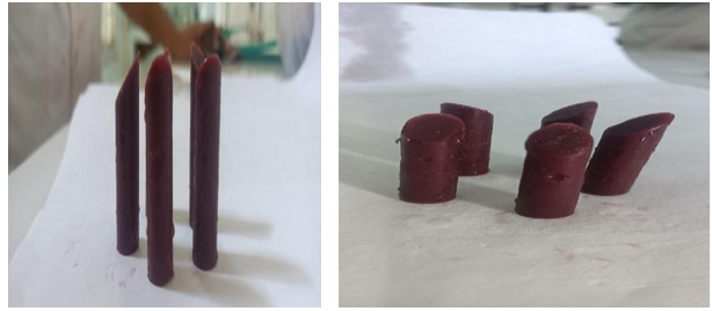
Figure 1: Formulated herbal lipsticks
Evaluation of Lozenges:
The prepared herbal lipsticks were evaluated using a range of parameters to assess their quality and suitability for use. Organoleptic properties, including color, odor, and texture, were evaluated visually and by sensory analysis. The melting point was determined using the capillary tube method, with the lipstick tested for its ability to withstand heat and maintain its consistency. The pH of the lipstick was measured using a digital pH meter, as the pH plays a significant role in the stability and skin compatibility of cosmetic products (Bergström et al., 2012). The breaking point was determined by applying increasing weights to the lipstick in a horizontal position to assess its strength. The force of application (spread ability) was measured to determine how smoothly the lipstick applied to the lips under normal conditions (Bhattacharya & Bhatia, 2012). Skin irritation was tested by applying the lipstick to the skin for 15 minutes to ensure it was non-irritating. Perfume stability was evaluated after 30 days of storage at room temperature, with the fragrance being assessed for changes in intensity and quality. The thixotropy character was determined using a penetrometer, where the depth of penetration by a standard needle was measured to assess the viscosity and spread ability of the lipstick. Softening point was determined using the ring and ball method, assessing the temperature at which the lipstick mass begins to lose its shape. Surface abnormalities were inspected for any crystallization or imperfections, while aging stability was tested by storing the lipsticks at 40°C for one hour to observe any changes in consistency or appearance (Martins et al., 2019). The solubility of the lipstick was tested in various solvents, and antifungal activity was assessed using the agar well diffusion method, as anthocyanins are known for their antimicrobial and antifungal properties (Carmen, 2017; Pires et al., 2018). The zone of inhibition around the bores was measured and compared with the control (Ofloxacin) to evaluate the efficacy of the lipstick against fungal growth.
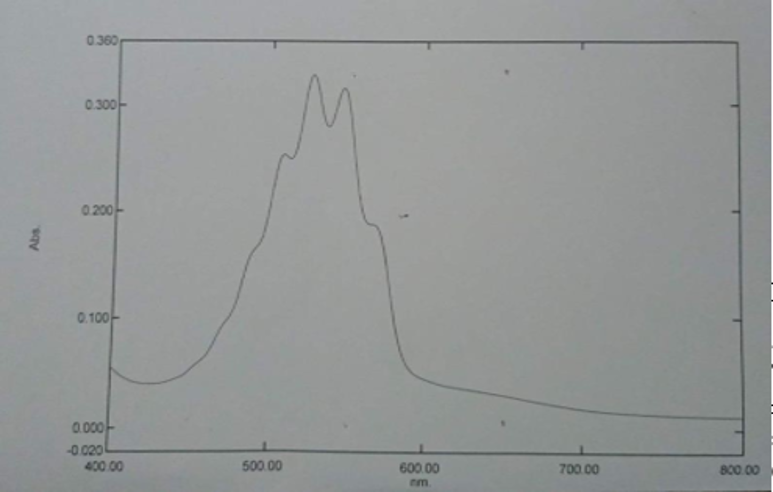
Figure 2: UV-Visible Spectrum of anthocyanin extract from Plum (400-800nm)
Determination of λmax of Rosa indica Extract: Similarly, the UV-Visible absorption spectra of the anthocyanin extract from Rosa indica (rose) were also scanned over the range of 400 nm – 800 nm. The λmax for the rose extract was found between 510 nm and 520 nm, which is in line with the results obtained for Prunus domestica, suggesting that both extracts contain similar anthocyanin pigments (Figure 3). This finding confirms the utility of Rosa indica anthocyanins as a natural colorant, with characteristics comparable to other fruit-based anthocyanins (Andersen et al., 2010).
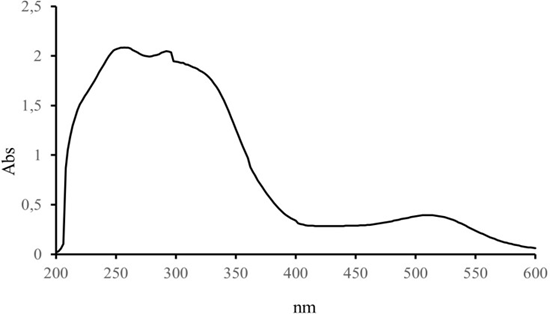
Figure 3: UV-Visible Spectrum Scanning of anthocyanin extract from Rose (400-800 nm)
Drug - Excipient Compatibility Study: The FTIR analysis of the anthocyanin extracts from Prunus domestica and Rosa indica revealed the presence of functional groups consistent with anthocyanins. The broad band at 3200–3400 cm–1 corresponds to the hydroxyl (-OH) group, a common feature of anthocyanin molecules (Zhao et al., 2007). The peaks observed at 1647 cm–1 and 1636.54 cm–1 are indicative of aromatic C=C stretching vibrations, confirming the presence of the benzenoid ring structure typical of anthocyanins (Figure 4). These spectral features further validate that the plum and rose extracts are rich in anthocyanins, confirming their potential as natural colorants.
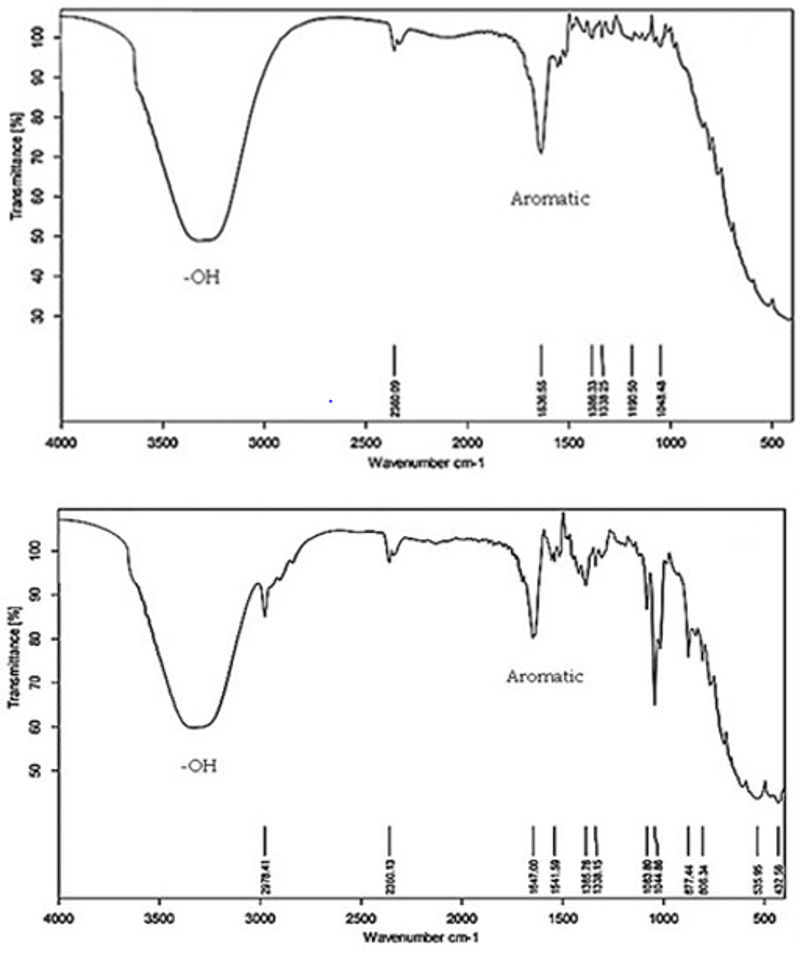
Figure 4: (a) FTIR analysis of anthocyanin pigment sample from plum
(b) FTIR analysis of anthocyanin pigment sample from rose
Evaluation of Herbal Lipstick Formulations: The prepared herbal lipstick formulations (F1-F6) were evaluated for various parameters to assess their quality, stability, and consumer acceptability. The formulations contained different concentrations of Prunus domestica and Rosa indica anthocyanin extracts, with the aim of determining the optimal formulation based on organoleptic properties and physicochemical parameters. Organoleptic Properties: The color and texture of the lipstick formulations were evaluated. The formulations F1, F2, F3, and F4 were observed to have smooth textures with shades ranging from red to light red, while formulations F5 and F6 showed a pale red color. These formulations were evaluated to ensure they met the desired cosmetic properties, with formulation F4 showing the best balance of color and texture (Table 2). Melting Point: The melting point of the lipstick formulations ranged from 58°C to 69°C, with F3 showing the highest melting point of 69°C, while F6 had the lowest at 58°C. The melting point is an important factor as it influences the stability and handling of the lipstick under different environmental conditions. The optimized formulation (F4) had a melting point of 67°C, which is within an acceptable range for lipstick products (Table 2). pH Parameter: The pH values of the herbal lipsticks ranged from 5.8 to 6.8, with formulation F1 showing the highest pH of 6.7 and F6 having the lowest at 5.8. All formulations were within the typical pH range for cosmetic products, ensuring they were skin-friendly and would not cause irritation. Breaking Point and Spread ability: The breaking point, which indicates the strength of the lipstick, ranged from 46.32 g in F6 to 78.32 g in F4. Formulations F3 and F4 exhibited excellent spread ability, a key attribute for ease of application (Table 2). Skin Irritation and Perfume Stability: All formulations were evaluated for skin irritation, and no irritation was observed, indicating that the herbal lipstick formulations were safe for application on the lips. Additionally, perfume stability was consistent across all formulations, with no significant changes in fragrance during the study. Thixotropy Character and Softening Point: The thixotropy character, which measures the lipstick's ability to return to its original consistency after being applied, ranged from 8.5 mm in F6 to 11.5 mm in F1. The softening point ranged from 46°C (F6) to 64°C (F5), and the formulations F4 and F5 showed a suitable balance of softening point and thixotropy for optimal performance in everyday use (Table 2).
| Evaluation Parameters | Marketed Lipstick | Prepared herbal lipstick formulations | |||||
| F1 | F2 | F3 | F4 | F5 | F6 | ||
| Organoleptic properties | Red & Smooth | Red & Smooth | Red & Smooth | Light Red & Smooth | Red & Smooth | Red & Smooth | Pale Red & Smooth |
| Melting Point (°C) | 63°C | 66°C | 69°C | 60°C | 67°C | 62°C | 58°C |
| pH parameter | 6.7 | 6.5 | 6.0 | 6.8 | 6.4 | 6.2 | 5.8 |
| Breaking point (g) | 53.3 gm | 75.8 9gm | 70.26 gm | 78.3 2gm | 72.81 gm | 66.97 gm | 46.32 gm |
| Spreadability | Excellent | Good | Excellent | Good | Excellent | Good | Unsatisfactory |
| Skin irritation | NO | NO | NO | NO | NO | NO | NO |
| Perfume stability | +++ | +++ | +++ | +++ | +++ | +++ | +++ |
| Thixotrophy character | 11.5 mm | 10.3 mm | 10 mm | 10.5 mm | 11.2 mm | 9.8 mm | 8.5 mm |
| Softening point | 61°C | 58°C | 60°C | 58°C | 62°C | 64°C | 46°C |
| Surface abnormalities | NO | NO | YES | NO | NO | YES | YES |
| Aging stability | Smooth | Smooth | Smooth | Smooth | Smooth | Smooth | Smooth |
| Solubility test | Soluble in Ethanol | Soluble in Ethanol | Soluble in Ethanol | Soluble in Ethanol | Soluble in Ethanol | Soluble in Ethanol | Soluble in Ethanol |
Table 2: Evaluation of F1-F6 herbal lipstick formulations
Optimized Herbal Lipstick Formulation: Based on the evaluations, Formulation F4 was chosen as the optimized herbal lipstick formulation. It displayed the best combination of organoleptic properties, melting point, breaking point, spread ability, skin compatibility, and overall performance. Compared to marketed formulations, the optimized F4 formulation exhibited a similar pH, superior breaking point, excellent spread ability, and no surface abnormalities (Table 3).
Evaluation Parameters | Marketed Formulation | Optimized Formulation (F4) |
Organoleptic Properties | Red & Smooth | Red & Smooth |
Melting Point (°C) | 63°C | 67°C |
pH Parameter | 6.7 | 6.4 |
Breaking Point (g) | 53.3 g | 72.81 g |
Spreadability | Excellent | Excellent |
Skin Irritation | No | No |
Perfume Stability | +++ | +++ |
Thixotropy Character (mm) | 11.5 mm | 11.2 mm |
Softening Point (°C) | 61°C | 62°C |
Surface Abnormalities | No defects | No defects |
Aging Stability | Smooth | Smooth |
Solubility Test | Soluble in Ethanol | Soluble in Ethanol |
Table 3: Optimized Formulation Evaluation
Antifungal Activity: The antifungal activity of the plum and rose extracts was tested against Candida albicans (Gram-positive yeast) at two concentrations (200 mg and 400 mg) of each extract. Both extracts exhibited significant antifungal activity, with clear zones of inhibition observed around the test samples. The Prunus domestica extract (plum) showed inhibition zones of 25.5 mm and 27 mm for the 200 mg and 400 mg concentrations, respectively, while the Rosa indica extract (rose) exhibited inhibition zones of 23 mm and 25.5 mm at the same concentrations (Tables 4 and 5). These results confirm that the anthocyanins in both plum and rose extracts retain their antifungal properties even when incorporated into a cosmetic formulation such as lipstick.
Figure 5: Antifungal activity of plum and rose extracts against Gram +ve Candida albicans
| Microorganism | Zone of Inhibition(mm) | |||
Standard (200mg Pure Drug) | Standard (400mg Pure Drug) | 200mg extract | 400mg extract | |
| Candida albicans |
26 |
28 |
25.5 |
27 |
Table 4: Zone of Inhibition of anthocyanin plum extract
| Microorganism | Zone of Inhibition(mm) | |||
Standard (200mgPure Drug) | Standard (400mgPure Drug) | 200mgextract | 400mgextract | |
| Candida albicans |
24 |
26 |
23 |
25.5 |
Table 5: Zone of Inhibition of anthocyanin rose extract
Discussion:
The present study aimed to develop and evaluate herbal lipsticks formulated with anthocyanin extracts derived from Prunus domestica (Plum) and Rosa indica (Rose) as natural colorants, with an emphasis on reducing the side effects commonly associated with synthetic dyes in commercial lip products. Through a series of evaluations, the formulations were tested for various parameters such as organoleptic properties, melting point, pH, spreadability, skin irritation, stability, and antifungal activity, to ensure the viability of these herbal alternatives.
The UV-Visible spectrophotometric analysis revealed that both the Prunus domestica and Rosa indica extracts exhibited λmax values between 510 nm and 520 nm, which is characteristic of anthocyanins, confirming their presence as natural colorants in the lipstick formulations. The FTIR analysis further supported this by identifying functional groups like hydroxyl (-OH) and aromatic benzenoid rings, commonly associated with anthocyanins, in the extract samples from both plum and rose. These findings validate the use of these extracts as potential sources of natural pigments with antioxidant and antimicrobial properties. The evaluation of herbal lipstick formulations (F1-F6) at room temperature demonstrated that the formulation F4 (using a combination of shea butter, candelilla wax, and jojoba oil) was the most stable and exhibited superior characteristics when compared to other formulations. Formulation F4 showed an excellent balance of organoleptic properties, stability, and performance metrics, including a melting point of 67°C, a breaking point of 72.81 gm, and no surface abnormalities or skin irritation. These results suggest that F4 is a promising candidate for commercialization, as it mimics the desirable properties of marketed lipsticks but with the added benefit of being eco-friendly and less likely to cause adverse reactions. Additionally, the antifungal activity of the anthocyanin extracts against Candida albicans confirmed their potential as natural antimicrobial agents. Both plum and rose extracts exhibited inhibitory effects, which can be an advantage in formulating lipsticks with additional protective properties against microbial infections, further differentiating them from synthetic counterparts.
Conclusion:
In conclusion, the study successfully demonstrated the feasibility of using anthocyanin extracts from Prunus domestica and Rosa indica as natural colorants in herbal lipstick formulations. The optimized formulation (F4) showed comparable, if not superior, performance to marketed lipsticks in terms of organoleptic properties, stability, and antimicrobial activity. Importantly, the formulated herbal lipstick presented minimal to no side effects, which makes it a promising alternative to conventional synthetic cosmetic products. The use of natural plant extracts such as plum and rose not only provides a safer option for consumers but also introduces a sustainable and eco-friendly solution to the cosmetic industry. Furthermore, the incorporation of anthocyanins into cosmetics could open doors for their broader application in other fields, such as food coloring and medicine, where their antioxidant and antimicrobial properties can be beneficial. Overall, the results indicate that anthocyanin-based herbal lipsticks hold significant potential as a cosmetic and therapeutic product, offering a viable, natural alternative to synthetic dyes and providing a new direction for the development of safer, more sustainable beauty products.
Conflict of interests
The authors declared no conflicts of interest.
Acknowledgements
Authors would like to express their gratitude to V. V. Institute of Pharmaceutical Sciences, Gudlavalleru, for offering essential facilities and resources to conduct this research.
References
- Boulos, M. N., El-Ghorab, A. H., & Elshafie, A. E. (2018). Natural colorants from plant extracts and their use in cosmetics. Journal of Natural Products, 81(3), 462-475.
View at Publisher | View at Google Scholar - Cerezo, A. B., Martínez, A. M., & Sánchez, J. A. (2020). Anthocyanins from fruits and vegetables as natural colorants in cosmetics. Journal of Applied Cosmetics, 39(2), 72-80.
View at Publisher | View at Google Scholar - He, M., Yao, X., & Zhang, X. (2021). The antioxidant and antimicrobial properties of anthocyanins in natural cosmetic formulations. International Journal of Cosmetic Science, 43(4), 325-332.
View at Publisher | View at Google Scholar - Liu, Y., Li, W., & Li, Y. (2020). Evaluation of the stability and color properties of anthocyanins as natural colorants in lipsticks. Cosmetics, 7(4), 57.
View at Publisher | View at Google Scholar - O’Brien, L., Johnson, R., & Jones, K. (2019). Health risks associated with synthetic cosmetic ingredients: A review. Journal of Environmental Health, 81(2), 40-45.
View at Publisher | View at Google Scholar - Bergström, M. A., Berthold, H., & Andersen, M. L. (2012). pH and stability of cosmetic formulations: An overview. International Journal of Cosmetic Science, 34(5), 430-435.
View at Publisher | View at Google Scholar - Bhattacharya, M., & Bhatia, S. (2012). Formulation and evaluation of herbal lipsticks: A review. International Journal of Pharmaceutical Sciences and Research, 3(6), 1745-1751.
View at Publisher | View at Google Scholar - Carmen, S. (2017). Extraction of anthocyanins from fruits: Techniques and applications. Journal of Food Science, 82(3), 537-548.
View at Publisher | View at Google Scholar - Habib, F., Riaz, M., & Jamil, A. (2015). Evaluation of natural plant extracts as alternatives to synthetic dyes in cosmetics. Journal of Applied and Environmental Microbiology, 4(3), 83-89.
View at Publisher | View at Google Scholar - Hussain, S. S., Ali, M., & Maqbool, M. (2015). Herbal cosmetics: Extraction, preparation, and evaluation of lipsticks. Journal of Pharmacognosy and Phytochemistry, 4(5), 224-231.
View at Publisher | View at Google Scholar - Mazza, G., & Cacace, J. E. (2008). Anthocyanins and polyphenols: Extraction and applications in food systems. In L. A. McHugh & S. J. McKay (Eds.), Antioxidants in food, vitamins, and supplements (pp. 212-234). CRC Press.
View at Publisher | View at Google Scholar - Martins, P. M., Rodrigues, M. A., & Silva, J. M. (2019). Evaluation of cosmetic formulations: Methods for testing stability and quality in commercial cosmetics. Cosmetic Science & Technology, 16(3), 78-89.
View at Publisher | View at Google Scholar - Pires, C. V., Almeida, D., & Ferreira, J. A. (2018). Antifungal properties of natural anthocyanin pigments and their application in the cosmetic industry. Journal of Cosmetic Dermatology, 17(1), 52-59.
View at Publisher | View at Google Scholar - Smith, R., & Thomas, S. (2016). Essential oils in cosmetics: Benefits, uses, and extraction methods. International Journal of Cosmetic Science, 38(6), 525-533.
View at Publisher | View at Google Scholar - Wrolstad, R. E. (2004). Anthocyanins in food and beverages: Extraction, processing, and applications. CRC Press.
View at Publisher | View at Google Scholar