 Clinic
Case Report | DOI: https://doi.org/10.31579/2835-2882/120
Five Complementary Conceptual Prisms for Understanding and Intervening from Modern General Medicine “Geography”
Formerly of the Health Center Santa Maria de Benquerencia. Regional Health Service of Castilla la Mancha (SESCAM), Toledo, Spain.
*Corresponding Author: Jose Luis Turabian, Formerly of the Health Center Santa Maria de Benquerencia. Regional Health Service of Castilla la Mancha (SESCAM), Toledo, Spain.
Citation: Jose Luis Turabian, (2026), Five Complementary Conceptual Prisms for Understanding and Intervening from Modern General Medicine “Geography”, Clinical Research and Studies, 5(3); DOI:10.31579/2835-2882/120
Copyright: © 2026, Jose Luis Turabian. this is an open-access article distributed under the terms of the Creative Commons Attribution License, which permits unrestricted use, distribution, and reproduction in any medium, provided the original author and source are credited.
Received: 04 May 2026 | Accepted: 11 May 2026 | Published: 22 May 2026
Keywords: multimorbidity; framework; general practice
Abstract
Addressing multimorbidity in modern general medicine requires moving beyond the reductionist model of the 20th century. To this end, general practitioners utilize five complementary conceptual frameworks. Each offers a unique way of understanding illness, structuring diagnosis, and intervening clinically in the consultation: History, Geometry, Geography, Narrative, and Emotion. The “Geography” approach (Territory and Environment) is presented below for immediate clinical use and illustrated with a clinical case. This framework defines multimorbidity not as an abstract problem, but as a socio-spatial and topographical phenomenon where the external environment dictates the internal health of the body. Diseases interact synergistically with the patient's social, economic, and physical context, creating syndemics. The pathological map overlaps with food deserts, urban segregation, architectural barriers, and the biological boundaries of the organism itself (such as the vascular endothelium). The clinical intervention strategies would be: 1) Modification of the microenvironment: Social prescription and intervention in the patient's environment are prioritized before adjusting medications; and 2) Sealing biological boundaries: Treatments that act as "drains or barriers" (e.g., diuretics or SGLT2 inhibitors) are prioritized to prevent damage to one organic territory from geographically invading another (such as vascular fluid flooding the pulmonary territory).
Introduction
Multimorbidity, the coexistence of two or more chronic diseases, has become a crucial challenge for aging societies. Multimorbidity is distinct from comorbidity, which considers other conditions within the context of an index disease (1). Multimorbidity is a matter of public concern because it affects overall quality of life, such as increasing mortality and healthcare utilization and expenditures (2). The prevalence of multimorbidity varies widely between continents: 39% and 43% in Europe and North America; 32% and 38% in low-middle-income and upper-middle-income countries, respectively (3).
Multimorbidity itself can be treated as a distinct entity, since patients with disparate presentations of multimorbidity may demonstrate similar health trajectories. This 'multimorbidity lens' can highlight the profound interrelationships between psychiatric and medical conditions. Although not exclusively a feature of aging, multimorbidity is strongly associated with aging. However, many additional factors modulate its presence and intensity: lower socioeconomic status, lower education, adverse childhood experiences, racial discrimination, and loneliness. Multimorbidity implies polypharmacy and vice versa (risk of adverse drug effects, drug interactions, drug-disease interactions, and potentially problematic polypharmacy) (1).
Thus, the accumulation of health problems is a complex condition and can occur as a result of a genetic predisposition (a natural tendency), environmental factors, or unknown causes: 1) Causality, associations, and links (through a common origin pathway, through the accumulation of risk factors, through genetic bases, through molecular and biological links); 2) Coincidence, seriality, and synchronicity (the simultaneous occurrence of two significant events that are not causally connected); 3) Chance; and 4) Due to our own interventions to address other pre-existing problems (such as pharmacological iatrogenesis or surgical sequelae) (4).
However, evidence regarding when and how chronic diseases begin to cluster, their trends and transitions, their prognostic significance, conceptualization, and intervention strategies remains limited (5-8).
The treatment of multimorbidity requires, by definition, an approach that transcends conventional medical thinking and the boundaries of different disciplines, specialties, organizations, and departments; it requires a radical shift in the conceptualization and treatment of medical illnesses. A greater appreciation of the multifactorial foundations of multimorbidity helps promote a better approach to managing medical and psychiatric multimorbidity. It is important for clinicians to recognize that the presence of multimorbidity is influenced by multiple biological (e.g., epigenetic changes, inflammation), pharmacological (e.g., polypharmacy, changes in pharmacokinetics/pharmacodynamics), psychological (e.g., defense mechanisms, psychological distress), and social (e.g., loneliness, social connection) factors. Understanding these contributing factors can guide clinicians to avoid the cumulative implementation of a risky single-disease approach and instead focus on optimizing medication management, improving care coordination, and treating the whole person, including the patient’s goals, values, and objectives (1, 9).
As a consequence of all the above, the general practitioners (GPs) are best positioned to manage multimorbidity. Addressing multimorbidity in modern general practice requires moving beyond the reductionist model of the 20th century. To this end, GPs utilize five complementary conceptual prisms. Each offers a unique way of understanding illness, structuring diagnosis, and intervening clinically in the consultation. Sometimes medicine should learn from historians, geometers, geographers, novelists, and psychologists. The “Geography” approach is presented below and illustrated with a clinical case.
Clinical Case
Ray's Geographic Diagnosis (The Territory)
Ray, 72, lives alone on the third floor of a walk-up apartment in a low-income neighborhood on the urban periphery. His medical history shows three diagnoses that, until now, have been treated in a fragmented way: Severe Chronic Obstructive Pulmonary Disease (COPD) (Treated with inhalers), Chronic Heart Failure (Treated with diuretics), and Depression with Social Isolation (Treated with antidepressants).
The GP's Analysis of the Territory
If the doctor were to apply standard clinical guidelines, he would increase the dosage of diuretics for the heart and inhalers for the lungs. However, he analyzes the geography of the process:
-External Geography (The Neighborhood and the Apartment): Living on the third floor of a walk-up apartment, the dyspnea caused by COPD and heart failure has turned his home into a geographical prison. Ray has not left his apartment in months. This prevents him from buying fresh food, so he survives on ultra-processed and canned goods from the corner store (high sodium content).
-Internal Geography (Vascular-Pulmonary Boundary): The excess sodium from the canned goods saturates his vascular territory. Fluid accumulates and "overflows the boundary," geographically flooding the pulmonary alveoli. This worsens his COPD and makes him feel even more suffocated. The suffocation and the geographical confinement in his apartment fuel his depression. It's a perfect syndemic (FIGURE 1).
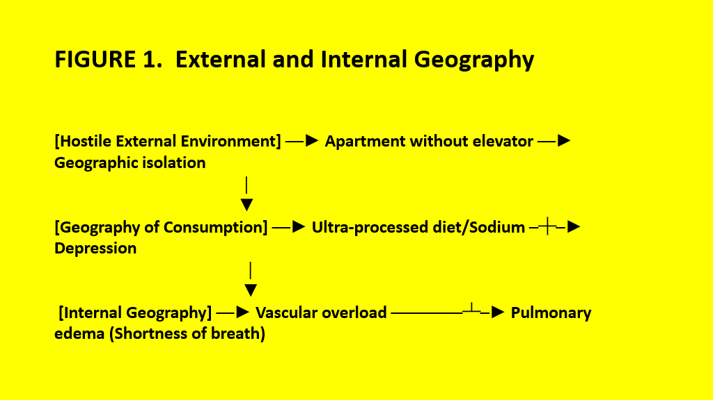
Figure 1: External and Internal Geography
Application of Geographic Clinical Strategies
The GP restructures Ray's plan, prioritizing geography over pure pharmacology: Priority 1) Dismantle the Syndemic from a Social Geography Perspective. The doctor determines that Ray's main problem is not his heart, but his isolation on the third floor. Instead of simply changing medication, the doctor activates the health center's social worker to request home care and process a dependency allowance for a move to a ground-floor apartment or a building with an elevator. Priority 2) Intervention in the Local Nutritional "Terrain." The doctor prescribes a drastic intervention in the patient's dietary geography. They activate a municipal "food on wheels" program (home delivery of healthy, low-sodium meals for homebound seniors). By clearing the nutritional terrain, sodium intake into the bloodstream is reduced. Priority 3) Sealing the Biological Boundary (Optimization of Internal Microgeography). To alleviate pulmonary flooding while the relocation is being arranged, the doctor prioritizes the scheduled use of a loop diuretic and introduces an SGLT2 inhibitor (SGLT2i). This medication not only helps the heart, but also acts as a "drain" that redistributes fluid volume within the vascular system, preventing it from
breaching the alveolar-capillary barrier of the lungs. Priority 4) Simplify the Geography of Care. The doctor cancels all of Ray's unnecessary in-person appointments at the hospital (repetitive blood tests, specialist checkups) that forced him to endure the ordeal of going down the stairs. He focuses his follow-up care on telemedicine and scheduled home visits from the primary care nurse.
Geographic Evolution of the Patient (At 6 months)
By intervening with territorial and social precision: Thanks to the distribution of salt-free food, Ramón's lungs stop filling with fluid. His shortness of breath decreases dramatically. As he stops experiencing shortness of breath and receives visits from the social worker and neighborhood volunteers, his depression improves substantially, allowing for a reduction in his psychiatric medication. With the successful move to a ground-floor apartment, Ramón is once again able to go out into the neighborhood square, reconnecting with his urban environment and definitively breaking the vicious cycle of immobility. The GP demonstrated that, in cases of complex multimorbidity, healing the map and territory where the patient lives is the most effective step in stabilizing the organs that are failing within.
Discussion
What is the "geography" of the evolutionary process of multimorbidity?
The "geography" of the evolutionary process of multimorbidity refers to how chronic diseases are distributed in physical, social, and bodily space, demonstrating that the accumulation of pathologies does not occur uniformly across the planet or within the organism itself (10-12). Unlike geometry (which analyzes abstract forms and the mathematics of networks) (13-15), medical geography analyzes territories, heat maps, socio-spatial inequalities, and the biological terrain (16-20). This geographical dimension is divided into four major scales:
1. Macrogeography: The Global Map of Epidemiological Transition
At a global scale, multimorbidity reveals a geography of economic contrasts and demographic transitions: 1) High-Income Countries: Multimorbidity is geographically concentrated in aging populations. The map is dominated by neurodegenerative diseases, cardiovascular diseases, and cancer, due to high life expectancy; 2) Low- and Middle-Income Countries: These countries are experiencing a unique geographical phenomenon known as the double burden of disease. Within the same territory, maps of infectious diseases and malnutrition (the traditional geography of poverty) coexist alongside a rapid increase in diabetes and heart disease due to the accelerated adoption of Western lifestyles.
2. Urban Microgeography: Social Determinants and "Postal Codes"
At the regional and urban levels, epidemiologists assert that the postal code is more important for health than the genetic code. The geography of multimorbidity overlaps precisely with maps of socioeconomic deprivation: 1) Food Deserts: Peripheral areas or vulnerable neighborhoods without access to fresh food markets, which geographically exacerbates clusters of obesity, hypertension, and diabetes; 2) Spatial Segregation and Pollution: Neighborhoods adjacent to industrial areas or major highways have disproportionately high rates of immunoinflammatory multimorbidity (coexistence of asthma, COPD, and cardiovascular diseases due to poor air quality); 3) Early Onset: In lower-income geographic areas, multimorbidity appears an average of 10 to 15 years earlier than in wealthier neighborhoods of the same municipality.
3. Geography of the Biological Terrain: The Body's Organs and Barriers
If we zoom in on the human body, multimorbidity also follows an internal geography or "organic topography." Diseases do not jump randomly from one point to another; they colonize areas with common characteristics: 1) Mucosal Axes and Barriers: A dysfunction in the geographic epithelial barrier of the gut (altered microbiota) often spreads pathologies to the blood-brain barrier or the skin, connecting ulcerative colitis with depression or psoriasis; 2) Vascular Geography: The endothelium (the inner lining of blood vessels) is a geographical network that runs throughout the body. When the vascular territory is damaged, multimorbidity spreads geographically from the heart (heart attack) to the brain (stroke) and the kidneys (renal failure).
4. Syndemics: The Geographic Convergence of Crises
The most advanced geographical concept in multimorbidity is the syndemic (the synergistic interaction between two or more diseases that reinforce each other due to the social context). A syndemic map shows how public health crises concentrate in specific geographic areas. A classic example is the convergence of diabetes, depression, and structural violence in marginalized urban areas, where each condition geographically worsens the prognosis of the others.
What specific clinical strategies do GPs use to prioritize which disease to treat first, based on the concept of the "geography" of the evolutionary process of multimorbidity?
For a GP, applying the metaphor of the "geography" of the evolutionary process of multimorbidity means ceasing to view the patient as a mathematical collection of data and beginning to see them as a living, social, and biological territory (21-25). Under this approach, diseases are not abstract points in a network; they are foci that colonize territories, spread across organic boundaries, and are profoundly affected by the external geography (the neighborhood, the climate, the environment, and the patient's resources), creating pathological heat maps. Within this socio-spatial and body topography framework, the GPl uses four very specific prioritization strategies:
1. Intervention at the Common "Biological Boundary": The physician identifies the body's internal geographical barriers (the vascular endothelium, the intestinal mucosa, the blood-brain barrier) that are damaged and allow a disease to "migrate" and invade another organ. They prioritize sealing or treating this boundary to prevent the colonization of new organs.
2. Dismantling Local Syndemics (Heat Maps): The physician overlays the patient's disease map with the map of their physical and social environment. If they detect a syndemic (several diseases that reinforce each other due to the environment, such as poverty or isolation), the clinical priority is not pharmacological, but rather socio-geographic (changing the environment or connecting with community resources). 3. Eradication of "Environmental Contaminants" (Geographic Lifestyle): If the patient lives in a "food desert" or in an environment with high levels of noise, air, or light pollution, the physician prioritizes neutralizing the impact of this hostile geography before adjusting medication dosages.
4. Modification of the Topography of Care (Geography of Accessibility): The physician assesses the patient's physical geography (whether they live in an apartment building without an elevator, the distance to the hospital, the difficulty of attending appointments). They prioritize treatments that simplify geographical travel to avoid exhaustion for both the caregiver and the patient.
In short, sometimes in medicine we should learn from the work of geographers: they integrate natural, social, and economic sciences to study the territory and the environment. They work by combining fieldwork with advanced spatial analysis technologies to understand how societies interact with their environment. This means it is important to analyze the territory and the environment as a key factor in the origin, spread of diseases and access to healthcare: Not treating patients directly, but first studying the environments to prevent diseases and optimize healthcare resources.
References
- Carlson DM, Yarns BC. (2023). Managing medical and psychiatric multimorbidity in older patients. Ther Adv Psychopharmacol. 13.
View at Publisher | View at Google Scholar - Permanyer I, Gumà J, Trias-Llimós S, Solé-Auró A. (2026). Multimorbidity trends in Catalonia, 2010–21: a population-based cohort study. Int J Epidemiol. 55(1): dyaf218.
View at Publisher | View at Google Scholar - Al Izzati R, Pakpahan E. (2026). Longitudinal pattern of multimorbidity in older adult population: latent transition analysis in 34 countries. Am J Epidemiol 195(3): 653–663.
View at Publisher | View at Google Scholar - Turabian JL. (2017). About the Accumulation of Diseases in Certain People. J Gen Pract (Los Angel). 5: e120.
View at Publisher | View at Google Scholar - Ioakeim-Skoufa I, Vicente-Romero J, González-Rubio F, et al. (2026) . Early dynamics of multimorbidity in 17.4 million people in Spain: onset patterns and prognostic value. Eur J Public Health. 36(3): ckag067.
View at Publisher | View at Google Scholar - Cuschieri S, Stranges S, Makovski TT. (2025). The different definitions of multimorbidity and their implications for research, surveillance, and policy. Eur J Public Health. 35(2): 197–198.
View at Publisher | View at Google Scholar - Turabian JL. (2020). The Character and Destination of Multimorbidity: Reflections for Classification. Archives of Community and Family Medicine. 3(2): 75-79.
View at Publisher | View at Google Scholar - Turabian JL. (2020). A Theory of Multimorbidity. Int Res Med Health Sci. (3-6): 9-16.
View at Publisher | View at Google Scholar - Turabian JL. (2020). Theory of the evolution of multimorbidity: it is created, in a small part but significant, by the medical intervention itself. COJ Reviews & Research. 2(3).
View at Publisher | View at Google Scholar - Skou ST, Mair FS, Fortin M, et al. (2022). Multimorbidity. Nat Rev Dis Primers. 8(1):48.
View at Publisher | View at Google Scholar - Barnett K, Mercer SW, Norbury M, Watt G, Wyke S.et al. (2012). Epidemiology of multimorbidity and implications for health care, research, and medical education: a cross-sectional study. Lancet. 380(9836):37-43.
View at Publisher | View at Google Scholar - Cassell A, Edwards D, Harshfield A, Rhodes K, Brimicombe J, Payne R, Griffin S. The epidemiology of multimorbidity in primary care: a retrospective cohort study. Br J Gen Pract. 2018;68(669):e245-e251.
View at Publisher | View at Google Scholar - Fallah N, Hong HA, Wang D, et al. (2024). Network analysis of multimorbidity and health outcomes among persons with spinal cord injury in Canada. Front Neurol. 14:1286143.
View at Publisher | View at Google Scholar - Jones I, Cocker F, Jose MD, Charleston MA, Neil A. (2021). Methods of analyzing patterns of multimorbidity using network analysis: a scoping review protocol. JBI Evid Synth. 19(10):2857-2862.
View at Publisher | View at Google Scholar - Zhang Z, He P, Yao H, et al. (2023). A network-based study reveals multimorbidity patterns in people with type 2 diabetes. iScience. 26(10):107979.
View at Publisher | View at Google Scholar - Gesler W. (1986). The uses of spatial analysis in medical geography: a review. Soc Sci Med. 23(10):963-973.
View at Publisher | View at Google Scholar - van der Meer L, Waelput AJM, Steegers EAP, Bertens LCM. (2022). Creating a sense of urgency and provoking action - An example on the use of heat maps to address perinatal health inequalities. Prev Med Rep. 30:102058.
View at Publisher | View at Google Scholar - Augustin J, Andrees V, Walsh D, Reintjes R, Koller D. (2023). Spatial Aspects of Health-Developing a Conceptual Framework. Int J Environ Res Public Health. 20(3):1817.
View at Publisher | View at Google Scholar - Vine MM, Mulligan K, Harris R, Dean JL. (2023). The Impact of Health Geography on Public Health Research, Policy, and Practice in Canada. Int J Environ Res Public Health. 20(18):6735.
View at Publisher | View at Google Scholar - Sadler RC, Larsen K. (2022). Mapping the Way to Good Health: The Interdisciplinary Challenges of Geographers in Medical Research. Int J Environ Res Public Health. 19(19):12419.
View at Publisher | View at Google Scholar - Turabian JL. (1995). [Notebooks of Family and Community Medicine. An introduction to the principles of Family Medicine]. Madrid: Díaz de Santos.
View at Publisher | View at Google Scholar - Turabian JL. (2018). Community medicine from the point of view of the general practitioner: “Never plump your foot straight into your shoe in the morning
View at Publisher | View at Google Scholar - Turabian JL, Perez Franco B. (1998). [Which is the goal of health education and «community» activities in primary care?] Aten Primaria 22(10):662-666.
View at Publisher | View at Google Scholar - Turabian JL, Perez Franco B. (2001). [Community Activities in Family Medicine and Primary Care]. Madrid: Díaz de Santos.
View at Publisher | View at Google Scholar - Turabian JL, Perez Franco B. (2008). [Individualized medical care with a community orientation - Contextualized care: the figure is the background]. Revista Clínica Electrónica en Atención Primaria.
View at Publisher | View at Google Scholar