 Clinic
Research Article | DOI: https://doi.org/10.31579/2834-5118/069
Evidence-Based Multimodal Management of Severe Post-Asphyxial Cerebral Palsy in a Turkish Girl from Sweden
Advisor doctor and expert trainer, Baghdad Medical City and Iraqi Ministry of Health Baghdad, Iraq.
*Corresponding Author: Aamir Jalal Al-Mosawi Advisor doctor and expert trainer, Baghdad Medical City and Iraqi Ministry of Health Baghdad, Iraq.
Citation: Al-Mosawi AJ, (2025), Evidence-Based Multimodal Management of Severe Post-Asphyxial Cerebral Palsy in a Turkish Girl from Sweden., International Journal of Clinical Surgery, 4(4); DOI:10.31579/2834-5118/069
Copyright: © 2025, Aamir Jalal Al-Mosawi. This is an open access article distributed under the Creative Commons Attribution License, which permits unrestricted use, distribution, and reproduction in any medium, provided the original work is properly cited.
Received: 04 July 2025 | Accepted: 18 July 2025 | Published: 28 July 2025
Keywords: cerebral palsy; refractory epilepsy; citicoline; cerebrolysin; piracetam; evidence-based medicine
Abstract
Severe perinatal asphyxia is a major cause of cerebral palsy and neurodevelopmental disability. We report the case of a 22-month-old girl who developed cerebral palsy and developmental delay following hypoxic-ischemic encephalopathy (HIE) at birth. The patient initially underwent unregulated stem cell therapy abroad without benefit. Based on published evidence and our prior clinical experience with neuroprotective agents, she was treated sequentially with Cerebrolysin, Citicoline, Piracetam, collagen hydrolysate, and nutritional support. Improvements were observed in motor strength, vocalization, and cognitive responsiveness across successive treatment courses. This case highlights the importance of evidence-based medicine (EBM) in guiding rational therapeutic interventions in complex neurological disorders, and in resisting unproven alternative approaches.
Introduction
Hypoxic-ischemic encephalopathy is one of the most devastating perinatal complications, with survivors often facing cerebral palsy, intellectual disability, or epilepsy.
In recent years, families have increasingly sought unregulated “stem cell” interventions, which lack reproducible evidence of benefit. In contrast, evidence-based medicine integrates clinical expertise, the best available evidence, and patient/family values to optimize care and avoid unscientific approaches [1-13].
The practice of evidence-based medicine requires integration of [14]:
- Best available research evidence
- Clinical expertise
- Patient and caregiver values
We report the case of a young girl with severe cerebral palsy after birth asphyxia who demonstrated developmental gains with an evidence-based multimodal pharmacological program, building on our previous experience with the treatment of cerebral palsy and other neurological disorders.
Patient and methods
A 22-month-old Turkish girl from Sweden who was born at 42+0 weeks via vacuum extraction after severe asphyxia (Apgars: 0, 1, 3). She required cardiopulmonary resuscitation and spontaneous breathing occurred at 60 minutes. She was treated with hypothermia for 72 hours. She developed seizures at 36 hours, managed with phenobarbital and midazolam. Magnetic resonance imaging performed at day 7, showed restricted diffusion in corpus callosum, subtle changes in globus pallidus, possible thalamic signal changes, and occipital laminar necrosis, consistent with subtotal asphyxia.
The patient was discharged with a diagnosis of severe hypoxic-ischemic encephalopathy with risk for cerebral palsy. Over time, global developmental delay and cerebral palsy became evident.
Prior interventions: Parents sought unregulated stem cell therapy abroad with no benefit, then presented to our clinic after reading about our successful management of a boy with ataxic cerebral palsy from Virginia.
Individualized evidence-Based multimodal therapies were recommended based on our extensive published evidence-based experiences with treatment of cerebral palsy and other neurological conditions [1-13, 15].
Results
Treatment and Outcomes
First course
- Cerebrolysin 3 ml IM every other day × 15 doses
- Citicoline syrup 300 mg daily
Outcome: Improved neck and trunk strength, especially during final week.
Second course
- Intramuscular piracetam 2.5 ml every other day
- Oral citicoline 250 mg daily
- Collagen hydrolysate (CH-Alpha) 2 ml daily
Outcome: Some cognitive improvements. Increased vocalization; consonant “b” produced daily instead of once weekly.
Third course
- Intramuscular cerebrolysin 3 ml IM every third day × 10 doses
- Intramuscular piracetam 2.5 ml IM every third day × 10 doses (alternate days)
- Oral citicoline 250 mg daily
- CH-Alpha 2 ml daily
- Royal-plus capsule daily
Outcome: Enhanced cognitive responsiveness, more consistent vocal attempts, improved interaction.
Fourth and fifth courses
- Intramuscular citicoline 2 ml IM every third day (10 doses monthly)
- Intramuscular piracetam 2.5 ml IM every third day (10 doses monthly)
- CH-Alpha 2 ml daily
- Royal-plus capsule daily
Outcome: Continued gains in awareness, vocalization, and motor engagement. Before treatment, the girl was not crawling and was not able to sit even with support. After treatment, she was crawling for few centimeters (Moving by dragging her tummy on the floor) and was able to sit with support (Figure-1).
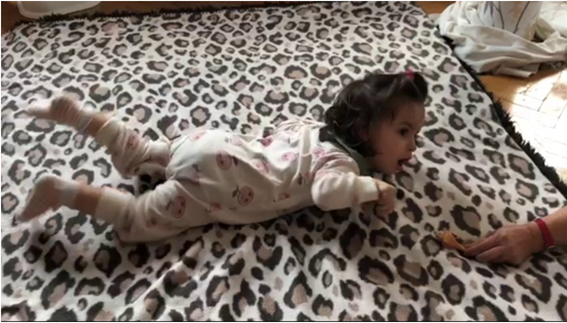
Figure 1A: After treatment, she was crawling for few centimeters
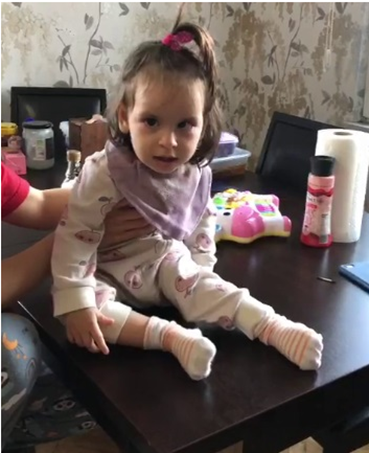
Figure 1B: After treatment, she was able to sit with support
Discussion
This case underscores the value of an evidence-based medicine framework in managing severe cerebral palsy after birth asphyxia.
1. Pathophysiology-based therapy
- Cerebrolysin: Help in improving neuroplasticity and motor outcomes in pediatric cerebral palsy.
- Citicoline: Can enhance neuronal membrane repair and has shown cognitive benefits in brain injury.
- Piracetam: Can enhance motor and cognitive function in children with cerebral palsy.
- Nutritional support (collagen hydrolysate, micronutrients) provided supportive benefit for neuromuscular function.
2. Sequential adaptive therapy
- Cyclic regimens allowed assessment of measurable outcomes before proceeding.
- Improvements in trunk stability, vocalization, and cognitive interaction were documented over time.
3. Contrast with unscientific interventions
- Unregulated stem cell therapy yielded no benefit, consistent with current systematic reviews showing lack of reproducible efficacy.
- In contrast, evidence-based therapy produced tangible functional gains.
4. Family-centered care
- Counseling recalibrated expectations away from “cure” promises towards quality of life and functional enhancement.
Cerebrolysin is a mixture of free amino acids (85%) and 15% biologically active low molecular weight amino acid sequences which include low molecular weight neuro-peptides (Brain-derived neurotrophic factor, glial cell line-derived neurotrophic factor, nerve growth factor, ciliary neurotrophic factor.
Cerebrolysin has been used safely with benefit in a variety of neuro-psychiatric disorders including idiopathic mental retardation, cerebral palsy, brain atrophy, myelomeningocele, pediatric juvenile spinal muscular atrophy, pediatric Charcot Marie Tooth disease, kernicterus, and agenesis of corpus callosum with colpocephaly [16-25].
Citicoline is a safe form of the choline has been increasingly grouped with the water-soluble B vitamins. It has been increasingly used with noticeable benefits in the treatment of several pediatric and neuro-psychiatric disorders including, cerebral palsy, cognitive impairment, autism disorders, Rett syndrome, and kernicterus [26, 27].
Piracetam beneficial effects on impaired cerebral functions include improving neuronal and cognitive functions, increasing cerebral blood flow and oxygen consumption, improving neurotransmitter’s function and brain neurotransmission. Piracetam is not associated with important side effect nor has acute toxicity at the therapeutic doses. Piracetam has been used with important benefits in the treatment of cerebral palsy and other childhood neuro-psychiatric disorders [28, 29].
Conclusion
Severe perinatal asphyxia often results in cerebral palsy with profound disability. This case illustrates how evidence-based medicine-guided multimodal therapies using neurotrophic, nootropic, and nutritional agents can yield measurable developmental improvements. Rational, evidence-based care should be prioritized over unregulated interventions in the management of pediatric neurological disorders.
Acknowledgement
The author would like to express his gratitude for the mother for kindly accepting publishing the photos of the patient.
The author has the copy right of the figures in this paper.
Conflict of interest
None.
References
- Al-Mosawi AJ. (2019). New therapies for the treatment of spastic cerebral palsy. Medical Journal of Clinical Trials & Case Studies (ISSN: 2578-4838) Mar; 3(2): 1-9.
View at Publisher | View at Google Scholar - Al-Mosawi AJ. (2019). The pattern of cerebral palsy in Iraqi children. MedLife Clinics (ISSN: 2689-5943) Aug; 1(1):1-9.
View at Publisher | View at Google Scholar - Al-Mosawi AJ. (2020). New Therapies for the treatment of ataxic cerebral palsy caused by kernicterus. EC Clinical and Medical Case Reports Mar; 3(4): 26-31.
View at Publisher | View at Google Scholar - Al-Mosawi AJ. (2020). The experience with the use of nandrolone decanoate and pyritinol in children with cerebral palsy. Open Access Journal of Biogeneric Science and Research (ISSN: 2692-1081) Jul; 2(3):1-3
View at Publisher | View at Google Scholar - Al-Mosawi AJ. (2020). Cerebral palsy: A unique illustrated experience. Medico Research Chronicles (ISSN: 2394-3971) Sept; 7 (4): 2017-239.
View at Publisher | View at Google Scholar - Al-Mosawi AJ. (2021). The early treatment of a boy from Virginia with ataxic cerebral palsy. Journal of Pediatrics and Child Health May; 2 (4): 1-5.
View at Publisher | View at Google Scholar - Al-Mosawi AJ. (2021). Cerebral Palsy, Autistic Features Associated with Periventricular White Matter Hyperintensity on Brain Magnetic Resonance Imaging: A Diagnostic Challenge. Journal of Pediatrics and Child Health Issues, June; 2(5):1-4.
View at Publisher | View at Google Scholar - Al-Mosawi AJ. (2021). A Girl from Canada with Severe Cerebral Palsy Associated with Hydrocephalus and Mutation of Kinase D-Interacting Substrate of 220-KDa (KIDINS220) Gene: A New Syndrome with Unique Brain Imaging Findings and a Therapeutic Challenge. Journal of Clinical Research in Radiology (ISSN: 2639-913X); 4 (1):22-25.
View at Publisher | View at Google Scholar - Al-Mosawi AJ. (2021). Brain Imaging Abnormalities in Cerebral Palsy. Journal of Clinical Research in Radiology (ISSN: 2639-913X); 4 (1): 11-15.
View at Publisher | View at Google Scholar - Al-Mosawi AJ. (2022). A Girl from Qatar with Post-Infantile Acquired Cerebral Palsy Caused by Submersion Injury: A Rare Etiology and a Therapeutic Challenge. Clinical Research and Clinical Trials (ISSN: 2693-4779) Jan; 5 (1): 1-4.
View at Publisher | View at Google Scholar - Al-Mosawi AJ. (2022). An Indian boy with post-infantile acquired cerebral palsy caused by submersion injury: A rare etiology and a therapeutic challenge. Case Reports & Research Practices in MEDICINE (ISSN: 2771-4845) Mar; 2 (1): 41-44.
View at Publisher | View at Google Scholar - Al-Mosawi AJ. (2022). The initial treatment of a girl from Texas with post-infantile acquired cerebral palsy caused by submersion injury. Journal of Pediatrics and Neonatal Medicine (ISSN: 2694-5983) April (4): 1:1-4.
View at Publisher | View at Google Scholar - Al-Mosawi AJ. (2022). Cerebral Palsy and Autism Associated with Periventricular White Matter Hyperintensity on Brain Magnetic Resonance Imaging: A New Disorder and Its Treatment. MedPress Psychiatry and Behavioral Sciences Sept; 1(1):1-4 [mppbs–202209007].
View at Publisher | View at Google Scholar - Al-Mosawi AJ. (2006). The Practice of evidence-based medicine. The New Iraqi Journal of Medicine (ISSN: 1817-5562, 1998037X); 2(1):8-10.
View at Publisher | View at Google Scholar - Al-Mosawi AJ. (2022). Childhood Lennox-Gastaut syndrome, low set ears, unilateral cryptorchidism: A new variant. Journal of Clinical Images & Reports Mar; 1(1):1-6.
View at Publisher | View at Google Scholar - Al-Mosawi AJ. (2020). Clinical uses of Cerebrolysin in Pediatric Neuropsychiatry. Science World Journal of Pharmaceutical Sciences; 1(1): 1-4.
View at Publisher | View at Google Scholar - Al-Mosawi AJ. (2019). New medical therapies for the treatment of myelomeningocele. Surgical Medicine Open Access Journal (ISSN: 2578-0379); 2(4): 1-4.
View at Publisher | View at Google Scholar - Al-Mosawi AJ. (2018). A novel therapy for pediatric juvenile spinal muscular atrophy.1st ed., Saarbrücken; LAP Lambert Academic Publishing: (ISBN: 978-613-9-89719-3).
View at Publisher | View at Google Scholar - Al-Mosawi AJ. (2020). The use of cerebrolysin in pediatric Wohlfart Kugelberg Welander syndrome. MOJ Clinical & Medical Case Reports (e-ISSN: 2381-179X); 10(1):20-23.
View at Publisher | View at Google Scholar - Al-Mosawi AJ. (2018). A novel therapy for pediatric Charcot Marie Tooth disease. 1st ed., Saarbrücken; LAP Lambert Academic Publishing: (ISBN: 978-613-8-39043-5).
View at Publisher | View at Google Scholar - Al-Mosawi AJ. (2020) The use of Cerebrolysin in Pediatric Charcot Marie Tooth Disease. Journal Of Neurologi Cal Research and Therapy (ISSN: 2470-5020); 3(2):17-21.
View at Publisher | View at Google Scholar - Al-Mosawi AJ. (2018). A novel therapeutic approach for the neurological complications of kernicterus. 1st ed., Saarbrücken; LAP Lambert Academic Publishing: (ISBN: 978-613-9-98425-1).
View at Publisher | View at Google Scholar - Al-Mosawi AJ. (2019). The novel use of cerebrolysin and citicoline in the treatment of kernicterus. Online Journal of Neurology and Brain Disorders (ISSN: 2637-6628); 3 (1): 208-212.
View at Publisher | View at Google Scholar - Al-Mosawi AJ. (2019). Agenesis of corpus callosum with colpocephaly: A novel therapy. 1st ed., Saarbrücken; LAP Lambert Academic Publishing: (ISBN: 978-613-9-45076-3).
View at Publisher | View at Google Scholar - Al-Mosawi AJ. (2020). The use of piracetam and cerebrolysin in the treatment of agenesis of corpus callosum with colpocephaly. EC clinical and medical case reports; 3(1): 01-05.
View at Publisher | View at Google Scholar - Al-Mosawi AJ. (2019). Citicoline research progress. 1st ed., Saarbrücken; LAP Lambert Academic Publishing: (ISBN: 978-620-0-11372-6).
View at Publisher | View at Google Scholar - Al-Mosawi AJ. (2019). The Use of Citicoline in Pediatric Neurology and Pediatric Psychiatry. Austin Pediatrics; 6(1): 1071-1072.
View at Publisher | View at Google Scholar - Al-Mosawi AJ. (2020). Recent uses of piracetam in pediatric neurology. SunKrist Neurology, Neurosurgery and Stroke Journal; 2 (1): 1002 (1-5).
View at Publisher | View at Google Scholar - Al-Mosawi AJ. (2020). Goldberg Shprintzen Syndrome: A Novel Therapeutic Approach. EC clinical and medical case reports October 31; 3 (11): 115-123.
View at Publisher | View at Google Scholar