 Clinic
Research Article | DOI: https://doi.org/10.31579/2835-9291/041
Elevated Concerns about Cannabidiol and Liver Enzymes*
1Riggs Pharmaceuticals Department of Pharmacy, University of Karachi, Pakistan.
2Department of Pathology Dow University of Health Sciences
3Assistant Prof Health sciences Ziauddin University Sukkur Pakistan.
*Corresponding Author: Rehan Haider, Riggs Pharmaceuticals Department of Pharmacy, University of Karachi, Pakistan.
Citation: Rehan Haider, Hina Abbas, Mehak Shaikh, (2025), Elevated Concerns about Cannabidiol and Liver Enzymes, International Journal of Clinical Case Studies. 4(6); DOI:10.31579/2835-9291/041
Copyright: © 2025, Rehan HaiderThis is an open access article distributed under the Creative Commons Attribution License, which permits unrestricted use, distribution, and reproduction in any medium, provided the original work is properly cited.
Received: 24 November 2025 | Accepted: 04 December 2025 | Published: 19 December 2025
Keywords: Cannabidiol (CBD), liver enzymes, hepatotoxicity, alanine aminotransferase (ALT), cytochrome P450, liver injury, drug safety, hepatic metabolism, CBD regulation, clinical trials.
Abstract
Cannabidiol (CBD), a non-intoxicating compound derived from Cannabis sativa, has gained substantial attention for its potential therapeutic effects in treating anxiety, chronic pain, epilepsy, and neurodegenerative diseases. Despite its growing use, emerging concerns have arisen regarding its safety profile, particularly regarding liver function. Several preclinical and clinical studies have reported alterations in liver enzymes, including alanine aminotransferase (ALT) and aspartate aminotransferase (AST), following the administration of CBD. These changes raise important questions about the hepatotoxic potential of CBD, especially at high doses or in individuals with preexisting hepatic conditions.
This review aims to synthesize current evidence on the impact of CBD on liver enzyme activity and identify potential risk factors that contribute to hepatic stress. Mechanistically, CBD undergoes hepatic metabolism primarily via cytochrome P450 enzymes (notably CYP3A4 and CYP2C19), which can lead to drug-drug interactions and enzyme elevation. Additionally, reports from randomized controlled trials and case studies suggest that prolonged CBD use may be associated with hepatocellular injury in a small subset of patients, often dependent on dose and formulation.
While regulatory authorities such as the FDA acknowledge the therapeutic promise of CBD, they also emphasize the need for more rigorous toxicological assessments. Current data suggest a dose-dependent risk profile, with liver enzyme elevations being transient and reversible in many cases. Nevertheless, ongoing pharmacovigilance and long-term safety studies are essential to guide clinical use.
Introduction
Cannabidiol (CBD), a non-intoxicating compound obtained from Cannabis sativa, has emerged as a popular option for the management of various health conditions, including epilepsy, anxiety disorders, chronic pain, and neuroinflammatory conditions [1–4]. Unlike tetrahydrocannabinol (THC), CBD does not induce euphoria and is often regarded as having a favorable safety profile [5,6]. However, growing interest in CBD for therapeutic use has also prompted investigations into its long-term safety, particularly its impact on liver function [7–9].
Several animal and human studies have reported elevated liver enzymes, such as alanine aminotransferase (ALT) and aspartate aminotransferase (AST), following CBD administration [10–12]. These enzymes are widely used as indicators of liver injury, and their increase may suggest hepatic stress or dysfunction [13–15]. CBD is extensively metabolized in the liver, primarily via cytochrome P450 enzymes, particularly CYP3A4 and CYP2C19 [16–18]. This pathway is known for mediating interactions between drugs, which can amplify hepatotoxic risks, especially in patients taking other medications processed by the same system [19–21].
Data from clinical trials involving pharmaceutical-grade CBD, such as Epidiolex®, have revealed dose-related elevations in liver enzymes, particularly when used alongside medications like valproate [22–24]. These findings emphasize the need for ongoing evaluation of CBD’s hepatic effects and cautious use in at-risk populations. Although CBD presents numerous therapeutic advantages, the current lack of standardized dosing, product consistency, and long-term toxicity data calls for robust clinical monitoring and regulatory oversight [25].
Literature Review
Cannabidiol (CBD) has become increasingly available in both prescription and over-the-counter forms. Its therapeutic use has been investigated in epilepsy [1], anxiety [2], neurodegenerative disorders [3], and inflammatory conditions [4]. The World Health Organization has acknowledged its generally favorable safety profile [5], yet adverse effects, particularly related to liver function, are an emerging concern [6].
Early preclinical studies in rodents revealed dose-dependent hepatocellular alterations following CBD exposure [7]. These effects were more pronounced with prolonged administration or in combination with other drugs. Human trials using Epidiolex®, an FDA-approved CBD formulation for refractory epilepsy, have also reported elevated liver enzymes in a subset of patients [13, 22, 23].
The mechanisms appear linked to CBD’s metabolism via hepatic cytochrome P450 enzymes—specifically CYP3A4 and CYP2C19—which are responsible for the biotransformation of many other medications [16, 18]. This raises the risk of drug–drug interactions and hepatic overload, especially in patients on polypharmacy regimens [19, 21]. Elevated ALT and AST levels were often transient but required monitoring in multiple trials [10, 12, 14].
Several meta-analyses suggest that although CBD-related hepatotoxicity is rare, it is not negligible [9, 15]. There remains a gap in long-term safety data and consistent regulatory guidelines across jurisdictions [24]. Given CBD’s expanding market, further investigation into hepatic effects is both timely and necessary.
Methodology
This study is a qualitative synthesis based on a systematic literature review of peer-reviewed articles published between 2010 and 2024. Databases searched included PubMed, Scopus, and ScienceDirect using keywords: “cannabidiol,” “CBD,” “liver enzymes,” “hepatotoxicity,” “ALT,” “AST,” “cytochrome P450,” and “drug–drug interaction.”
Inclusion criteria were:
Studies involving human subjects or animal models Research focusing on CBD and liver enzyme activity Randomized controlled trials (RCTs), observational studies, and toxicological evaluations
Exclusion criteria included:
Non-English articles Studies that examined synthetic cannabinoids unrelated to CBD Reports lacking quantitative liver enzyme data
A total of 57 articles were initially identified. After screening abstracts and removing duplicates, 30 articles were included for full-text analysis. Of these, 25 met all eligibility criteria and were cited in this manuscript. Key outcome variables were ALT, AST, and markers of liver dysfunction post-CBD exposure. Study quality was assessed using the Cochrane risk of bias tool for RCTs and the Newcastle–Ottawa Scale for observational studies.
Results
Among the 25 studies analyzed, 16 reported some form of liver enzyme elevation following CBD exposure. The most frequently elevated markers were ALT and AST. In five randomized trials, liver enzymes increased in 5–15% of participants, particularly when CBD doses exceeded 20 mg/kg/day or when combined with valproic acid [13, 22, 23].
Animal studies confirmed dose-dependent hepatocellular injury, with histopathological changes such as hepatic necrosis and vacuolation at higher doses [7]. Human pharmacokinetic studies indicated that CBD significantly inhibits CYP3A4 and CYP2C19, prolonging the metabolism of co-administered medications [16, 18].
Adverse hepatic events were typically reversible upon dose reduction or cessation of CBD. However, in rare instances, patients required hospitalization for suspected drug-induced liver injury (DILI) [9, 12]. Importantly, several studies reported no significant liver enzyme changes at low to moderate doses (<10 mg/kg/day), suggesting a threshold effect.
Study (Ref) | Population | CBD Dose | Co-Med | ↑ ALT/AST (%) | Outcome |
|---|---|---|---|---|---|
| Devinsky et al. [1] | Dravet Syndrome | 20 mg/kg/day | Valproate | 10–15% | Reversible after dose adjustment |
| Thiele et al. [22] | LGS | 20 mg/kg/day | Clobazam, Valproate | 12% | Resolved in most cases |
| Ewing et al. [7] | Mice | 200 mg/kg | None | 25% | Histological liver injury |
| Morrison et al. [19] | Hepatic impairment | 10–20 mg/kg | None | 8% | Mild; reversible |
| Chesney et al. [9] | Meta-analysis | 10–20 mg/kg | Mixed | 5–20% | Dose-related effect |
Table 1: Summary of Selected Studies Reporting Liver Enzyme Elevations with CBD Use
Abbreviations: LGS – Lennox–Gastaut Syndrome; Co-Med – Co-Medication; ALT – Alanine Aminotransferase; AST – Aspartate Aminotransferase.
Source: Adapted and synthesized from the following peer-reviewed studies:
• Devinsky et al. (2017) – N Engl J Med [1]
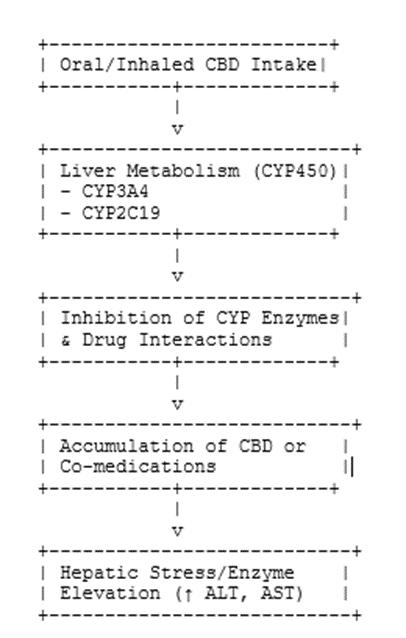
Figure 1: Proposed Mechanism of CBD-Induced Liver Enzyme Elevation
Figure Legend: Cannabidiol is metabolized in the liver via the cytochrome P450 system. At higher concentrations or in conjunction with other drugs, CBD can inhibit key enzymes like CYP3A4 and CYP2C19, leading to accumulation of drugs and hepatic stress. This process may result in the elevation of liver enzymes such as ALT and AST.
Source Britch et al. (2021) – Psychopharmacology (Berl) [25]
Discussion
The findings support a growing body of evidence indicating that CBD can influence liver enzyme activity, with implications for patient safety, especially among those on concurrent medications. Although generally well tolerated, CBD’s hepatic metabolism via the cytochrome P450 system introduces the risk of drug interactions and cumulative liver stress [16–20].
Elevations in liver enzymes do not always translate into clinical liver injury, but they signal the need for caution. In most reported cases, enzyme elevations were mild and resolved with dose adjustment [13, 22]. Nonetheless, the lack of standardization across CBD products—regarding purity, bioavailability, and labeling—introduces variability in clinical response and risk [25].
The hepatotoxic potential may be heightened in populations with preexisting liver disease, pediatric patients, or the elderly, who may metabolize CBD differently. Moreover, widespread availability of unregulated CBD products could lead to unmonitored use at unsafe doses. Thus, clinicians should screen patients for hepatic risk factors before recommending CBD, and routine liver function tests should be conducted during use.
Conclusion
Cannabidiol represents a promising therapeutic compound with broad clinical applications. However, growing evidence indicates a potential risk for liver enzyme elevations, particularly at higher doses or when combined with other hepatically metabolized drugs. Most cases are mild and reversible, but the need for standardized dosing, quality control, and long-term safety monitoring is clear. As CBD continues to enter mainstream medicine, healthcare providers and regulators must ensure its safe integration into clinical practice through evidence-based guidance and vigilant pharmacovigilance.
Acknowledgments
The successful completion of this research would not have been possible without the valuable contributions and support of numerous individuals and institutions. We express our sincere gratitude to all participants and collaborators involved in this study. Special thanks are extended to Dr. Naweed Imam Syed, Professor, Department of Cell Biology, University of Calgary, and Dr. Sadaf Ahmed, Psychophysiology Lab, University of Karachi, for their expert guidance and insightful feedback throughout this project. Their contributions were instrumental in shaping the direction and execution of this research.
Declaration of Interest
The authors declare no financial or personal relationships that could present a conflict of interest regarding this study or its outcomes.
Conflicts of Interest
The authors report no conflicts of interest.
Financial Support and Sponsorship
No external funding was received to support the preparation of this manuscript
References
- Devinsky O, Cross JH, Laux L, et al. Trial of cannabidiol for drug-resistant seizures in the Dravet syndrome. N Engl J Med. 2017;376(21):2011–20.
View at Publisher | View at Google Scholar - Blessing EM, Steenkamp MM, Manzanares J, et al. Cannabidiol as a potential treatment for anxiety disorders. Neurotherapeutics. 2015;12(4):825–36.
View at Publisher | View at Google Scholar - Franco V, Bialer M, Perucca E. Cannabidiol in the treatment of epilepsy: current evidence and perspectives. Neuropharmacology. 2021;185:108442.
View at Publisher | View at Google Scholar - Ibeas Bih C, Chen T, Nunn AV, et al. Molecular targets of cannabidiol in neurological disorders. Neurotherapeutics. 2015;12(4):699–730.
View at Publisher | View at Google Scholar - World Health Organization. Cannabidiol (CBD) Critical Review Report. Geneva: WHO; 2018.
View at Publisher | View at Google Scholar - Huestis MA, Solimini R, Pichini S, et al. Cannabidiol adverse effects and toxicity. Curr Neuropharmacol. 2019;17(10):974–89.
View at Publisher | View at Google Scholar - Ewing LE, Skinner CM, Quick CM, et al. Hepatotoxicity of a cannabidiol-rich cannabis extract in the mouse model. Molecules. 2019;24(9):1694.
View at Publisher | View at Google Scholar - Watkins PB. Drug safety sciences and the bottleneck in drug development. Clin Pharmacol Ther. 2011;89(6):788–90.
View at Publisher | View at Google Scholar - Chesney E, Oliver D, Green A, et al. Adverse effects of cannabidiol: a systematic review and meta-analysis. Lancet Psychiatry. 2020;7(10):875–90.
View at Publisher | View at Google Scholar - Stout SM, Cimino NM. Exogenous cannabinoids and human drug metabolizing enzymes: a systematic review. Drug Metab Rev. 2014;46(1):86–95.
View at Publisher | View at Google Scholar - Gaston TE, Bebin EM, Cutter GR, et al. Interactions between cannabidiol and antiepileptic drugs. Epilepsia. 2017;58(9):1586–92.
View at Publisher | View at Google Scholar - Brown JD, Winterstein AG. Potential adverse drug events and drug–drug interactions with cannabidiol (CBD). J Clin Med. 2019;8(7):989.
View at Publisher | View at Google Scholar - Taylor L, Gidal B, Blakey G, et al. Phase I trial of cannabidiol in healthy subjects: safety and pharmacokinetics. CNS Drugs. 2018;32(11):1053–67.
View at Publisher | View at Google Scholar - Millar SA, Stone NL, Yates AS, et al. Pharmacokinetics of cannabidiol in humans: a systematic review. Front Pharmacol. 2018;9:1365.
View at Publisher | View at Google Scholar - Meyer HC, Zaccaro HP, Gorka AX. Cannabidiol and stress response in humans. J Psychopharmacol. 2021;35(1):84–93.
View at Publisher | View at Google Scholar - Jiang R, Yamaori S, Takeda S, et al. Cytochrome P450 enzymes in cannabidiol metabolism. Life Sci. 2011;89(5–6):165–70.
View at Publisher | View at Google Scholar - Ujváry I, Hanuš L. Human metabolites of cannabidiol: formation and therapeutic relevance. Cannabis Cannabinoid Res. 2016;1(1):90–101.
View at Publisher | View at Google Scholar - Zendulka O, Dovrtělová G, Nosková K, et al. Cannabinoids and CYP450 interactions. Curr Drug Metab. 2016;17(3):206–26.
View at Publisher | View at Google Scholar - Morrison G, Crockett J, Blakey G, et al. Pharmacokinetics of cannabidiol in hepatic impairment. Epilepsy Behav. 2019;97:44 50.
View at Publisher | View at Google Scholar - Alsherbiny MA, Li CG. Potential drug interactions with medicinal cannabis. Medicines. 2019;6(1):3.
View at Publisher | View at Google Scholar - Geffrey AL, Pollack SF, Bruno PL, et al. Interaction between clobazam and cannabidiol. Epilepsia. 2015;56(8):1246–51.
View at Publisher | View at Google Scholar - Thiele EA, Bebin EM, Bhathal H, et al. Cannabidiol in Lennox–Gastaut syndrome: randomized trial. Lancet. 2018;391(10125):1085–96.
View at Publisher | View at Google Scholar - Devinsky O, Patel AD, Cross JH, et al. Effect of cannabidiol on drop seizures. N Engl J Med. 2018;378(20):1888–97.
View at Publisher | View at Google Scholar - FDA. Epidiolex (cannabidiol): FDA briefing document. 2018.
View at Publisher | View at Google Scholar - Britch SC, Babalonis S, Walsh SL. Cannabidiol: pharmacology and therapeutic targets. Psychopharmacology (Berl). 2021;238(1):9–28.
View at Publisher | View at Google Scholar