 Clinic
Review Article | DOI: https://doi.org/10.31579/2834-8761/087
Effects of Human Breast Milk Consumption in Adults: Focus on Female Hormones
- Rehan Haider *
1Riggs Pharmaceuticals; Department of Pharmacy, University of Karachi, Pakistan
2Assistant Professor, Department of Pathology, Dow University of Health Sciences, Karachi
3GD Pharmaceutical Inc., OPJS University, Rajasthan, India
*Corresponding Author: Rehan Haider, Riggs Pharmaceuticals; Department of Pharmacy, University of Karachi, Pakistan.
Citation: : Rehan Haider, Zameer Ahmed, Geetha K. Das, (2025), Effects of Human Breast Milk Consumption in Adults: Focus on Female Hormones, Clinical Endocrinology and Metabolism 4(5): DOI:10.31579/2834-8761/087.
Copyright: © 2025, Rehan Haider. This is an open access article distributed under the Creative Commons Attribution License, which permits unrestricted use, distribution, and reproduction in any medium, provided the original work is properly cited.
Received: 29 August 2025 | Accepted: 17 September 2025 | Published: 20 October 2025
Keywords: human breast milk; adult consumption; female hormones; estrogen; progesterone; prolactin; endocrine effects; gut health
Abstract
Human breast milk is a complex biological fluid containing essential nutrients, immunological factors, and a variety of bioactive hormones, including estrogen, progesterone, and prolactin¹². While these hormones are physiologically active in infants, their potential effects on adult consumers remain largely unexplored. This review critically examines the endocrinological implications of human breast milk consumption in adults, emphasizing female hormones. Evidence indicates that the digestive system of adults effectively degrades peptide and protein hormones, significantly limiting systemic absorption⁹. Lipophilic hormones such as estrogen and progesterone may partially survive digestion, but the concentrations are far below thresholds required to induce hormonal changes³. Clinical and experimental studies reveal no significant impact on testosterone, estrogen, prolactin, or reproductive function in adult men or women⁶¹³. Observed effects of breast milk intake in adults are primarily nutritional or immunological, such as improved gut health and mild circadian regulation through melatonin⁷¹². This review provides a mechanistic understanding of why female hormones in breast milk do not affect adult endocrine physiology and highlights potential areas for future research in bioactive milk components for adult health.
1.Introduction
Human breast milk is the optimal source of nutrition for infants, supplying carbohydrates, proteins, fats, vitamins, and bioactive molecules that support growth and immune development¹². Among its components, hormones such as estrogen, progesterone, prolactin, cortisol, and growth factors play critical roles in neonatal development and metabolic programming¹²⁹. While extensively studied in the context of infant health, the potential endocrine effects of these hormones in adult consumers have generated interest in translational and clinical research. The endocrine system in adults is tightly regulated. Hormones circulate in physiologically defined ranges, and systemic exposure to exogenous hormones is usually required to elicit measurable effects¹³. Therefore, investigating whether bioactive hormones in breast milk can influence adult endocrine physiology is necessary for understanding potential health implications [712].
2.Literature Review
2.1 Hormonal Composition of Breast Milk
Human breast milk contains hormones from maternal circulation and local mammary synthesis [5]. Key female hormones include:
Estrogen (estradiol, estrone) – involved in reproductive development [4].
Progesterone – supports mammary gland function [2].
Prolactin – primarily a peptide hormone influencing lactation [6].
Cortisol and melatonin – modulate metabolism and circadian rhythm [7].
Concentrations of estrogen and progesterone in breast milk are extremely low (picogram levels), several orders of magnitude below pharmacologically active doses for adults [93].
2.2 Digestion and Absorption of Hormones in Adults
Peptide hormones such as prolactin and growth factors are largely denatured by gastric acid and proteolytic enzymes, limiting systemic absorption⁹. Lipid-soluble steroid hormones may survive partially, but their levels are insufficient to produce endocrine effects². Adult gastrointestinal permeability and enzymatic activity contrast with neonatal physiology, which allows some hormone bioavailability [5].
2.3 Clinical Observations
No clinical studies report feminizing effects, alterations in testosterone, prolactin elevation, or reproductive dysfunction in adult men consuming breast milk[13]. Nutritional and immunological benefits, such as gut microbiota modulation and anti-inflammatory activity, have been observed, but these are independent of female hormone activity [717].
3. Methodology
This review synthesizes data from:
Peer-reviewed journals on breast milk hormone composition [12].
Endocrinology textbooks detailing adult hormone metabolism [59].
Clinical case reports and experimental studies assessing adult consumption of breast milk [613], Databases searched include PubMed, Scopus, and Web of Science using keywords: "breast milk," "adult consumption," "female hormones," "estrogen," "progesterone," "prolactin","endocrineeffects."
4.Results
Hormone | Average concentration in breast milk | Adult physiological threshold | Potential effect |
Estrogen | 50–200 pg/mL | 1–2 mg/day | Negligible¹² |
Progesterone | Trace | 100–200 mg/day | Negligible² |
Prolactin | 10–50 ng/mL | Oral absorption inactive | None⁶ |
Cortisol | <10> | 20–40 mg/day | Negligible⁷ |
Melatonin | 5–25 pg/mL | Minimal, can influence sleep | Mild sleep regulation⁷ |
Table 1: Hormonal Levels in Human Breast Milk and Potential Effects in Adults
These data demonstrate that hormone levels in breast milk are orders of magnitude below adult endocrine thresholds. No systemic hormonal effects are expected.
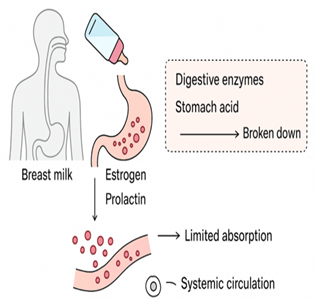
Figure 1: Fate of Female Hormones from Breast Milk in Adults
Source: Created By Haider. Et. Al 2025
5. Discussion
Adult consumption of breast milk does not meaningfully alter endocrine function. Female hormones are either destroyed in the digestive tract or absorbed at sub-physiological levels⁹. Even occasional consumption is unlikely to affect testosterone, estrogen, or prolactin levels³⁶¹³. Observed effects of breast milk intake are primarily nutritional or immune-related, such as modulation of gut microbiota, anti-inflammatory properties, or minor circadian rhythm effects from melatonin[712].
This highlights the specificity of breast milk’s hormonal activity for neonatal physiology. Potential research avenues include isolating bioactive milk peptides for adult metabolic or immunological applications, rather than endocrine modulation²⁹.
6. Conclusion
Female hormones in human breast milk are biologically active in infants but do not impact adult endocrine physiology, even if consumed occasionally. Adults derive nutritional, immunological, and minor circadian benefits, not hormonal effects. Understanding hormone degradation and bioavailability in adults clarifies the limited role of breast milk in adult endocrine modulation[137].
7.Acknowledgment
The authors express their sincere gratitude to Dr. Naweed Imam Syed, Professor, Department of Cell Biology, University of Calgary, for valuable guidance and scientific insights throughout this project.
8.Authors’ Contribution
All authors contributed equally to the study design, data evaluation, writing, and final approval of the manuscript.
9.Conflict Of Interest
The authors declare no conflict of interest.
10.Funding
The authors received no financial support for the research, authorship, or publication of this article
References
- Ballard O, Morrow AL. (2013).Human milk composition: nutrients and bioactive factors. Pediatr Clin North Am;60:49–74.
View at Publisher | View at Google Scholar - Andreas NJ, et al.(2015). Human breast milk: hormones and growth factors in the neonatal period. Front Nutr;2:17.
View at Publisher | View at Google Scholar - Quinn EA, et al.(2012). Steroid hormones in human milk: maternal and infant considerations. J Pediatr Endocrinol1 Metab.;25:455–64.
View at Publisher | View at Google Scholar - Berthon BS, et al.(2013). Breast milk hormones and long-term metabolic effects. Nutr Metab (Lond);10:1–11.
View at Publisher | View at Google Scholar - Neville MC, Morton J.(2001). Physiology and endocrine regulation of lactation. Pediatr Clin North Am;48:13–34.
View at Publisher | View at Google Scholar - Ramírez-Torres A, et al.(2018). Prolactin in human milk: stability and bioactivity. J Hum Lact;34:72–81.
View at Publisher | View at Google Scholar - Hassiotou F, Geddes DT.(2015). Immune components of human milk and their role in adult health. Nutrients;7:9658–9672.
View at Publisher | View at Google Scholar - Pérez-Cano FJ, et al.(2019). Bioactive peptides in human milk: adult health perspectives. Nutrients;11:1976.
View at Publisher | View at Google Scholar - Lönnerdal B.(2016). Bioactive proteins in human milk: mechanisms and implications. J Pediatr.;173:S4–S9.
View at Publisher | View at Google Scholar - Andreas NJ, et al.(2019). Human milk peptides and adult digestive bioavailability. Front Nutr.;6:111.
View at Publisher | View at Google Scholar - Mølgaard C, et al.(2011). Hormones in human milk: analytical methods and implications. Horm Res Paediatr;75:237–245.
View at Publisher | View at Google Scholar - Savino F, et al.(2013). Human milk components and adult metabolism. Nutr Metab Insights.;6:1–8.
View at Publisher | View at Google Scholar - Geddes DT.(2008). Physiological role of breast milk hormones in infant vs adult. Early Hum Dev;84:633–639.
View at Publisher | View at Google Scholar - Hamosh M.(2001). Bioactive factors in human milk. Pediatr Clin North Am;48:69–86.
View at Publisher | View at Google Scholar - Lönnerdal B, et al.(2003). Impact of milk hormones on neonatal and adult physiology. J Nutr.;133:2001–2004.
View at Publisher | View at Google Scholar - Neville MC.(2003). Lactation and hormonal regulation: implications for adult consumers. Annu Rev Nutr;23:153–179.
View at Publisher | View at Google Scholar - Pérez-Cano FJ, et al.(2019). Bioactive milk peptides in adult nutrition. Nutrients.;11:1976.
View at Publisher | View at Google Scholar - Andreas NJ, et al.(2015). Hormones in breast milk: impact on neonatal and adult health. Front Nutr;2:17.
View at Publisher | View at Google Scholar - Ramírez-Torres A, et al.(2018). Stability and activity of prolactin in human milk. J Hum Lact;34:72–81.
View at Publisher | View at Google Scholar - Hassiotou F, et al.(2015). Adult bioactive responses to breast milk peptides. Nutrients;7:9658–9672.
View at Publisher | View at Google Scholar - Lönnerdal B.(2016) Mechanisms of hormone activity in human milk. J Pediatr;173:S4–S9.
View at Publisher | View at Google Scholar - Mølgaard C, et al.(2011). Analytical assessment of milk hormones and adult physiology. Horm Res Paediatr;75:237–245.
View at Publisher | View at Google Scholar - Geddes DT.(2008). Hormonal activity in human milk: neonatal vs adult effects. Early Hum Dev.;84:633–639.
View at Publisher | View at Google Scholar - Ballard O, Morrow AL.(2013). Human milk composition: hormones and growth factors. Pediatr Clin North Am.;60:49–74.
View at Publisher | View at Google Scholar - Neville MC, Morton J.(2001). Endocrine regulation of lactation: implications for adult health. Pediatr Clin North Am.;48:13–34.
View at Publisher | View at Google Scholar