 Clinic
opinion | DOI: https://doi.org/DOI:10.31579/2834-796X/116
Applications of AI/ML in Packaging Innovation for Biosimilar Products
*Corresponding Author: Anupam Chanda, Packaging and Polymer Science Technologist (PG), India, Bioxytran Inc. Boston, USA.
Citation: Anupam Chanda, (2026), Applications of AI/ML in Packaging Innovation for Biosimilar Products, International Journal of Cardiovascular Medicine, 5(1); DOI:10.31579/2834-796X/116
Copyright: © 2026, Anupam Chanda. This is an open access article distributed under the Creative Commons Attribution License, which permits unrestricted use, distribution, and reproduction in any medium, provided the original work is properly cited.
Received: 05 December 2025 | Accepted: 16 December 2025 | Published: 05 January 2026
Keywords:
Abstract
Introduction
- AI /ML (Machine Learning) is playing a most significant role in Packaging Development, “Packaging machines in R&D and commercial production for Biosimilar products. Not only in online “liquid injection inspection” areas but in semi solids, solids, Gel, Labels for vials, PFS, Plastic bottle, flexible pouches and many Pharmaceutical DOSES FORM.
- Python is widely used in AI due to its simplicity, versatility.
- Rich selection of libraries for machine learning and data analysis.
- It allows developers to create intelligent systems that can learn from data, recognize patterns, and make decisions.
- Keras Software:
- Facilitates tasks like image classification, object detection and video analysis through easy-to- implement convolutional neural networks (CNNs).
- Ideal for applications from medical imaging diagnostics to automated manufacturing quality control.
- Open CV Software:
- Possibilities in computer vision applications.
- Enhanced object detection to sophisticated image recognition.
- Tensor Flow Soft Ware:
- Natural language processing
- Computer vision
- Object detection
- Exact recognition
- Building convolutional neural networks.
- Label text matters, Barcodes. Vial & PFS Inspection
- Maintaining rigorous quality control standards when mass-producing vials of
- liquid medicine can be challenging.
- Vials can be subject to contaminant or cross-contamination can occur during manufacturing.
- These “defects” cannot be tolerated.
- Detecting these issues is nearly impossible for the human eye, especially when vials are produced at a high rate.
- AI-powered machine vision solutions
- AI software help pharmaceutical companies detect contaminants, identify defects, ensure consistent fill levels, minimize consumer risk, and enhance overall product quality.
Quantitative analysis: AI can be used to analyze data from assays, such as fluorescent measurements or spectroscopic data, to more accurately and efficiently quantify the amount of adsorbed protein.
Optimizing coatings: AI algorithms can help design and optimize surface coatings to maximize protein repellency, potentially by identifying combinations of materials and coating architectures that are most effective.
Understanding mechanisms: By analyzing complex datasets, AI can identify previously unknown correlations between various parameters and protein adsorption, providing deeper insight into the underlying mechanisms.
Reducing aggregation: AI models can predict the likelihood of aggregation based on the degree of adsorption and other factors, helping formulators design strategies to prevent it.
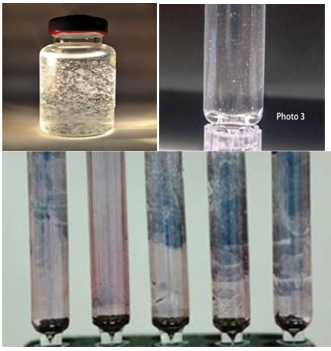
Delamination of Glass prediction by AI
Prediction: AI models, artificial neural networks or random forests, can be trained to predict the likelihood of delamination.
Method: These models analyze specific parameters derived from the glass vial, such as its natural frequency or wavelet transform coefficients, which are influenced by the vial's structural integrity and surface properties.
Benefit: By using AI, manufacturers can proactively identify vials with a higher risk of delamination before they are filled with product, improving quality control and patient safety.
Protein Adsorption in Glass prediction by AI
Predictive modeling: AI can analyze large datasets of protein properties, surface characteristics, and solution conditions to build models that predict the degree of adsorption. This allows for the screening of numerous potential formulations in
silico before experimental validation.
Recent Publications (minimum 5)
- Delamination of Glass and Probable Solution– Drug Packaging
- Importance of Extractable and Leachable study for PrimaryPackaging Materials.
- Criticality of Rubber stopperfor Biologics and Biosimilar products.
- Role of Borosilicate Glass for “oncologyproducts(cancer)
- Role of packagingfor NDDS (Nevaldrug delivery system)and NCE(Newchemicalentity)products.