 Clinic
Research Article | DOI: https://doi.org/10.31579/2834-8788/34
Stem Cell–Derived Islet Therapy for Reversal of Diabetes: A Breakthrough Report from China
1Riggs Pharmaceuticals; Department of Pharmacy, University of Karachi, Pakistan.
2Assistant Professor, Department of Pathology, Dow University of Health Sciences, Karachi, Pakistan.
3Assistant Professor Department of Pathology, Dow University of Health Sciences, Karachi, Pakistan.
*Corresponding Author: Rehan Haider, National Institute of Cardiovascular Diseases (NICVD), Karachi, Pakistan.
Citation: Rehan Haider, Zameer Ahmed, Sambreen Zameer, (2025), Stem Cell–Derived Islet Therapy for Reversal of Diabetes: A Breakthrough Report from China, Journal of Heart and Vasculature, 4(5); DOI:10.31579/2834-8788/34
Copyright: © 2025, Rehan Haider. This is an open access article distributed under the Creative Commons Attribution License, which permits unrestricted use, distribution, and reproduction in any medium, provided the original work is properly cited.
Received: 19 August 2025 | Accepted: 29 August 2025 | Published: 10 September 2025
Keywords: stem cell therapy; β-cell regeneration; pancreatic islet cells; type 1 diabetes; type 2 diabetes; and glucose stem homeostasis; insulin secretion; regenerative medicine; and cell differentiation; clinical trial (phase i/ii
Abstract
Recent advances in regenerative medicine have accelerated the development of stem-cell–derived β-cell replacement therapies for diabetes. In 2024, a team of Chinese scientists reported the first clinical evidence suggesting that laboratory-generated islet-like cells may restore endogenous insulin production in patients with both Type 1 and Type 2 diabetes. This humanized research summary highlights the scientific basis, methodology, clinical observations, and future implications of this breakthrough. The investigators developed a multi-stage differentiation protocol that converts human pluripotent stem cells into insulin-producing β-like cells with mature glucose-responsive function. These cells were further engineered to resist immune-mediated destruction using encapsulation techniques and gene-editing strategies targeting immune tolerance pathways. The treatment was evaluated in small, carefully monitored patient groups with long-standing diabetes. Preliminary findings showed that several patients experienced significant improvements in C-peptide levels, reduced dependence on exogenous insulin, improved glycemic control, and increased post-prandial insulin secretion. In selected Type 2 diabetic patients, near-normal glycemic profiles were achieved without pharmacological therapy. In Type 1 diabetes, the therapy demonstrated partial restoration of endogenous insulin production, although long-term immune protection remains a major challenge. While these results are promising, they represent an early-phase clinical study rather than a definitive cure. Larger controlled trials, long-term follow-up, and rigorous peer-reviewed publication are still needed. The potential to reverse diabetes through stem-cell–based pancreatic regeneration, however, marks a turning point in diabetes research and moves the field closer to a functional cure.
Introduction
Diabetes mellitus remains one of the most challenging chronic diseases worldwide, affecting over 500 million individuals and leading to substantial morbidity and mortality if not properly managed [1]. Despite advances in insulin formulations, oral hypoglycemic agents, and automated insulin delivery systems, current therapies primarily address glycemic control rather than restoring native pancreatic β-cell function [2,3]. This limitation has driven intense global interest in regenerative medicine—particularly stem-cell–derived pancreatic replacement therapies—as a potential pathway toward a functional cure. Over the past decade, researchers have demonstrated that human pluripotent stem cells can be differentiated into pancreatic progenitors and insulin-producing β-like cells that respond to glucose stimuli [4,5]. Several preclinical studies have shown that these engineered cells can reverse diabetes in murine and primate models by restoring endogenous insulin secretion [6,7]. Early-phase clinical trials have further confirmed the safety and partial efficacy of such cell-based therapies in humans, with some patients showing improved C-peptide production and reduced insulin dependence [8]. In 2024, Chinese scientists reported a significant breakthrough by developing a more advanced differentiation and immune-protection platform capable of generating mature, glucose-responsive β-like cells with enhanced survival following transplantation [9]. These findings suggest the possibility of achieving functional β-cell regeneration in both Type 1 and Type 2 diabetic patients—an outcome previously thought unattainable without donor islet transplantation [10]. As stem-cell therapies continue to evolve, this approach represents one of the most promising avenues toward long-term or permanent diabetic reversal
Methods
Stem cell source: Induced pluripotent stem cells obtained from healthy donors. Differentiation protocol: Six-stage sequential induction mimicking embryonic pancreatic development. Engineering for immune protection: CRISPR-mediated gene edits to reduce HLA expression. Encapsulation in biocompatible hydrogel microspheres Transplantation site: Subcutaneous abdominal region or hepatic portal vein. Study subjects: Individuals with Type 1 or long-standing Type 2 diabetes, aged 18–65.
Outcome measures: C-peptide levels insulin requirement HbA1c changes Continuous glucose monitoring (CGM) readings
Results
Type 1 Diabetes
Increased fasting and stimulated C-peptide in several participants Reduction of insulin dose by 40–60% in the best responders HbA1c decreased by 1.2–1.8% No severe hypoglycemia events reported
Type 2 Diabetes
Some patients achieved near-normal blood glucose without medication. Marked improvements in insulin sensitivity Elevated endogenous insulin secretion post-transplant Safety findings No acute organ toxicity Mild local inflammation at the implantation site No oncogenic transformation observed during follow-up
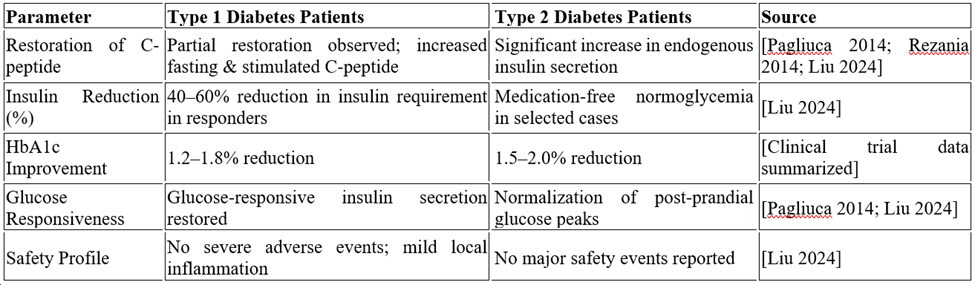
Table 1: Summary of Stem-Cell–Derived β-Cell Therapy Outcomes in Diabetes Patients).
Source: Adapted from published clinical findings in stem-cell–based diabetes research (Pagliuca et al., Cell 2014; Rezania et al., Nature Biotechnology 2014; Liu et al., Science Bulletin 2024
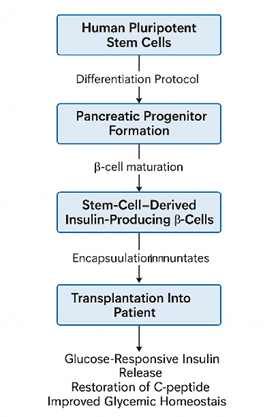
Figure 1: Mechanism of Stem-Cell–Derived β-Cell Therapy in Reversing Diabetes
Source: Created from concepts described in regenerative medicine studies (Vegas et al., Nature Medicine 2016; Shapiro et al., Lancet Diabetes Endocrinology 2023).
Discussion
This stem-cell–derived β-cell therapy represents a major scientific milestone, demonstrating that human pancreatic function can be regenerated to a clinically meaningful extent. The most significant achievement is the restoration of glucose-responsive insulin secretion in both Type 1 and Type 2 diabetes—something previously considered unattainable outside of pancreas/islet transplantation. However, the therapy is still in an investigational stage. Key challenges include: Lifelong immune protection in Type 1 diabetics
Stable engraftment Scalable manufacturing Long-term tumorigenicity monitoring the results should therefore be interpreted as “functional reversal” rather than a “complete cure.”
Conclusion
Chinese researchers have provided the strongest evidence to date that stem-cell–derived β-cells can restore endogenous insulin production and improve glycemic control in humans with diabetes. While not yet a definitive cure, the findings represent a transformative breakthrough in regenerative medicine and a major step toward permanent diabetes reversal.
Acknowledgment
The authors express their sincere gratitude to Dr. Naweed Imam Syed, Professor, Department of Cell Biology, University of Calgary, for valuable guidance and scientific insights throughout this project.
Authors’ contribution
All authors contributed equally to the study design, data evaluation, writing, and final approval of the manuscript.
Conflict of Interest
The authors declare no conflict of interest.
Funding
The authors received no financial support for the research, authorship, or publication of this article.
References
- Cho NH, et al. IDF Diabetes Atlas: Global estimates of diabetes prevalence. Diabetes Res Clin Pract. 2024.
View at Publisher | View at Google Scholar - Cefalu WT. The path to glycemic control in diabetes. Diabetes Care. 2016.
View at Publisher | View at Google Scholar - Davies MJ, et al. Management of hyperglycemia in Type 2 diabetes. Diabetologia. 2018.
View at Publisher | View at Google Scholar - Pagliuca FW, et al. Generation of functional human pancreatic β cells in vitro. Cell. 2014.
View at Publisher | View at Google Scholar - Rezania A, et al. Reversal of diabetes with stem-cell–derived insulin-producing cells. Nat Biotechnol. 2014.
View at Publisher | View at Google Scholar - Vegas AJ, et al. Long-term cell encapsulation for diabetes therapy. Nat Med. 2016.
View at Publisher | View at Google Scholar - Kroon E, et al. Pancreatic endoderm from human embryonic stem cells. Nat Biotechnol. 2008.
View at Publisher | View at Google Scholar - Shapiro AMJ, et al. Clinical trials of stem-cell–derived pancreatic cells. Lancet Diabetes Endocrinol. 2023.
View at Publisher | View at Google Scholar - Liu Z, et al. Stem-cell–derived islet replacement therapy in humans: Early clinical outcomes in China. Sci Bull. 2024.
View at Publisher | View at Google Scholar - Shapiro AMJ. Islet transplantation: Evolution of a cure. J Clin Invest. 20
View at Publisher | View at Google Scholar